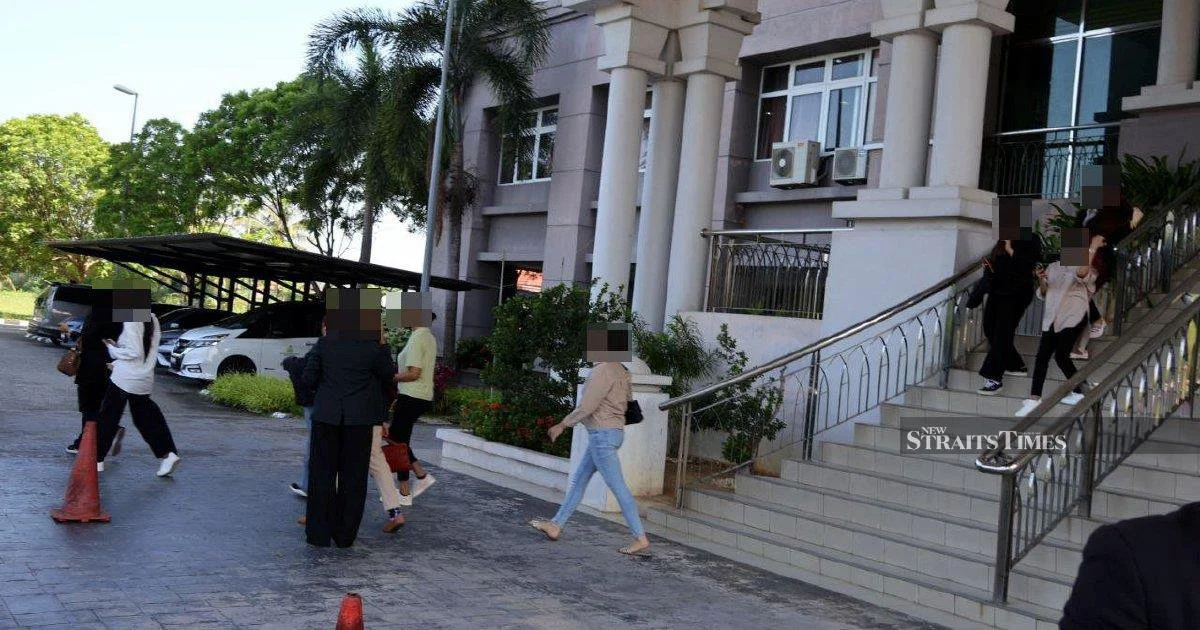
The Syariah Lower Court in Kota Baru has adjourned legal proceedings against 14 men who face charges related to cross-dressing at a private residence, marking another delay in a case that has drawn considerable public attention since the incident emerged last year. The defendants were allegedly found dressed in women's clothing at an apartment located on Jalan Mahmood, triggering a legal investigation under Syariah law that has since unfolded through the Islamic court system in Kelantan.
The postponement reflects the procedural complexities often encountered in religious court matters, particularly cases involving allegations of behaviour considered non-conformant with Islamic teachings. While the exact reasons for the adjournment were not detailed in court announcements, such delays commonly arise from administrative requirements, the need for additional documentation, scheduling conflicts involving legal representatives, or requests for more preparation time by the defence. The decision to defer proceedings means the matter will not proceed to substantive deliberation at this time.
Cross-dressing carries significant legal weight within Malaysia's Syariah law framework, treated as a matter falling under Islamic jurisprudence rather than secular criminal statutes. Different states apply varying interpretations and penalties under their respective Islamic enactments, creating a somewhat fragmented regulatory landscape across the country. In Kelantan, where this case originates, the Syariah courts operate under established Islamic principles while maintaining jurisdiction over Muslim individuals accused of conduct deemed contrary to Islamic law.
The involvement of 14 individuals simultaneously underscores the scale of the incident that precipitated this legal action. Such multi-party cases in Syariah courts are relatively uncommon and often generate broader societal discussion about religious adherence, personal conduct, and the boundaries of religious authority in contemporary Malaysia. The concentration of charges against numerous defendants at a single location suggests a coordinated law enforcement operation that resulted in the collective detention and subsequent prosecution of all individuals present.
For Malaysian observers and analysts tracking religious jurisprudence developments, this case represents an illustrative example of how Syariah courts address contemporary social behaviour patterns. The proceedings touch upon fundamental questions about how Islamic legal systems navigate modern urban realities and private conduct, issues increasingly relevant as Malaysian courts seek to balance religious obligations with contemporary society. The case also demonstrates the apparatus through which state Islamic enforcement bodies monitor and prosecute alleged violations within Muslim communities.
The postponement introduces further uncertainty regarding when substantive proceedings might commence and what evidence the prosecution intends to present. Depending on the eventual trial timeline, witnesses may be required to testify, forensic or circumstantial evidence may be introduced, and the defendants' legal representatives will present their respective positions. The protracted nature of these proceedings reflects broader patterns in Malaysian Syariah court administration, where docket pressures and procedural requirements frequently extend timelines.
Public discourse surrounding this matter has encompassed diverse perspectives on religious enforcement, personal freedoms, and legal authority. While some voices emphasise the importance of upholding Islamic principles through judicial mechanisms, others raise questions about the proportionality of prosecution and the state's role in regulating private behaviour within residential settings. These divergent viewpoints characterise ongoing debates throughout Malaysia regarding the appropriate scope and intensity of Syariah court intervention.
The case carries implications extending beyond the immediate defendants, potentially influencing how enforcement agencies interpret their mandate and how courts apply existing Syariah provisions. Judicial decisions emanating from this trial may establish precedents affecting future cases with analogous factual circumstances, shaping the trajectory of Syariah jurisprudence within Kelantan and potentially influencing interpretations across other Malaysian states with similar legal provisions.
For the 14 men involved, the postponement represents both continued legal uncertainty and additional time for case preparation. Defence strategies typically evolve through adjournments, with legal teams utilising such periods to gather evidence, conduct investigations, and formulate arguments responsive to prosecution contentions. The outcome of eventual proceedings will likely hinge on evidentiary matters, witness credibility assessments, and judicial interpretation of applicable Syariah provisions.
No revised trial date has been announced for the defendants, leaving the matter in a state of procedural suspension. Court observers and legal analysts monitoring the case remain attentive to future developments, recognising that this proceeding exemplifies the intersection of religious authority, contemporary social practices, and judicial administration within Malaysia's dual legal system.

