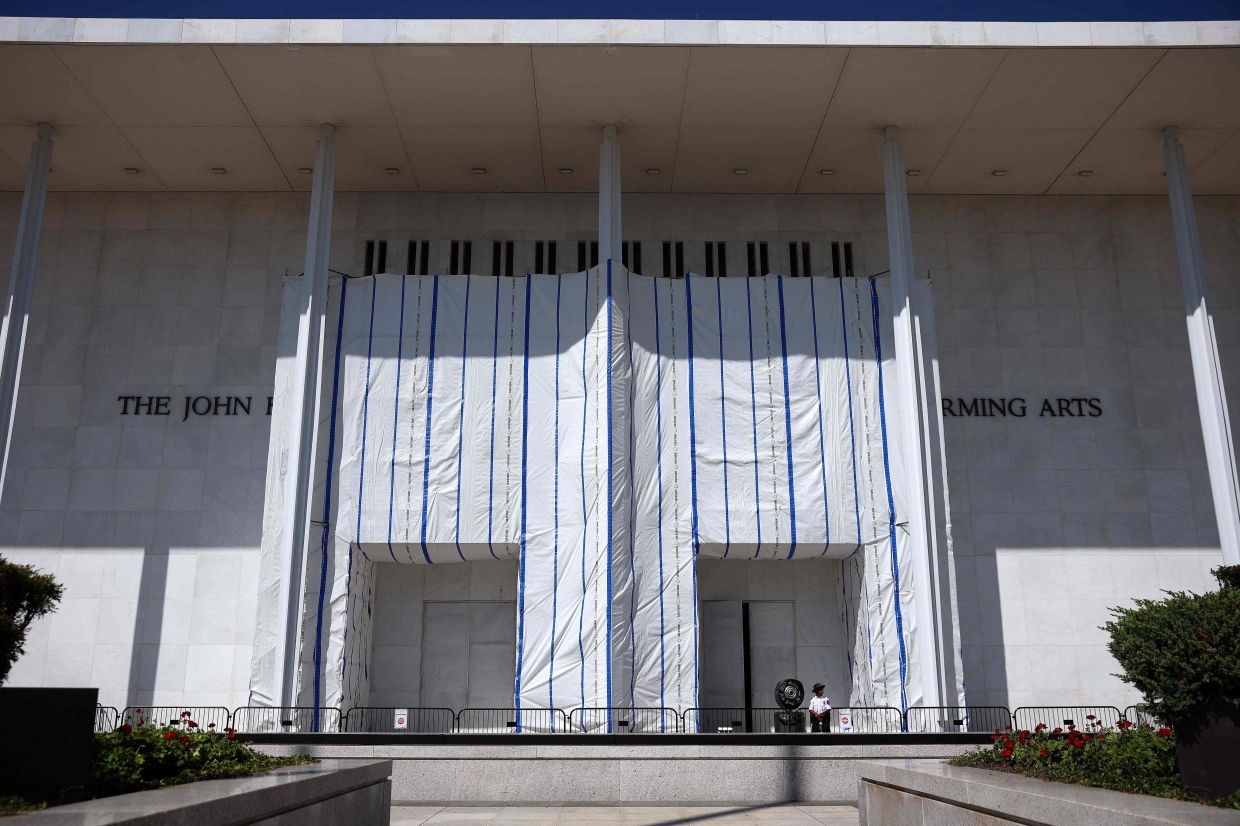
The Trump administration has raised the prospect of demolishing the Kennedy Center in Washington, one of America's most celebrated performing arts venues, should legal challenges derail its renovation programme and naming ambitions. The extraordinary threat emerged in a Justice Department filing submitted on Tuesday as part of an escalating dispute between the administration and Democratic opponents seeking to halt both the two-year restoration project and efforts to prominently feature Trump's name on the iconic building.
The Justice Department's position represents a dramatic escalation in tensions over the institution, which has served as a living memorial to President John F. Kennedy since its establishment decades ago. Rather than claiming an actual demolition plan exists, the government's legal argument pivots on a conditional logic: without Trump's intervention and fundraising leadership, the building would deteriorate so severely that it would eventually become unsafe and require removal. Justice Department attorney Brantley Mayers articulated this position in stark language, stating that "without those efforts, the center will deteriorate further into an unsafe, decrepit structure that will be required to be taken down."
The filing paints an extraordinarily bleak picture of the Kennedy Center's current condition, describing it as "structurally unsound, fundamentally unsafe, and embarrassing to the nation's capital." This characterization starkly contrasts with earlier assessments from Kennedy Center officials themselves, who have described the necessary work in considerably more measured terms, focusing on electrical upgrades, stage repairs, and leak prevention measures without suggesting any fundamental structural crisis that would endanger visitors. The divergence between the administration's legal framing and the institution's own technical descriptions suggests the demolition warning may serve primarily as a negotiating tactic rather than a genuine assessment of the building's status.
Shouldn't the threat be realized, the Justice Department filing envisions the site's transformation into a large outdoor amphitheater overlooking the Potomac River. The filing candidly acknowledges that such a replacement would "fail to adequately honor" President Kennedy and cost less to construct and maintain than restoring the existing complex. This proposal effectively frames the administration's renovation efforts as Kennedy Center preservation in its truest sense, while positioning legal opposition as potentially responsible for the landmark's complete disappearance.
The core dispute centres on Trump's determination to attach his name prominently to the institution. His handpicked board members voted recently to inscribe "Restored and Renovated by President Donald J. Trump" beneath the Kennedy Center's existing name and to redesignate the surrounding plaza as "President Donald J. Trump Plaza." These naming decisions have prompted Congresswoman Joyce Beatty, an ex officio board member, to file suit challenging the administration's authority to rebrand the institution. Beatty's legal position rests on the principle that only Congress possesses the power to rename the centre, which Congress originally established specifically as a living memorial to the slain president.
A federal judge had previously sided with Beatty's argument, ruling that the board lacked unilateral authority to rename the Kennedy Center and ordering earlier Trump signage removed from the building. The administration has filed an appeal of that decision, setting up a prolonged legal battle over naming rights and institutional identity. The administration simultaneously secured US$258 million in congressional funding for the restoration project and claims to have cultivated a new donor base willing to contribute to the work. Justice Department lawyers argue that formal recognition of Trump remains essential for maintaining momentum among this newly cultivated group of contributors, effectively making the naming provisions integral to the financial viability of the entire renovation effort.
This dispute reflects broader tensions surrounding the Trump administration's approach to national institutions and monuments. For Malaysian observers and other international audiences, the confrontation offers insight into American political divisions over cultural heritage, presidential authority, and the mechanics of public institution governance. The willingness to invoke demolition as a potential consequence of legal opposition—whether tactical or literal—illustrates the stakes perceived by both sides in this conflict.
The administration's argument that Trump's fundraising prowess and leadership prove indispensable to the Kennedy Center's survival carries implicit claims about the institutional dependency on executive championing. Yet this framing also provokes questions about whether renovations require public credit and presidential branding or whether such improvements represent standard governmental responsibility toward national treasures. The broader principle at stake concerns whether contributions to public works justify prominent naming rights and whether courts should defer to executive determinations about institutional identity when Congress established the institution with specific commemorative intent.
A federal hearing scheduled for Thursday will address both the administration's closure proposals and its latest attempt to secure formal recognition on the building. This proceeding will determine whether Beatty's legal challenge prevails and whether the Kennedy Center naming dispute continues grinding through the courts. The outcome will signal whether courts will impose limits on executive efforts to rebrand congressional memorials or whether the administration's control of the board and renovation funding affords sufficient authority to reshape the institution's public identity. For stakeholders in cultural preservation and institutional governance across the United States and internationally, the Kennedy Center decision will carry significant precedential weight regarding the balance between executive power and congressional intent in defining national monuments.

