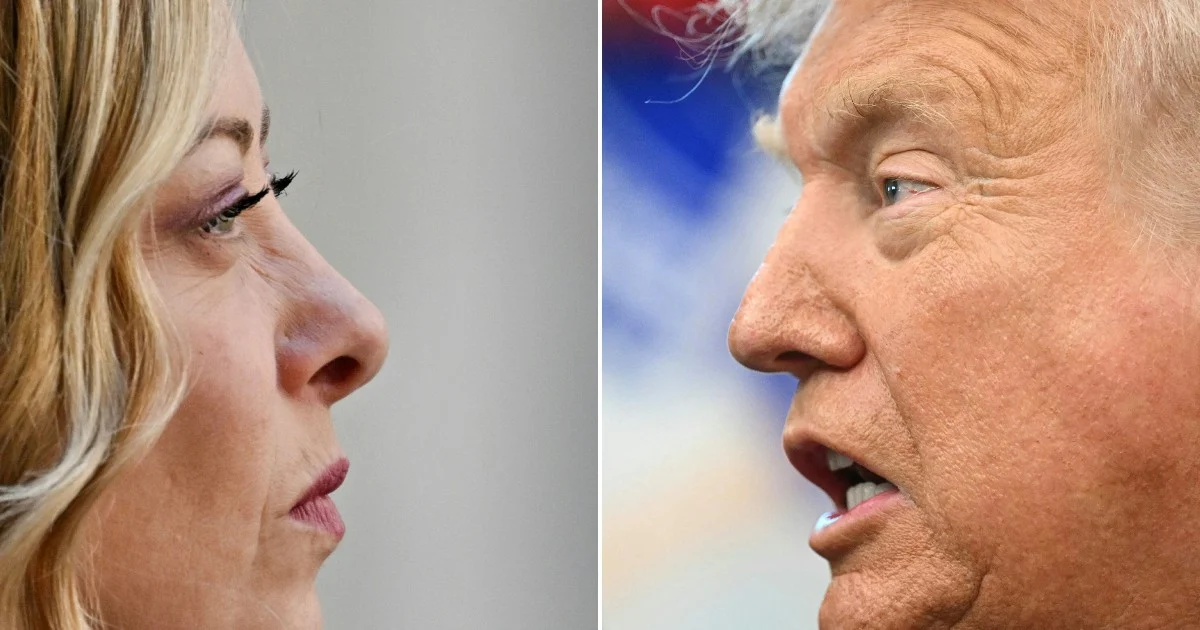
The simmering diplomatic tensions between Washington and Rome took a sharper turn on Saturday as US President Donald Trump levelled fresh accusations against Italian Prime Minister Giorgia Meloni, suggesting she had persistently sought his company for a photograph during recent diplomatic engagements. The American leader's public assertion, delivered without the typical restraint of official channels, signals a worrying deterioration in relations between two significant Western allies at a moment when coordinated global leadership is increasingly valuable.
Trump's strategy of linking the photo dispute to substantive policy disagreements represents a notable shift in diplomatic practice, collapsing personal grievance into matters of strategic consequence. By connecting the photograph row to tensions over Iran policy and NATO force commitments, the US President has effectively elevated what might otherwise remain a minor protocol matter into a statement about fundamental differences in how Washington and Rome view their respective roles in managing international challenges. This approach compresses multiple layers of disagreement into a single public rebuke, transforming what could have been managed through quiet diplomatic channels into fodder for international media scrutiny.
The Italian government's response to these escalating claims remains central to understanding how this dispute might affect broader European-American cooperation. Meloni has built her political brand partly on strong Western alignment and a commitment to NATO obligations, positions that would normally position Rome as a natural partner for Washington. Yet the public nature of Trump's criticism creates a difficult dynamic where the Italian Prime Minister faces domestic political pressures to respond defensively, potentially hardening positions that might otherwise have remained negotiable.
For observers in Southeast Asia and beyond, this transatlantic friction offers an instructive lesson in how personal rivalries and policy disagreements can become dangerously intertwined at the highest levels of government. The region's own experience with great power dynamics suggests that when major powers allow diplomatic disputes to fester unresolved, smaller states often find themselves navigating treacherous waters. The erosion of trust between Washington and Rome also raises questions about the coherence of Western strategy on critical issues, from European security architecture to approaches toward Middle Eastern threats.
The Iran dimension to this dispute deserves particular attention, as it touches on questions affecting global energy markets and regional stability that extend well beyond Europe. Disagreements between Washington and European allies over how to manage Iranian nuclear ambitions and regional influence have been longstanding, with Italy occasionally positioned between American pressure and European diplomatic preferences. Trump's invocation of Iran policy as part of this personal spat suggests that underlying strategic differences remain unresolved, with the photograph controversy serving as a convenient vessel for deeper frustrations.
NATO commitment levels represent another flashpoint embedded in Trump's critique, reflecting longstanding American concerns about burden-sharing within the alliance. Italy, like many European members, has faced periodic pressure from Washington to increase defence spending and military contributions. The connection Trump draws between a photograph dispute and NATO obligations suggests impatience with what his administration views as insufficient allied commitment, though whether public rebuke represents an effective negotiating strategy remains questionable.
Diplomatic protocol typically insulates personal interactions from policy disputes, allowing leaders to maintain working relationships despite genuine disagreements on substance. Trump's departure from this convention reflects either a deliberate choice to weaponise personal friction or a fundamental discomfort with traditional diplomatic norms. Either interpretation carries implications for how alliance management functions during periods when coordinated response to shared challenges becomes necessary.
Meloni's positioning as a right-wing populist leader aligned with Trump's political orientation adds another complicating layer to their apparent friction. Both leaders represent anti-establishment political movements within their respective countries, a common ground that might ordinarily facilitate warmer relations. That substantial policy and personal disagreements persist despite ideological kinship suggests deeper structural tensions between American and Italian interests that cannot be smoothed over through shared conservative credentials.
The public airing of this dispute also raises questions about the role of personal chemistry in international relations. Modern diplomatic theory emphasises institutional relationships and formal agreements over interpersonal dynamics, yet in practice, relationships between leaders significantly influence whether agreements hold and disputes remain manageable. Trump's apparent willingness to publicise grievances with Meloni demonstrates how personal factors continue to shape state behaviour, despite the structural complexities of contemporary international affairs.
For policymakers and analysts monitoring Western alliance dynamics, this escalating row serves as a reminder that even established partnerships require active maintenance and that unresolved disagreements, left to simmer, can transform minor incidents into major flashpoints. The photograph controversy, stripped of its personal context, represents a trivial matter that any diplomatic team could have managed discreetly. Its emergence into public discourse instead reflects accumulating frustrations that neither Washington nor Rome has adequately addressed through private channels, suggesting a broader breakdown in their communication architecture.
The implications of sustained Washington-Rome friction extend throughout NATO and the broader Western alliance system. Italy's geographic position, military capabilities, and historical role make it valuable to American strategy in Europe and beyond. Deteriorating relations with Rome could complicate American efforts to maintain cohesive alliance responses to shared security challenges, particularly as the United States seeks to balance commitments across multiple regions. Whether this dispute represents temporary turbulence or signals a more fundamental realignment in transatlantic relations remains unclear, but the public manner in which it has unfolded suggests that repairing the relationship will require explicit diplomatic engagement rather than the passage of time alone.
%22%2F%3E%3C%2Fpattern%3E%3C%2Fdefs%3E%3Crect%20width%3D%22100%25%22%20height%3D%22100%25%22%20fill%3D%22url(%23ph4exaug)%22%2F%3E%3Crect%20width%3D%22100%25%22%20height%3D%22100%25%22%20fill%3D%22url(%23ph4exaup)%22%2F%3E%3Ctext%20x%3D%2250%25%22%20y%3D%2250%25%22%20text-anchor%3D%22middle%22%20dominant-baseline%3D%22central%22%20fill%3D%22rgba(255%2C255%2C255%2C0.95)%22%20font-family%3D%22Georgia%2C%20'Times%20New%20Roman'%2C%20serif%22%20font-weight%3D%22700%22%20font-size%3D%22320%22%20letter-spacing%3D%22-0.02em%22%3E70%3C%2Ftext%3E%3C%2Fsvg%3E)
%22%2F%3E%3C%2Fpattern%3E%3C%2Fdefs%3E%3Crect%20width%3D%22100%25%22%20height%3D%22100%25%22%20fill%3D%22url(%23ph2vervg)%22%2F%3E%3Crect%20width%3D%22100%25%22%20height%3D%22100%25%22%20fill%3D%22url(%23ph2vervp)%22%2F%3E%3Ctext%20x%3D%2250%25%22%20y%3D%2250%25%22%20text-anchor%3D%22middle%22%20dominant-baseline%3D%22central%22%20fill%3D%22rgba(255%2C255%2C255%2C0.95)%22%20font-family%3D%22Georgia%2C%20'Times%20New%20Roman'%2C%20serif%22%20font-weight%3D%22700%22%20font-size%3D%22226%22%20letter-spacing%3D%22-0.02em%22%3EPenang%3C%2Ftext%3E%3C%2Fsvg%3E)