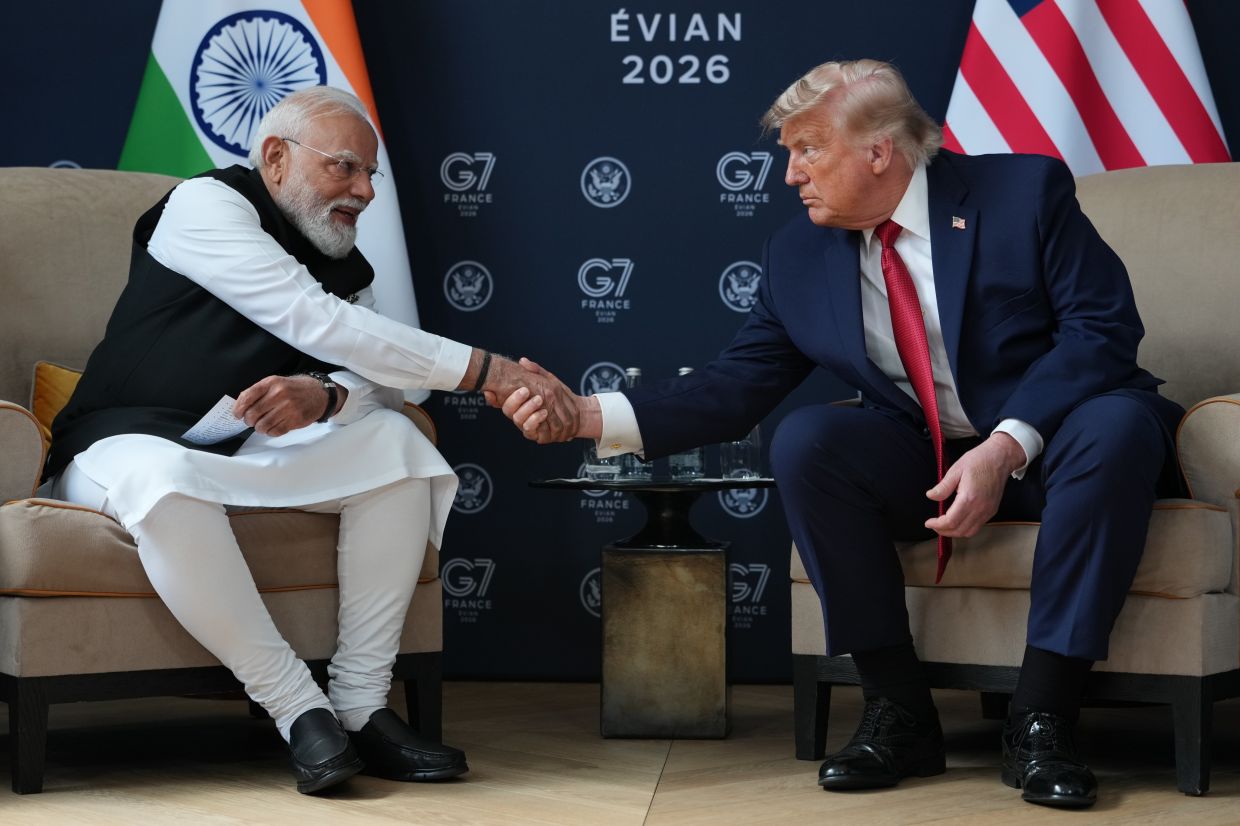
During a bilateral meeting with Prime Minister Narendra Modi in New Delhi—their first face-to-face engagement in over a year—US President Donald Trump sidestepped the controversial killing of three Indian sailors when questioned by journalists. The incident has become a flashpoint in the otherwise warming relationship between Washington and New Delhi, testing the diplomatic bonds being strengthened through an ongoing bilateral trade negotiation.
The three Indian nationals died when US forces launched missiles at the MT Settebello, a Palau-flagged commercial vessel operating in the Strait of Hormuz, last week. American military officials justified the attack as an enforcement action against what they characterised as violations of a blockade imposed on Iranian ports. Two additional merchant ships with Indian crew members also came under fire during the same operation, though the details of those incidents remain contested.
When pressed on the deaths, Trump offered a striking dismissal of Indian concerns. "I heard about that," he told assembled reporters without extending condolences. He characterised maritime labour as inherently dangerous, remarking that commercial shipping "has been happening throughout time" and constitutes "a rough profession." His remarks sought to normalise the incident rather than address the specific circumstances of the strike or acknowledge the loss of life.
India's External Affairs Minister S. Jaishankar had previously lodged what he described as a "strong protest" in a direct conversation with US officials. However, the State Department's official account of that discussion revealed fundamental disagreement over responsibility. Washington's statement emphasised that the US would not tolerate "violations of the US blockade and the illicit transport of Iranian oil," effectively doubling down on its enforcement rationale rather than expressing regret for the outcome.
Trump's apparent indifference triggered a visible backlash across India. Citizens in New Delhi's auto rickshaw sector tore down promotional posters bearing Trump's image and "Happy Birthday America" slogans that had been distributed by the US embassy as part of a goodwill campaign. The symbolic rejection reflected broader public frustration with the government's perceived deference to American interests. Opposition leader Rahul Gandhi seized on the moment to criticise Prime Minister Modi, alleging that India's leadership had surrendered its autonomy. "A free country would never tolerate such language. But our Compromised PM? Silent. They listen like an obedient servant and comply with the orders," he posted on social media platforms, framing the incident as evidence of imbalanced relations.
Despite this tension, Trump and Modi publicly maintained cordial rhetoric about their personal relationship and their nations' strategic alignment. Trump told reporters that the two countries "cannot be closer" and that their bond originated from his personal chemistry with Modi. He suggested that even without a formal military alliance, the United States would come to India's defence if needed—a reassurance likely intended to smooth over immediate friction.
The timing of the crisis is particularly delicate given that Trump and Modi last convened in Washington in February 2025, where they launched formal negotiations toward a comprehensive bilateral trade agreement. India has become one of the first nations to pursue such talks with the new Trump administration, reflecting strategic calculations by both governments about closer economic ties. These discussions remain active, with US Trade Representative involvement ongoing, though neither side has announced concrete progress.
During Wednesday's press conference, Trump pivoted to praising Modi's negotiating acumen, calling him a "tough trader" and a "great guy." He announced plans to visit India in the future, gestures designed to emphasise continuity and partnership despite the underlying friction. Secretary of State Marco Rubio had visited India separately, reinforcing the administration's messaging by characterising the country as among America's "most important strategic partners."
The dynamic between Washington and New Delhi reflects the complexities of great power relations in the Indo-Pacific, where both nations have incentives to cooperate on trade, technology, and strategic concerns related to China's rise, yet diverge sharply over maritime enforcement operations and regional security policies. India's dependence on maritime commerce and its substantial shipping industry create particular vulnerability to US enforcement actions in international waters.
For Malaysia and Southeast Asia more broadly, the incident underscores how bilateral disputes between major powers can spill into regional waters and affect shipping routes critical to the region's economies. The Strait of Hormuz remains essential infrastructure for global commerce, and enforcement operations there carry risks for merchant crews from multiple nations, including those from ASEAN member states. The apparent willingness of the US to prioritise its blockade enforcement over minimising civilian casualties sends a signal about how power dynamics will shape maritime governance in contested regions.
The incident also highlights tensions within India's foreign policy calculus. New Delhi seeks American partnership on security and economic fronts while maintaining independent navigation of complex regional interests, including relationships with Iran and concerns about unilateral US actions affecting its nationals. Trump's dismissive response suggests that Washington may expect India to absorb such costs as part of a strategic partnership rather than negotiate specific protections for its maritime workers and vessels.
As trade negotiations continue between the two nations, the sailors' deaths will likely remain a source of friction, even if both governments attempt to move past the immediate controversy. India's public has registered its displeasure, and political opposition has seized the moment to challenge the government's alignment with American interests. Whether Modi's administration can successfully compartmentalise security grievances from economic negotiations remains to be seen, but the incident has revealed the limits of personal chemistry in managing state-to-state relations when fundamental interests collide.
%22%2F%3E%3C%2Fpattern%3E%3C%2Fdefs%3E%3Crect%20width%3D%22100%25%22%20height%3D%22100%25%22%20fill%3D%22url(%23ph29bu7g)%22%2F%3E%3Crect%20width%3D%22100%25%22%20height%3D%22100%25%22%20fill%3D%22url(%23ph29bu7p)%22%2F%3E%3Ctext%20x%3D%2250%25%22%20y%3D%2250%25%22%20text-anchor%3D%22middle%22%20dominant-baseline%3D%22central%22%20fill%3D%22rgba(255%2C255%2C255%2C0.95)%22%20font-family%3D%22Georgia%2C%20'Times%20New%20Roman'%2C%20serif%22%20font-weight%3D%22700%22%20font-size%3D%22272%22%20letter-spacing%3D%22-0.02em%22%3EJohor%3C%2Ftext%3E%3C%2Fsvg%3E)
%22%2F%3E%3C%2Fpattern%3E%3C%2Fdefs%3E%3Crect%20width%3D%22100%25%22%20height%3D%22100%25%22%20fill%3D%22url(%23ph1i38g)%22%2F%3E%3Crect%20width%3D%22100%25%22%20height%3D%22100%25%22%20fill%3D%22url(%23ph1i38p)%22%2F%3E%3Ctext%20x%3D%2250%25%22%20y%3D%2250%25%22%20text-anchor%3D%22middle%22%20dominant-baseline%3D%22central%22%20fill%3D%22rgba(255%2C255%2C255%2C0.95)%22%20font-family%3D%22Georgia%2C%20'Times%20New%20Roman'%2C%20serif%22%20font-weight%3D%22700%22%20font-size%3D%22170%22%20letter-spacing%3D%22-0.02em%22%3EJudicial%3C%2Ftext%3E%3C%2Fsvg%3E)