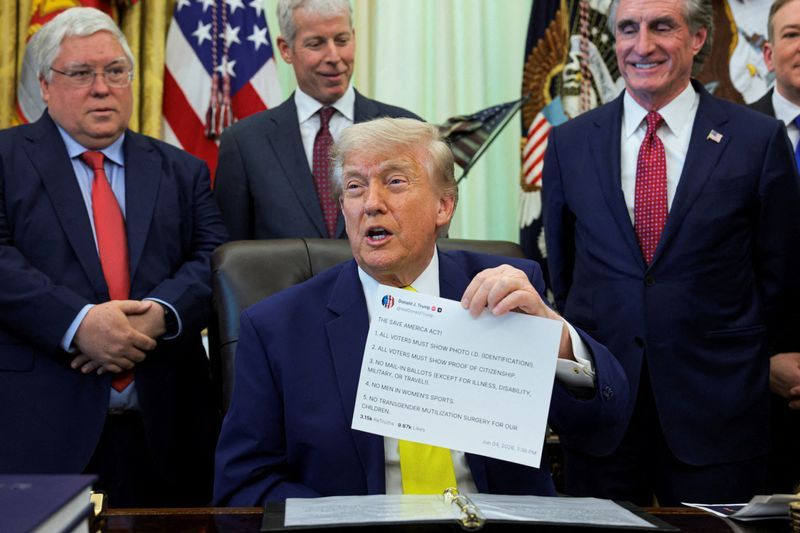
Donald Trump faces a federal lawsuit in New York over Truth API, a subscription service launched by Trump Media & Technology Group that sells early access to posts from the U.S. president and other high-ranking officials on his Truth Social platform. The Intercept and the Freedom of the Press Foundation filed the complaint in Manhattan federal court, seeking to shut down the service, which charges subscribers up to $100,000 monthly for advance access to posts from ten prominent accounts, including Trump's own.
The timing of Truth API's August 1 launch came just days after Democratic Senators Elizabeth Warren of Massachusetts and Adam Schiff of California formally requested that the Securities and Exchange Commission investigate whether the service undermined financial market integrity while benefiting wealthy insiders and Trump himself. The senators' concerns centred on the service's potential to give privileged subscribers an edge in trading markets that respond to Trump's announcements on tariffs, geopolitical events and other economically sensitive matters.
The lawsuit raises fundamental questions about equal access to government communications and potential conflicts of interest. The plaintiffs argue that the service violates the First Amendment because all citizens should have equal and simultaneous access to presidential announcements. They further contend that allowing the president to profit from early-access subscriptions to his own posts creates an impermissible financial incentive that conflicts with his constitutional duties and raises serious concerns about market manipulation.
Trump's financial stake in Truth Media amplifies these concerns. As the company's largest shareholder with a 41.3% stake worth approximately $950 million held through his Donald J. Trump Revocable Trust, the president stands to benefit directly from Truth API's success. His oldest son, Donald Trump Jr., serves as a Trump Media director and oversees the family trust, creating a structure that critics argue blurs the lines between Trump's personal wealth and his official duties.
According to the plaintiffs' complaint, Trump posted or reposted between 9,000 and 11,000 messages to Truth Social during his second term, with many announcements never followed by formal White House statements. This pattern suggests that Truth Social functions as Trump's primary channel for making significant policy declarations and market-moving announcements, making early access particularly valuable to subscribers willing to pay premium fees.
Beyond Trump, the Truth API service provides early access to posts from Vice President JD Vance, Health and Human Services Secretary Robert F. Kennedy Jr., FBI Director Kash Patel, and the official White House account itself. This expansion creates a broader concern about government officials potentially profiting from early disclosure of policy announcements that could affect financial markets, commodities prices and investor behaviour.
Trump Media's response characterises the lawsuit as a politically motivated attempt to suppress the president's speech. A company spokesperson argued that numerous platforms and news organisations already disseminate Trump's content through subscription models, suggesting Truth API merely follows established industry practice. The company framed the legal challenge as weaponised activism designed to harm shareholders and silence Trump's message.
During a recent earnings call, Trump Media interim Chief Executive Kevin McGurn defended the service by explaining that Truth API enables subscribers to receive news only fractionally faster than the general public. This characterisation understates the practical value of even minimal time advantages in financial markets, where millisecond delays can translate into significant trading advantages for those receiving information first.
The regulatory context remains complex. The SEC's three current commissioners are Republicans, which may influence how aggressively the agency pursues any investigation into market manipulation concerns. Democratic senators' earlier calls for SEC action faced an uphill battle in the current political environment, though the federal court lawsuit represents a separate legal avenue that does not depend on executive branch enforcement.
For Southeast Asian observers, this case illuminates broader tensions in American governance between presidential communication rights and anti-corruption safeguards. Many regional democracies struggle with similar questions about how leaders should use digital platforms and whether monetising government announcements raises unacceptable conflict-of-interest concerns. The lawsuit may ultimately reshape how U.S. presidents manage official communications and restrict their ability to leverage government information for personal financial gain.
The fundamental issue transcends partisan divisions. Whether Truth API survives legal challenge may depend on courts' willingness to enforce constitutional principles against potential abuse even when applied to a sitting president. The case raises enduring questions about whether early access to market-moving government announcements constitutes an unconstitutional taking of the public's equal right to government information, or whether presidents possess broad latitude to control the timing and channels of their official communications.

