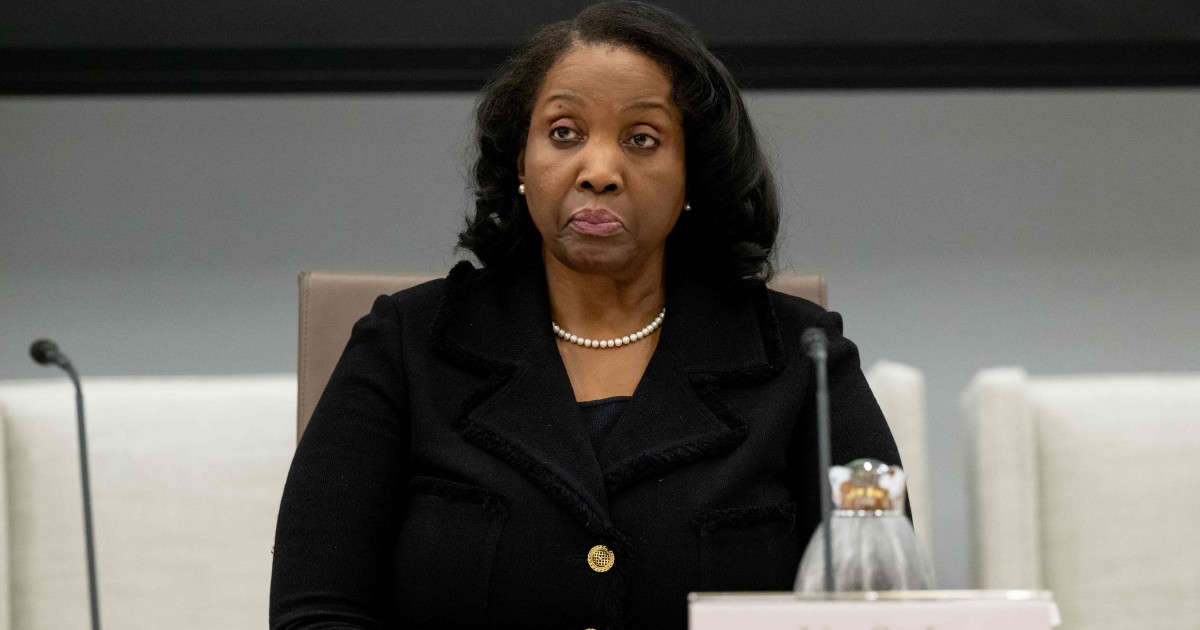
President Donald Trump is escalating his campaign to remove Lisa Cook from her position as a Federal Reserve Governor, according to correspondence released by the White House on Friday. The renewed push comes despite a significant legal setback in June when the Supreme Court ruled against Trump's earlier removal attempt, suggesting a determination to pursue alternative avenues in what has become an extended institutional conflict.
Cook's position at the Federal Reserve has become increasingly contentious within Trump's administration, with the president and his allies levelling mortgage fraud allegations against the seasoned economist. The specifics of these accusations have formed the basis for what amounts to an extraordinary challenge to the independence of the central bank's leadership, raising fundamental questions about the proper balance between executive authority and institutional autonomy in American governance.
The timing of this renewed effort reflects a calculated shift in Trump's approach. Rather than accepting the Supreme Court's June decision as conclusive, the administration appears to have identified alternative legal or procedural mechanisms through which removal might be pursued. This persistence suggests either confidence in newly crafted arguments or a determination to exhaust available options regardless of previous judicial outcomes.
For international observers, particularly those in Malaysia and across Southeast Asia, the institutional implications carry particular weight. The Federal Reserve's decisions on interest rates, inflation policy, and currency management directly influence global financial markets and capital flows. Any uncertainty regarding the central bank's independence or leadership stability could introduce volatility that reverberates through regional economies dependent on stable US monetary conditions.
Cook herself brings significant credentials to the role. Her academic background and policy experience represent the technical expertise traditionally expected from Federal Reserve leadership. The effort to remove her therefore extends beyond a simple personnel dispute to touch on questions of who gets to define merit and competence in central banking, and whether political considerations should override professional qualifications.
The Federal Reserve's mandate to maintain price stability and maximum employment exists partly to shield monetary policy from short-term political pressures. When a sitting president actively pursues the removal of board members over disputed allegations, it tests this protective framework and raises questions about institutional resilience. Previous administrations have criticised Fed decisions, but direct removal efforts represent a more fundamental challenge.
The mortgage fraud allegations themselves warrant scrutiny. Without access to specific evidence or detailed legal arguments, it remains unclear whether these represent genuine misconduct or whether they function primarily as a justification for a removal that may be driven by other considerations. The distinction matters considerably for understanding whether this represents legitimate oversight or institutional overreach.
Politically, Cook's status as a Democratic appointee adds another dimension to the conflict. Her removal would tilt the Federal Reserve's governing structure toward Trump's appointees, potentially influencing policy direction on matters ranging from rate decisions to regulatory frameworks. This zero-sum dynamic transforms internal governance into an extension of partisan competition, with potential consequences for the Fed's perceived neutrality.
The Supreme Court's June decision evidently did not foreclose all removal pathways available to the executive. Trump's legal team apparently believes alternative grounds or procedures exist through which a different outcome might be achieved. This legal cat-and-mouse dynamic could extend the controversy through multiple court filings and administrative proceedings, creating extended uncertainty around Cook's tenure.
For policymakers in Malaysia and across Southeast Asia, these developments underscore the importance of understanding American domestic political currents. US Federal Reserve decisions have cascading effects on emerging market currencies, capital flows, and borrowing costs. A Fed consumed by internal political battles may struggle to focus on its core missions, potentially creating policy drift or unexpected shifts in monetary direction.
The broader principle at stake transcends the individual case. Central bank independence has been recognised internationally as essential for sound monetary management and long-term economic stability. When removal of governors becomes a political tool, it undermines the insulation from short-term pressures that allows central banks to make unpopular but necessary decisions. This precedent, should it succeed, could influence how other nations view their own institutional arrangements.
Cook's colleagues at the Federal Reserve face an awkward position. Supporting her publicly risks inviting similar challenges from the administration. Remaining silent appears cowardly but protects institutional neutrality. This dynamic itself corrodes the collegial professional environment that central banking requires to function effectively across business cycles and political transitions.
As this conflict unfolds through the courts and administrative channels, Malaysian observers should recognise that the outcome will ripple through global financial markets and potentially establish precedents for how powerful executives approach institutional reform. The resolution will offer insights into whether American institutional checks and balances can withstand sustained political pressure, a question with implications extending far beyond Washington.

