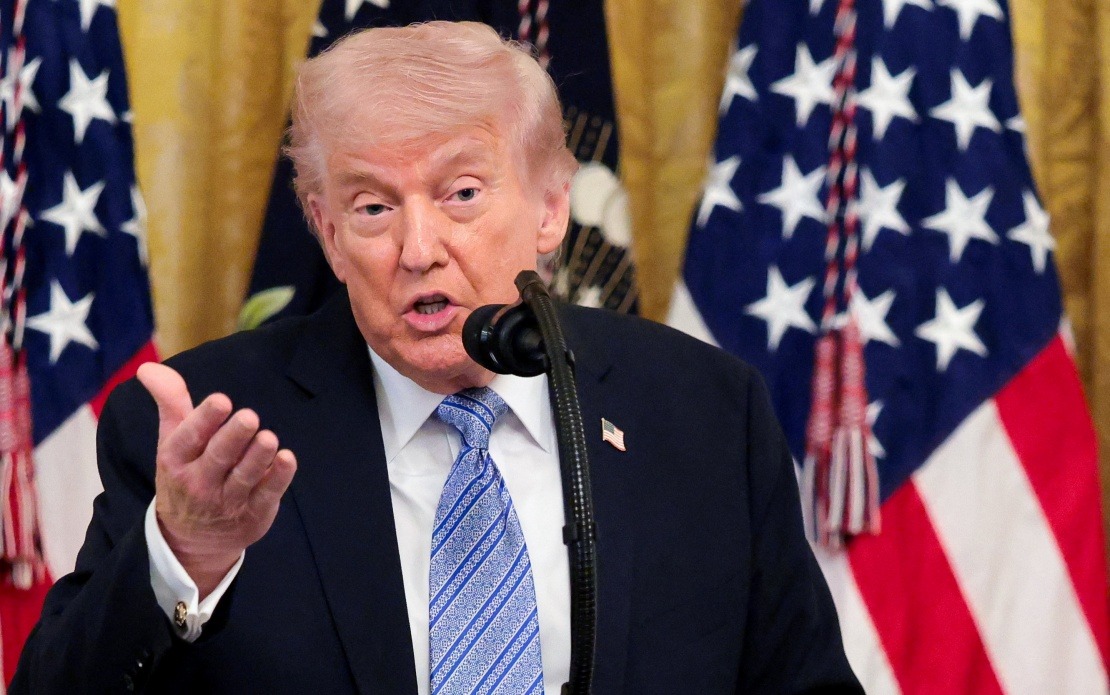
President Donald Trump has expressed interest in backing FIFA President Gianni Infantino as the next secretary-general of the United Nations, according to reports from the New York Post. The unconventional proposal represents a significant shift in how the Trump administration views the highest-ranking diplomatic position in the world, signalling a preference for leadership outside traditional political circles.
Trump's rationale for supporting the 56-year-old Swiss-born football executive rests on the belief that Infantino possesses a unique talent for diplomatic bridge-building. According to sources close to the president, Trump sees the FIFA chief as someone "respected by everyone around the world" and values his demonstrated capacity "to bring people together." This assessment reflects Trump's broader frustration with conventional institutional approaches to resolving international disputes, a sentiment he has repeatedly expressed regarding the UN's effectiveness in addressing contemporary global conflicts.
The relationship between Trump and Infantino has developed notably in recent months, particularly during this year's World Cup when the FIFA president made deliberate overtures toward cultivating a closer partnership with the American leader. A symbolic milestone in their growing ties came in December when Infantino presented Trump with FIFA's inaugural Peace Prize, a gesture that underscored the football executive's strategic positioning within Trump's orbit. This trophy presentation served as both a diplomatic courtesy and a calculated investment in maintaining influence with an incoming US administration.
The timeline for this potential transition is significant. Under the UN Charter's Article 97, a new secretary-general would commence a five-year term beginning January 1, 2027, replacing the current incumbent Antonio Guterres. This succession process follows established international protocols that have governed UN leadership appointments for decades, creating a formal framework within which any unconventional candidacy must navigate.
Securing the secretary-general position entails navigating complex institutional approval mechanisms that demand broad international consensus. The UN Security Council, comprising 15 member states with five permanent members holding veto power, must first recommend a candidate to the General Assembly. This dual-approval structure means that Infantino would require backing not only from the Trump administration but also from Russia, China, France, and the United Kingdom—a diplomatic achievement that would represent a dramatic feat of consensus-building in an increasingly fragmented international landscape.
Trump's interest in reshaping UN leadership reflects his broader dissatisfaction with the organization's performance during his first administration and his current tenure. The president has consistently critiqued what he perceives as the UN's inadequacy in proactively resolving major international crises, from conflicts in the Middle East to ongoing regional tensions. This criticism extends beyond rhetoric; Trump has implemented concrete measures to reduce American financial contributions to the organization and orchestrated withdrawals from various UN-affiliated bodies, including the World Health Organization.
The establishment of a US-led Board of Peace last year sparked considerable speculation about whether Trump intended to create a parallel diplomatic mechanism to supplant traditional UN structures. Such moves suggested the administration was developing alternative frameworks for negotiating settlements, particularly regarding the Israeli-Palestinian conflict and other contentious disputes. Though Trump subsequently denied these assertions, the pattern of actions demonstrated his willingness to circumvent established institutions when he deemed them ineffective.
Infantino's potential candidacy would represent a remarkable departure from historical precedent in UN secretary-general selections. Predecessors have typically emerged from diplomatic or political backgrounds, with experience navigating state-to-state relations and international governance structures. The FIFA president's professional track record centres on managing a global sports organization, albeit one with significant political dimensions and extensive international engagement. His mandate has involved mediating disputes between national football associations, navigating diverse geopolitical interests, and maintaining the World Cup as a genuinely global event.
For Southeast Asian nations and Malaysia specifically, this development carries implications worth examining. The region has long valued a UN Secretary-General perceived as genuinely neutral and focused on advancing the interests of developing nations. The current system, while imperfect, maintains traditional power-balancing mechanisms that prevent any single nation from unilaterally imposing leadership preferences. An unconventional appointment process championed primarily by the United States could establish concerning precedents for institutional capture, potentially undermining the UN's claimed universality and impartiality.
Moreover, Infantino's profile suggests potential vulnerabilities in championing global causes with particular salience to Asia and Africa. While FIFA has expanded its footprint internationally, the organization has simultaneously faced persistent criticism regarding governance standards, corruption allegations, and the treatment of migrant workers in host nations—issues that resonate deeply across developing regions. These controversies could complicate his ability to command moral authority in advancing development agendas or human rights initiatives that concern non-aligned nations.
The diplomatic landscape surrounding this proposition remains uncertain. China and Russia, which retain veto power within the Security Council, have not signalled positions regarding an Infantino candidacy. Their perspectives will prove decisive, regardless of American advocacy. Additionally, the broader membership of the General Assembly may resist what could be perceived as American pressure to install a non-traditional candidate without robust international consultation and consensus-building.
If realized, this appointment would fundamentally alter expectations regarding UN leadership qualifications and selection processes. It would signal that administrative competence in managing global organizations and perceived diplomatic skills matter more than traditional credentials in international relations. Conversely, the proposal's ultimate failure would reaffirm the institutional constraints limiting even powerful nations' ability to reshape international governance unilaterally—a reality that shapes regional security dynamics across Asia.

