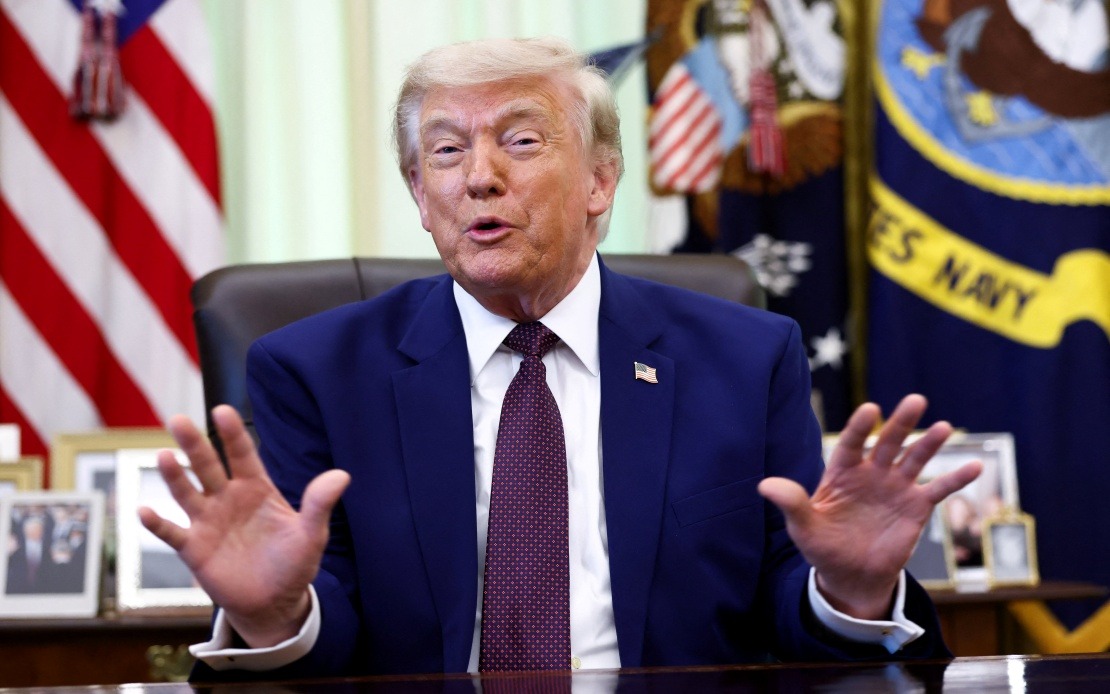
Donald Trump has intensified pressure on Republican senators to expedite the passage of the SAVE America Act, a legislative initiative designed to strengthen voter registration requirements across federal elections. Speaking through his Truth Social platform, the US president expressed urgency about moving the controversial voting measure through Congress before lawmakers depart for their August recess, signalling that his administration views the legislation as a priority that cannot wait beyond the coming legislative pause.
White House Press Secretary Karoline Leavitt recently indicated that Trump's confidence in Senate Majority Leader John Thune may be waning, suggesting the president's impatience with the legislative pace has reached a critical point. This public expression of frustration appears designed to galvanise Republican senators who may harbour reservations about the proposed changes, while simultaneously signalling to Thune that delays carry political consequences within the administration.
At the heart of Trump's legislative agenda lies the SAVE (Safeguard American Voter Eligibility) America Act, which would mandate that voters present either a passport or birth certificate when registering to participate in federal elections. The requirement represents a significant tightening of current voting access procedures, as many states presently allow citizens to register without such documentary evidence, a flexibility that election administrators have long defended as practical and administratively sound.
Republican supporters frame the legislation as a protective measure designed to prevent foreign nationals and undocumented immigrants from registering to vote in federal contests. Proponents argue that the identification requirement addresses vulnerabilities in the current system, though critics contend the measure could disenfranchise eligible voters who lack readily available documentation. The debate reflects broader ideological disagreements between Republicans and Democrats regarding the balance between election security and voting accessibility.
Trump's strategic approach involves invoking what he characterises as Democratic procedural ruthlessness. The president argues that Democrats would unhesitatingly abolish the Senate filibuster—the procedural mechanism requiring 60 votes to advance legislation—if they controlled both chambers and encountered Republican opposition to their priorities. This argument frames the filibuster's abolition as a preemptive defensive measure rather than an unprecedented institutional change, positioning Republicans as acting first to protect their legislative agenda from future Democratic reversal.
The filibuster has traditionally served as a brake on majoritarian legislative power in the Senate, requiring broad bipartisan consensus for most bills. Trump's call to dismantle it for Republican objectives represents a continuation of escalating institutional tensions that intensified during previous administrations, when both parties have periodically sought to eliminate the rule for matters deemed sufficiently consequential. The current push suggests Trump views voting legislation as sufficiently central to his political objectives to justify such a dramatic procedural manoeuvre.
Beyond the SAVE America Act itself, Trump's ultimatum encompasses broader legislative goals including federal budget passage and raising the debt ceiling. By bundling multiple priorities into his filibuster argument, the president signals that Republican senators face pressure on multiple fronts to demonstrate loyalty and legislative productivity. The timeline pressure—passage before August recess—effectively narrows the window for deliberation or negotiation, a tactic designed to prevent procedural delays that might allow opposition to coalesce.
For Malaysian and Southeast Asian observers, this American legislative struggle underscores how democratic institutions remain contested terrain even in established democracies. The debate over voter identification requirements, electoral access, and procedural rules reflects fundamental disagreements about democratic principles that resonate internationally. Similar tensions between election security and voter accessibility have emerged in various forms across the region, from discussions of postal voting procedures to debates over voter registration standards.
The episode also illustrates the relationship between executive and legislative branches in presidential systems, particularly when a president commands significant influence over his party's senators. Trump's public pressure on Republican colleagues demonstrates how modern presidents leverage media platforms and factional loyalties to advance specific legislative goals, techniques increasingly visible across democratic systems. The underlying question—whether voting access should expand or contract—remains deeply contested and reflects divergent visions of democratic participation.
The Republican Party's apparent receptiveness to Trump's calls for procedural change, despite the precedent-setting nature of such moves, suggests that party cohesion around voting legislation has become sufficiently strong to override institutional conservative instincts. This alignment indicates that voting access has become a partisan flashpoint where both sides view fundamental principles as at stake, making compromise and incremental approaches increasingly difficult to achieve.

