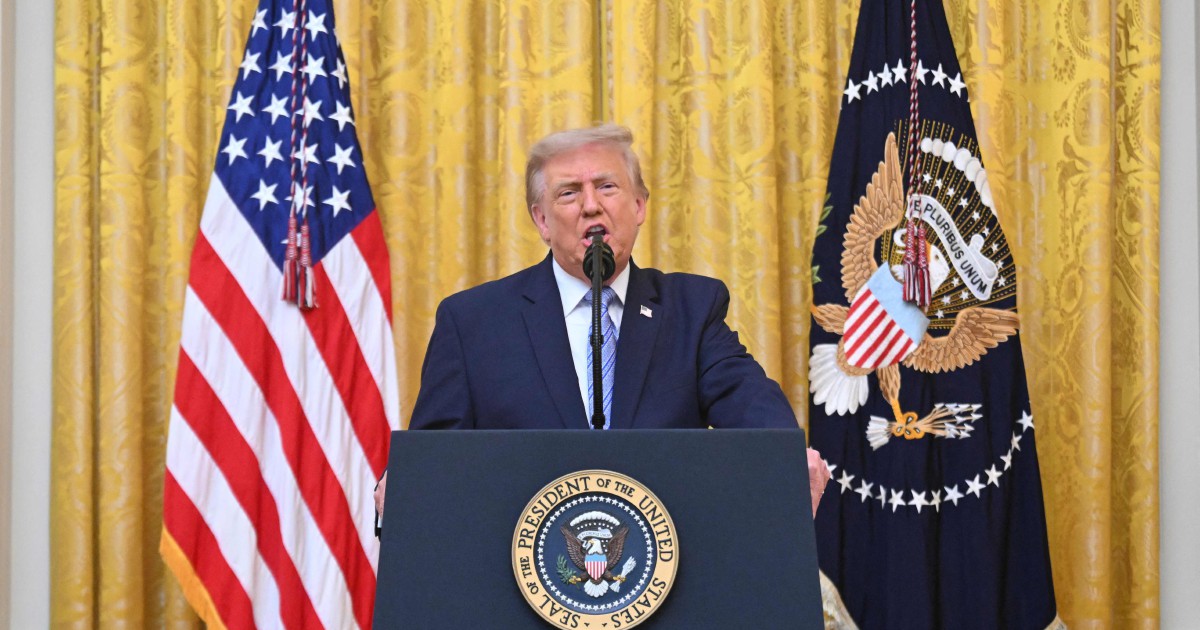
US President Donald Trump has once again returned to allegations of widespread fraud and foreign interference connected to the 2020 presidential election, reasserting claims that have been comprehensively examined and rejected by election officials, courts, and independent fact-checkers. During remarks delivered on Thursday, Trump alleged that China orchestrated the theft of millions of voter files and suggested Venezuela possessed the capability to tamper with American voting machines. These contentions form part of a pattern of election-related statements that the president has continued to advance despite extensive judicial and administrative scrutiny.
The allegations concerning Chinese theft of voter information and Venezuelan interference represent among the most serious charges Trump has levelled against foreign actors in connection with US electoral processes. Such claims carry significant geopolitical implications and touch on fundamental questions about national security and the integrity of democratic institutions. However, election officials and cybersecurity experts have found no credible evidence supporting the specific assertions about either nation's involvement in manipulating the 2020 election outcome.
For Malaysian and Southeast Asian observers, Trump's continued promotion of these unverified claims warrants attention for several reasons. The rhetoric surrounding election interference demonstrates how political leaders in democratic systems grapple with questions of legitimacy, foreign intervention, and institutional trust. In the region, where concerns about election integrity and foreign influence have featured prominently in recent political discourse, understanding how major democracies address such allegations provides instructive parallels and contrasts.
The 2020 US election witnessed unprecedented scrutiny from multiple quarters, including the Trump administration itself, which launched investigations through various federal and state agencies. The Department of Homeland Security's election security division declared the election "the most secure in American history," a conclusion endorsed by Republican and Democratic election officials alike across contested states. Despite this official assessment, Trump has maintained his position that systematic fraud occurred, with his latest comments representing a continuation of rhetoric that has persisted for years following the election.
Venezuela's alleged involvement in US voting systems represents a particularly notable dimension of Trump's claims. The assertion that Venezuelan technology could influence American elections has circulated in certain political circles but lacks substantiation from credible cybersecurity assessments or election security professionals. Such claims also reflect broader geopolitical tensions between the United States and Venezuela, where political animosity predates recent election disputes.
China-related election interference allegations, meanwhile, touch on broader US-China tensions that span trade, technology, and security domains. While foreign interference in elections remains a legitimate concern that governments worldwide take seriously, specific allegations require rigorous evidence and methodology to distinguish genuine threats from unsubstantiated claims. Intelligence assessments regarding actual Russian interference in the 2016 election differed markedly from conclusions about 2020, suggesting that different campaigns may have encountered varying levels of foreign adversary activity.
Trump's reiteration of these claims reflects a phenomenon observed in democracies where political figures continue advancing disputed narratives despite contradictory findings from official investigations and independent analyses. Election officials from Trump's own party, including those in Republican-controlled states, certified results after detailed audits and verification procedures. Several court cases challenging election outcomes were dismissed by judges appointed across the political spectrum, indicating that legal scrutiny did not support fraud allegations at scales sufficient to alter results.
The Malaysian context offers instructive comparison points. Malaysian elections have faced questions about integrity and foreign interference, with public discourse often reflecting anxieties about electoral fairness and external manipulation. How regional democracies evaluate and communicate findings regarding election security differs from the American approach, yet all democratic systems share fundamental interest in public confidence in electoral processes. The challenge facing leaders involves distinguishing between genuine security concerns and politically motivated narratives that undermine institutional legitimacy.
Fact-checking organisations and election security specialists have systematically examined Trump's election-related allegations and documented their lack of evidentiary basis. However, the persistence of these claims among segments of the American public demonstrates how political narratives, once established, prove difficult to dislodge through factual correction alone. This phenomenon has implications beyond the US, as misinformation and contested election narratives increasingly feature in political contests globally.
Trump's continued assertion of these claims occurs within a context where questions about US electoral reliability have received international attention, with some observers noting how domestic political disputes can affect America's credibility in international discussions about democratic governance and election integrity. For countries in Southeast Asia and beyond that look to established democracies as models for institutional development, such internal disputes raise questions about resilience within democratic systems.
The broader significance of Trump's statements extends beyond the specific allegations toward what they reveal about the contemporary political environment in the United States. The willingness of a former and current president to repeatedly advance claims rejected by his own election security officials, courts, and fellow partisans suggests deep structural challenges in how political truth is established and maintained within democratic discourse. These developments warrant attention from regional observers interested in understanding how major democracies navigate polarisation and institutional trust.
Moving forward, the question remains how American institutions will manage persistent challenges to electoral legitimacy that lack factual foundation. The approach taken by election officials, courts, and media in responding to unsubstantiated claims will likely influence international perceptions of American democracy's robustness. For Malaysia and Southeast Asian nations, the American experience demonstrates both the challenges that democracies face in protecting institutional credibility and the mechanisms available for systematic verification of electoral outcomes.

