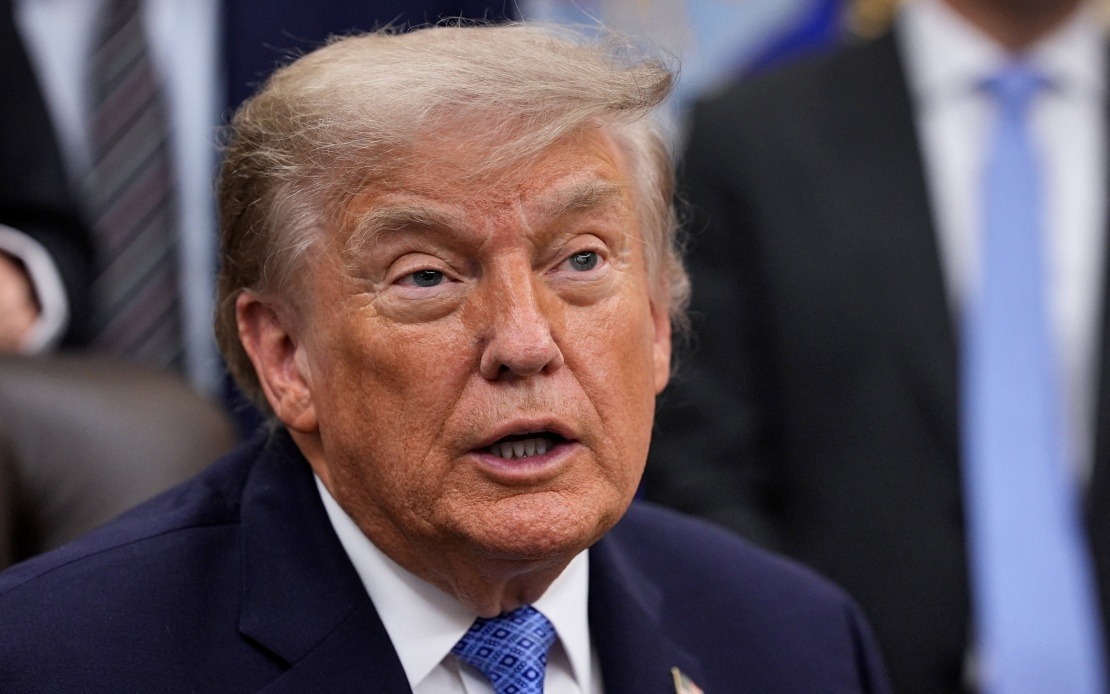
President Donald Trump has escalated tensions with Canada over transnational air pollution, leveraging trade policy as a weapon in a dispute over wildfire management. On Friday, Trump used his Truth Social platform to accuse Canada of allowing hazardous smoke to drift across the border, declaring that the environmental cost should translate directly into higher tariffs on Canadian goods already subject to US duties.
The diplomatic friction stems from a significant wildfire crisis spanning the Canadian province of Ontario and the northern American state of Minnesota. Dozens of active fires across this border region have created a dense haze that has blanketed much of North America's northeastern corridor, affecting quality of life and air quality across major population centers including Toronto, Chicago, Detroit, and Washington. In New York City specifically, visibility deteriorated markedly, with residents reporting the pervasive smell of smoke lingering throughout the urban environment.
Trump's response characterizes the situation as a failure of Canadian forest management practices. He argued that inadequate maintenance of Canadian forests and insufficient removal of brush and forest debris have directly contributed to the proliferation and severity of these wildfires. This framing positions the blame squarely on Canadian authorities for what Trump describes as allowing the United States to be "unnecessarily invaded by filthy, polluted, and unhealthy air," language that reflects his typically confrontational rhetorical style when dealing with cross-border issues.
The president indicated his intention to contact Prime Minister Mark Carney directly to demand clarity on Canadian government plans to address the crisis. By framing the pollution as an economic burden to the United States, Trump has signaled that he views this as a matter warranting retaliatory trade measures. This approach reflects his broader willingness to employ tariffs as a negotiating tool across multiple policy domains, from traditional trade disputes to environmental and public health matters.
However, scientific consensus presents a markedly different explanation for the intensifying wildfire crisis across North America. Peer-reviewed research consistently links the increase in wildfire frequency, severity, and geographic spread to climate change rather than to forest management alone. Rising temperatures, extended dry seasons, and altered precipitation patterns create conditions where wildfires ignite more readily and spread more rapidly across forested regions. This evidence-based perspective complicates Trump's framing of the issue as a straightforward matter of Canadian negligence.
Ontario Premier Doug Ford responded to Trump's criticism by shifting the discourse toward cooperation rather than confrontation. Ford emphasized that environmental disasters respect no political boundaries and that assistance should flow in both directions across the border. He noted that Ontario and the broader Canadian federation have previously mobilized resources to assist American communities facing natural disasters, implicitly arguing that reciprocal support during Canada's crisis hour should be the expected response from a neighboring ally rather than tariff threats.
The conflict underscores the complex relationship between transnational environmental challenges and trade relationships. Wildfire smoke and air pollution demonstrate that ecological problems do not conform to political boundaries, yet governmental responses often reflect existing geopolitical tensions and trade friction. For regional observers in Southeast Asia, this dynamic offers instructive parallels, as countries throughout the region frequently grapple with transboundary haze from Indonesian forest fires, highlighting how environmental cooperation can become entangled with trade and diplomatic relations.
Trump's tariff threat also reflects a broader pattern in his approach to international relations, wherein traditional policy instruments are repurposed to address grievances that might typically fall outside conventional trade negotiations. By attempting to weaponize tariffs in response to air quality concerns, he demonstrates how boundary disputes between political and economic policy can blur during periods of heightened nationalism and protectionism.
The timing of this dispute carries additional significance given the already strained Canada-US relationship under Trump's current administration. Trade tensions have periodically erupted into open conflict, and environmental issues have not traditionally commanded priority in negotiations between the two nations. The introduction of wildfire pollution into this calculus potentially expands the scope of bilateral grievances and complicates efforts to reach broader trade agreements or cooperative frameworks.
Looking forward, the dispute illustrates the vulnerability of border regions to environmental crises that demand coordinated international response. Whether Trump follows through on tariff increases or whether negotiation channels produce collaborative solutions will likely set precedent for how the two nations address future transnational environmental challenges. For Canada, the situation presents a delicate balance between defending its environmental record and acknowledging legitimate concerns about transboundary pollution while resisting what it may view as leveraging natural disasters for trade advantage.

