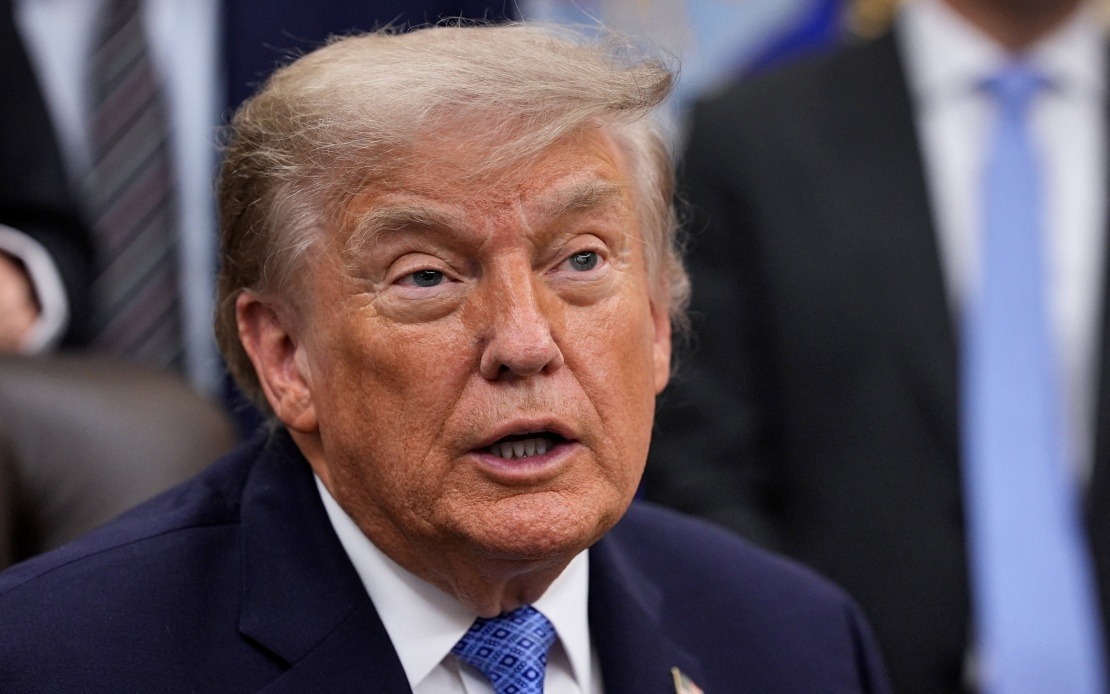
United States President Donald Trump is set to broadcast a nationally televised address on Thursday evening at 9 pm Eastern Time (0100 GMT Friday), according to an announcement posted on his Truth Social account. The timing slots Trump into one of American television's most coveted broadcast windows, traditionally reserved for moments when a sitting president needs to communicate directly with the nation on matters of substantial consequence or national importance.
The substance of Thursday's remarks remains shrouded in uncertainty. The White House has not disclosed what specific topics the president intends to address, leaving observers and commentators to speculate about which pressing issue prompted the prime-time slot. This silence is notable given the array of urgent matters commanding American political attention at present.
One prominent possibility centres on the deteriorating situation in Iran, which has dominated US news cycles for several months. Recent escalations in the conflict have reignited concerns about regional stability and direct American involvement, concerns that carry immediate domestic implications. Energy markets have reacted nervously to mounting tensions, with petrol prices climbing as traders factor in supply risks. An address tackling Iran policy would allow Trump to present his administration's position directly to American households grappling with higher fuel costs at the pump.
For Southeast Asian readers and businesses with exposure to US markets and global energy prices, the Iranian dimension carries particular weight. Malaysia and the region rely heavily on stable energy supplies and open shipping lanes through the Strait of Hormuz. Any significant shift in US policy toward Iran could reshape energy costs and geopolitical calculations across Southeast Asia, making Trump's potential remarks on this subject a matter of genuine regional concern.
This represents Trump's second major televised address since commencing his second presidential term in January 2025. His previous prime-time speech came in December, when mounting domestic political pressure compelled him to mount a defence of his economic record before the American public. That earlier address signalled Trump's willingness to deploy the bully pulpit to manage political narratives during challenging moments, a pattern that may recur on Thursday.
The timing of Thursday's address carries particular electoral significance. The speech occurs roughly four months before crucial midterm elections, a contest that will reshape congressional composition and determine whether Trump's Republican Party can consolidate power or faces erosion of support. Recent polling has presented a mixed picture for Republicans, with some surveys showing vulnerability in key races. A prime-time address allows Trump to potentially recalibrate public perception and energise his political base during a critical phase of the electoral cycle.
For international observers, the address offers a window into Trump's thinking at a pivotal moment in his presidency. Second-term presidents often face different political dynamics than first-term executives; the constraints of reelection ambitions fade, yet midterm performance can establish momentum for legislative initiatives. Trump's choice of topic and rhetorical approach will signal whether his administration intends to pivot toward new priorities or double down on existing controversies.
Prime-time presidential addresses represent a distinctive feature of American political communication. Networks typically preempt regular programming to carry such speeches, guaranteeing a substantial viewing audience and ensuring that the president's message receives widespread initial dissemination. The symbolic weight attached to occupying such a time slot means that Trump's decision to utilise it carries its own message, regardless of the specific content delivered.
The lack of advance disclosure about the address's subject matter is itself noteworthy. In some cases, administrations use the days before a major speech to seed information through friendly media outlets, building anticipation and framing the narrative context. Trump's apparent decision to maintain opacity suggests either genuine uncertainty about final messaging, deliberate strategy to maximise surprise impact, or a last-minute decision to address an unfolding crisis rather than a carefully choreographed announcement.
For Malaysian policymakers and business leaders tracking US political developments, Thursday's address merits close attention. American presidential decisions on foreign policy, trade, energy, and economic matters create ripple effects across regional economies. The combination of ongoing Iran tensions, approaching midterm elections, and an unconfirmed speech topic suggests that significant policy signals may be forthcoming. Monitoring the address and subsequent market reactions will prove essential for organisations with substantial exposure to US policy changes or global energy and financial markets influenced by presidential pronouncements.

