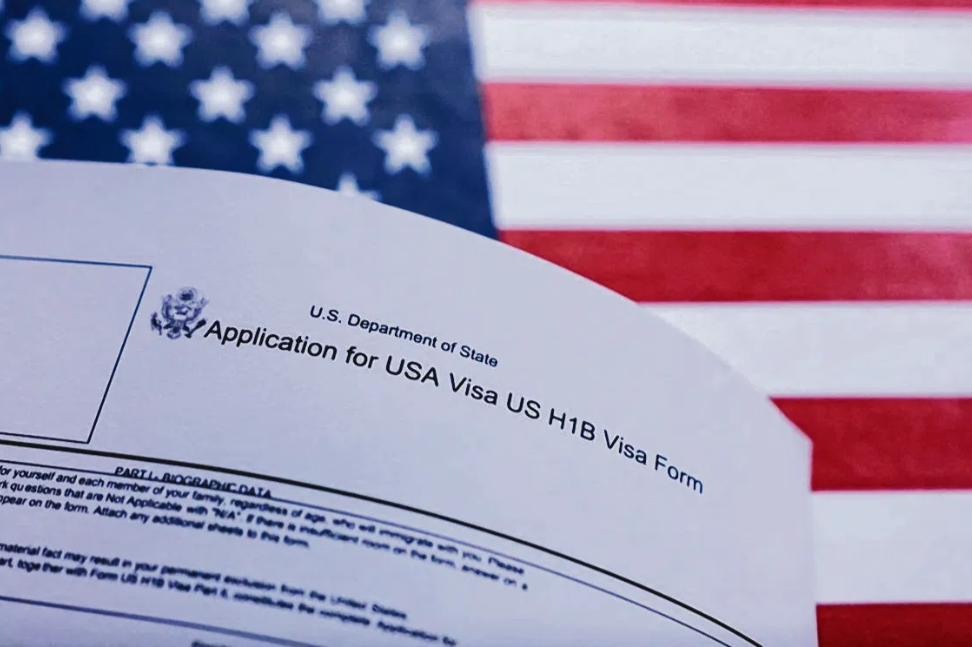
The Donald Trump administration's aggressive restrictions on H-1B temporary work visas are triggering an unprecedented reversal in global technology talent flows, with growing numbers of skilled professionals from India and China abandoning American employment to return home. This shift represents a fundamental realignment in how multinational tech firms access talent and signals a recalibration of the once-magnetic pull of the American Dream for foreign-born knowledge workers seeking stability and opportunity.
The turning point came when uncertainty over visa costs and employment security became intolerable for workers who had invested years building lives and careers in the United States. Take the case of Deepak, a 44-year-old technology professional who spent 15 years in America before deciding in May to uproot his family, selling two houses and relocating to Kerala with his wife and two children carrying only five bags. His departure was not driven by a lack of employment prospects—he secured another tech role within months of a layoff in October—but rather by the psychological and practical toll of perpetual immigration jeopardy. The anxiety of knowing his H-1B status could become precarious if he failed to secure employment within 60 days proved more exhausting than the prospect of starting anew in India.
The Trump administration's fee proposals have created chaos across the American tech industry's hiring ecosystem. When the administration announced a US$100,000 application fee for new H-1B visas—a figure 25 times higher than the prevailing rate—confusion rippled through major corporations unsure whether the surcharge would apply to visa transfers and renewals alongside new applications. Although a federal judge struck down this particular policy as unlawful in June, the administration has persisted with its restrictive agenda, proposing a separate US$4,000 surcharge beginning September for H-1B extensions and renewals. This layering of financial disincentives has poisoned the well for employers considering overseas recruitment, making it significantly more expensive and administratively burdensome to hire skilled foreigners compared to prior decades.
The empirical evidence of this talent drain is becoming undeniable. Data compiled by Xpheno, a Bengaluru-based talent consulting firm, reveals that approximately 15,100 Indian professionals returned to India in 2025, compared with 9,800 in 2024—a 54 percent year-on-year increase. The pace has only accelerated, with 7,300 returnees already recorded in the first months of 2026. While equivalent statistics for Chinese professionals remain harder to quantify, China's Ministry of Education reported that 536,000 students returned to China in 2025 following graduation, representing an 8.3 percent increase from the previous year and pointing to a broader erosion of America's appeal as a destination for ambitious Asian talent.
This outflow directly correlates with declining H-1B visa petition approvals at America's largest technology employers. Analysis of US Citizenship and Immigration Services data shows that H-1B petitions approved for the top 100 employers—including Amazon, Infosys, TCS, Apple, and Microsoft—are tracking toward a drop exceeding 10 percent in fiscal year 2026 compared with 2025. This contraction occurs precisely when American corporations face mounting pressure from restructuring driven by artificial intelligence adoption, hiring freezes triggered by market uncertainty, and mass layoffs that have eliminated positions held by both foreign and domestic workers. Meta, Visa, Amazon, and numerous other technology leaders have terminated thousands of employees in recent months, compressing available positions while simultaneously signaling to visa-dependent workers that stability in the American tech sector has evaporated.
The predicament facing current H-1B visa holders has become increasingly desperate. Carrie, a Chinese national working as a data analyst in the American Midwest, found herself effectively unemployable after her employer issued a termination notice in June. Despite being in her third year of H-1B status, she began an exhausting job search sending up to 30 applications daily, eventually tapering to five per day as she cycled through every company willing to sponsor foreign workers. The mathematical reality confronting her and thousands of peers is unforgiving: she must secure new employment before her visa expires at the end of August or face forced departure. Yet the marketplace has effectively shut its doors to foreign applicants, with one anonymous technology professional at a major German software company observing that only exceptionally skilled foreigners are clearing hiring thresholds in a labor market saturated with technology talent but constrained by visa sponsorship reluctance.
Indian and Chinese nationals comprise roughly 82 percent of the entire H-1B visa pool—approximately 70 percent Indian and 12 percent Chinese—with the overwhelming majority concentrated in technology roles. These nationalities have historically represented America's largest, most educated, and highest-earning immigrant communities, yet they are increasingly becoming targets of social hostility. Reports from the AAPI Equity Alliance document intensifying racist attacks and online harassment directed at Indian and Chinese professionals, a climate that compounds the practical disincentives of visa uncertainty and layoffs. For many contemplating whether to persevere through deteriorating conditions or return home, these hostile social currents have become a final deciding factor.
The surge in returns to India is creating unforeseen opportunities in the country's rapidly expanding technology infrastructure. Global Capability Centres—multinational offices that function as captive operations for companies like Google, Amazon, and Microsoft—now number approximately 2,000 across India and have collectively recruited roughly 100,000 employees annually since 2023. Xpheno's research indicates that the top 125 such centres absorbed around 7,000 mid and senior technology professionals with over a decade of experience within the past 12 months, including 2,800 returning from the United States. Consultant Nupur Dave, who has guided thousands of overseas Indian technology workers through repatriation, reports unprecedented momentum, with returnees demonstrating greater willingness to leave than in any previous period, despite enduring years of psychological investment in American careers.
However, returning professionals face sobering economic realities that temper the relief of escaping American visa precarity. Returnees lacking specialized expertise in data science or artificial intelligence typically command smaller compensation packages than their American equivalents, reducing the financial advantage of overseas work. The job market values returning professionals primarily on the basis of specialized technical skills rather than experience accumulated in the American context, creating a form of credential devaluation that complicates reintegration despite acute labour shortages in India's technology sector.
Some returnees are seizing the unexpected opportunity to contemplate alternatives to corporate technology careers. Ram, a 38-year-old product manager who spent nine years in Connecticut before returning to Bengaluru in early 2025 with his wife and toddler, has deliberately stepped outside the employment market to reassess his professional direction. Drawing on accumulated savings, he is evaluating whether to continue in product management, launch an entrepreneurial venture, or pursue entirely different pursuits such as agriculture. His situation captures an unconventional silver lining to the forced repatriation trend: for some, the termination of precarious visa status has paradoxically created freedom to question choices made within the constraints of American work visas, where career continuity and visa maintenance pressures typically foreclose meaningful reflection.
The reversal of talent flows carries significant implications for Southeast Asian technology hubs and regional innovation ecosystems. If thousands of experienced engineers and technology leaders departing America establish themselves in India, China, or neighbouring markets, they will bring accumulated expertise, professional networks, and capital that could accelerate technological development outside the United States. Malaysia, Singapore, and other regional economies competing for technology talent and investment may discover that American-trained professionals formerly locked into US employment are now available for regional opportunities. Simultaneously, the contraction of H-1B-dependent American corporations' capacity to absorb international talent may redirect recruitment toward other English-speaking markets with less restrictive immigration policies, potentially benefiting countries like Canada and Australia while hastening America's relative decline as a global talent magnet.

