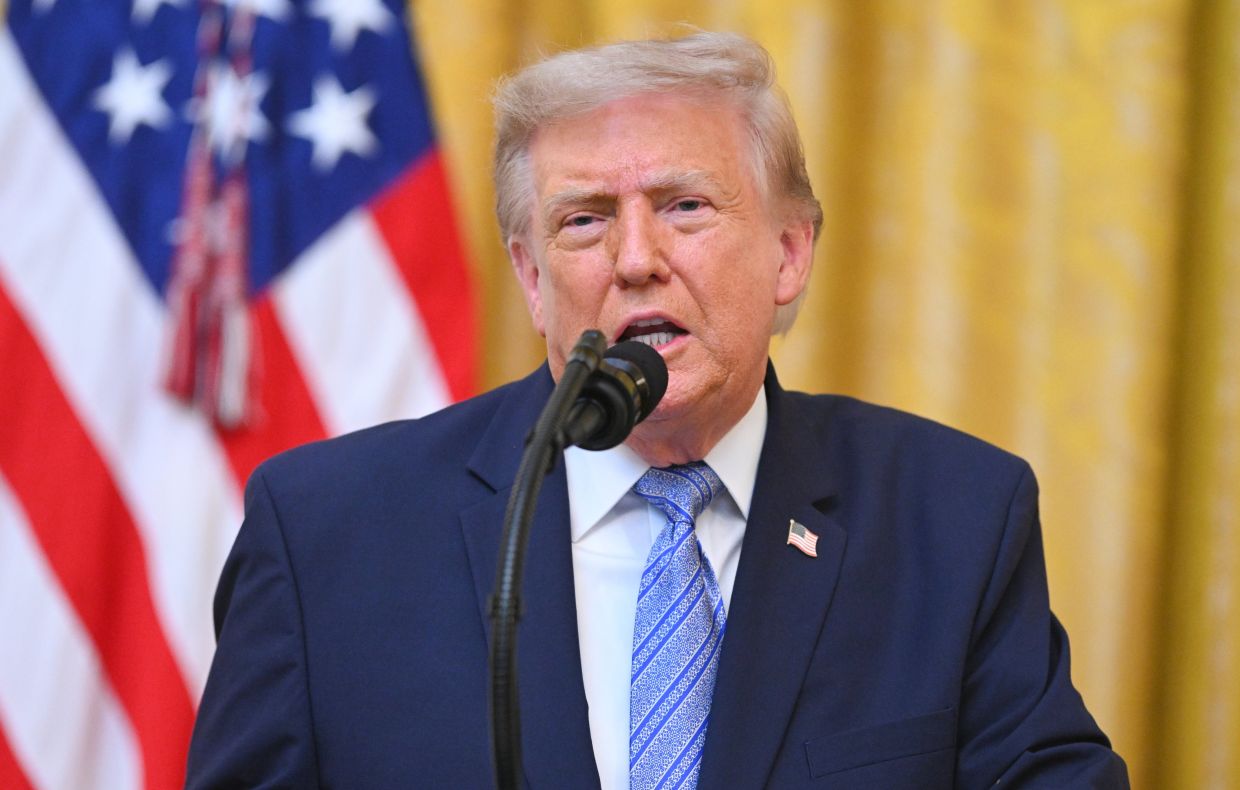
President Trump delivered one of his most aggressive White House speeches in his second term, weaving together accusations of Chinese electoral sabotage with escalating geopolitical tensions and calls for sweeping voting reforms. The address, positioned as a defining statement on national security and democratic integrity, represented a significant hardening of the administration's stance toward Beijing while simultaneously pressing a domestic political agenda centred on election rules ahead of crucial midterm contests. The confrontational tone signalled a departure from previous diplomatic restraint, with the president framing both international and domestic challenges through the lens of protecting American interests from external and internal threats.
At the heart of Trump's speech was an extraordinary claim that China orchestrated what he described as the largest compromise of electoral data in American history. The allegation, presented as a critical national security crisis, served as the cornerstone of his argument for immediate action against Beijing. Trump positioned this assertion not merely as a technical breach but as a deliberate attack on the foundation of American democracy itself, suggesting that foreign adversaries had gained access to sensitive voter information that could be weaponised against US interests. The framing transformed cybersecurity concerns into a narrative of existential threat, lending urgency to his broader policy prescriptions.
Beyond the realm of data security, Trump extended his accusations to encompass what he characterised as a sophisticated influence operation targeting American elites. He claimed that Chinese state actors had deliberately worked to sway influential business leaders and prominent journalists toward positions hostile to his administration. This allegation introduced a new dimension to the traditional debate about foreign interference, suggesting not merely propaganda campaigns or social media manipulation but targeted recruitment or persuasion of American opinion-shapers. The narrative implied a coordinated strategy designed to undermine confidence in his leadership among constituencies that might otherwise prove sympathetic.
The president's accusations further alleged that China's interference in electoral processes represented a systematic and enduring threat specifically calibrated to ensure his political defeat. Rather than describing electoral interference as a general destabilisation effort, Trump contended that Chinese efforts had been deliberately concentrated on undermining his first term in office. This personalisation of the threat narrative connected Beijing's alleged activities directly to his political survival, framing national security concerns through an explicitly partisan lens that blurred distinctions between defending democratic institutions and defending his own electoral prospects.
Domestically, Trump pivoted toward championing voting reforms that he positioned as essential safeguards for electoral integrity. His emphasis on these measures, presented as urgent responses to demonstrated vulnerabilities and documented instances of fraud, formed the second major theme of his address. The president repeatedly invoked concerns about the security and legitimacy of the electoral process, using these anxieties to build support for structural changes to voting procedures. This domestic focus served to connect his international security warnings about Chinese interference to his legislative agenda, suggesting that meaningful election protection required both confronting foreign adversaries and implementing specific voting rule changes.
Among the specific reforms Trump championed were voter identification requirements and proof of citizenship provisions, anchored within the framework of the SAVE America Act. These proposals, long contested in American politics, took on heightened significance within the context of his broader security narrative. By linking voting security reforms to documented foreign interference, Trump sought to reframe longstanding partisan debates about ballot access as objective responses to genuine threats rather than as contested policy disagreements. The connection between electoral vulnerability and voting procedure changes formed a core rhetorical strategy throughout the address.
Trump's warnings about Chinese ambitions extended substantially beyond the electoral realm, encompassing broader geopolitical competition and military preparedness. His assertion that an era of American complacency toward Beijing had concluded signalled a fundamental reorientation of administration priorities toward confrontation rather than engagement. The speech positioned China not merely as a current threat but as a strategic competitor whose ambitions required an American response fundamentally different in scale and intensity from previous diplomatic approaches. This wider framing situated electoral interference concerns within a comprehensive reimagining of US-China relations.
The geopolitical component of Trump's address also encompassed heightened tensions with Iran, reflecting a parallel concern about adversarial state behaviour. By bundling together warnings about China, Iran, and domestic electoral vulnerabilities, Trump constructed a comprehensive threat narrative that positioned his administration as the sole defender against converging dangers. The inclusion of Iranian tensions alongside Chinese accusations suggested a view of an interconnected web of adversarial actors and threats requiring aggressive American responses across multiple domains simultaneously.
In a striking demonstration of his willingness to escalate confrontation beyond foreign policy, Trump directed sharp criticism at domestic media institutions. His warning that he was considering revoking broadcast licences for television networks ABC and NBC represented an extraordinary threat to press freedom and regulatory independence. This attack on specific news organisations for their coverage extended his combative posture from foreign adversaries to domestic institutions, suggesting a view that American media organisations had themselves become vectors of opposition to his administration. The threat carried profound implications for press independence and the separation between executive power and regulatory authority.
For Malaysian and Southeast Asian observers, Trump's hardened stance toward China carries significant implications for regional stability and economic relationships. The escalation of US-China tensions over electoral interference and broader competition directly affects the strategic calculations of Southeast Asian nations seeking to balance relationships with both superpowers. Malaysian businesses and policymakers accustomed to navigating delicate diplomatic equilibrium must now contend with an American administration signalling a more confrontational approach toward Chinese activities, from trade and technology to intelligence and influence operations. The regional implications extend beyond bilateral US-China relations to encompass broader questions about technology security, supply chain resilience, and the sustainability of regional economic integration.
The emphasis on voting reforms and electoral security also resonates with regional concerns about democratic resilience and foreign interference in Southeast Asian political processes. Several nations in the region have grappled with allegations of foreign influence and disinformation campaigns affecting electoral outcomes, making Trump's security-focused approach to voting procedures potentially relevant to regional policymaking discussions. However, the specific reforms Trump championed, particularly voter identification and citizenship proof requirements, reflect American political contexts and may have different implications when considered for adoption or adaptation in Southeast Asian democracies with distinct institutional structures and demographic characteristics.
The address ultimately represented a deliberate statement of confrontational intent across multiple domains simultaneously. By connecting allegations of Chinese electoral interference to voting procedure reforms, geopolitical competition, and attacks on domestic media, Trump constructed a comprehensive narrative positioning his administration as defending American democracy and national security against interconnected threats. Whether these characterisations accurately reflect the nature and scope of foreign interference, the efficacy of proposed reforms, or the wisdom of escalated confrontation remains subject to vigorous debate among policy experts, security analysts, and political observers. What remained clear from the address was the administration's fundamental commitment to a more adversarial posture toward China and a willingness to pursue contested domestic policy changes under the banner of security imperatives.

