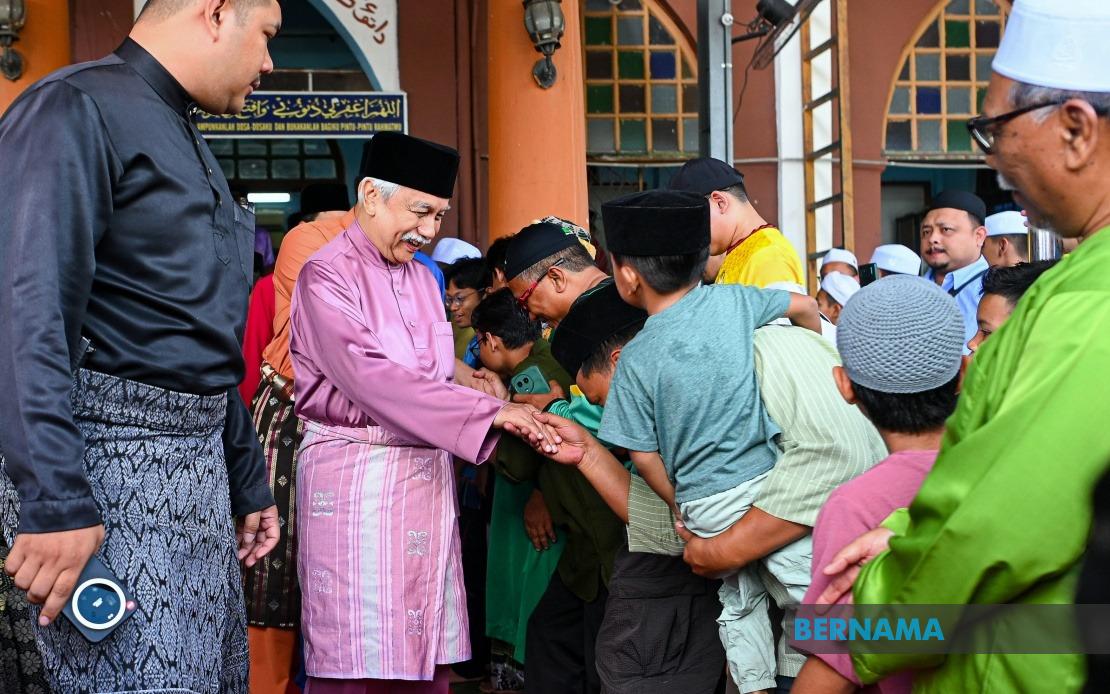
Tuanku Muhriz Tuanku Munawir, the Yang Dipertuan Besar of Negeri Sembilan, attended Friday prayers at Masjid Kariah Pantai in Seremban on July 17, participating in congregational worship alongside more than 500 other Muslims. The occasion underscored the royal family's active engagement with religious observances and community worship in the state, demonstrating the continuing significance of the sultanate in maintaining spiritual leadership across the region.
The Yang Dipertuan Besar was accompanied by his two sons, Tunku Besar Seri Menanti Tunku Ali Redhauddin and Tunku Zain Al-'Abidin, reflecting the family's collective commitment to religious practice and setting an example for the broader Muslim community in Negeri Sembilan. The presence of the royal household at the Friday congregation carries particular cultural and spiritual significance in Malaysian society, where the monarchy holds an important constitutional role in matters of Islam in their respective states.
Several prominent state officials attended the prayers alongside the royal party. Datuk Klana Petra Muhammad Faris Johari, the Undang of Luak Sungei Ujong, and Menteri Besar Datuk Seri Aminuddin Harun were among the dignitaries present, highlighting how religious observance remains a unifying activity that brings together leaders from different levels of state administration. Such collective participation reflects the continued importance of Islam in Negeri Sembilan's governance and public life.
Ahead of the prayers, Imam Amru Zubair Abu Hanifah delivered a Friday sermon that centred on contemporary challenges to faith. The choice of topic suggests pastoral concerns about how Muslims navigate modern pressures and distractions to their spiritual practice. Friday sermons in Malaysian mosques typically address timely issues facing Muslim communities, and this emphasis on protecting faith in the face of contemporary threats points to broader concerns within Malaysia's religious establishment about secularisation and competing worldviews.
Following the conclusion of prayers, Tuanku Muhriz and his sons engaged directly with members of the congregation, spending time in informal interaction and social connection. This direct engagement between the royal family and ordinary worshippers reinforces bonds of accessibility and shared religious identity, moving beyond ceremonial formality into genuine community participation. The willingness of senior members of the state's leadership to mingle with congregants demonstrates an understanding of the mosque as a space for both spiritual practice and social cohesion.
A particularly notable aspect of the event was the presentation of contributions to children who had attended the Friday prayers. This gesture combines religious encouragement with practical support, incentivising young Muslims to participate in congregational worship from an early age. In Malaysia's context, fostering children's engagement with Islamic practice through such visible gestures from respected authority figures helps establish religious habits and cultural identity during formative years, contributing to the intergenerational transmission of Islamic observance.
The gathering at Masjid Kariah Pantai exemplifies how Friday prayers serve multiple purposes in Malaysian society beyond purely spiritual ones. They function as occasions for civic leaders to demonstrate their personal commitment to Islam, for communities to strengthen social bonds, and for religious messaging to reach diverse audiences through the pulpit. The scale of attendance—over 500 congregants—indicates the continued vitality of mosque participation in Seremban and the draw of having distinguished guests present.
For Malaysia and the Southeast Asian region more broadly, such events reflect the enduring significance of Islam in public and political life. Unlike secular democracies where religious observance remains largely private, Malaysia's constitutional framework explicitly recognises Islam as the federation's official religion, with each state's ruler serving as the custodian of Islamic affairs within their territory. The Yang Dipertuan Besar's active participation in mosque activities reinforces this constitutional role and demonstrates how religious leadership and secular governance remain intertwined in Malaysian federalism.
The presence of the Menteri Besar alongside the Sultan's representatives also signals alignment between the state's executive and spiritual leadership on matters of public religious observance. In Malaysian politics, such coordinated appearances by multiple layers of authority at religious events carry symbolic weight, suggesting unity across different branches of state administration on questions of Islamic practice and community welfare. This coordination helps prevent the fragmentation that can sometimes occur when religious and secular authorities operate in divergent spheres.

