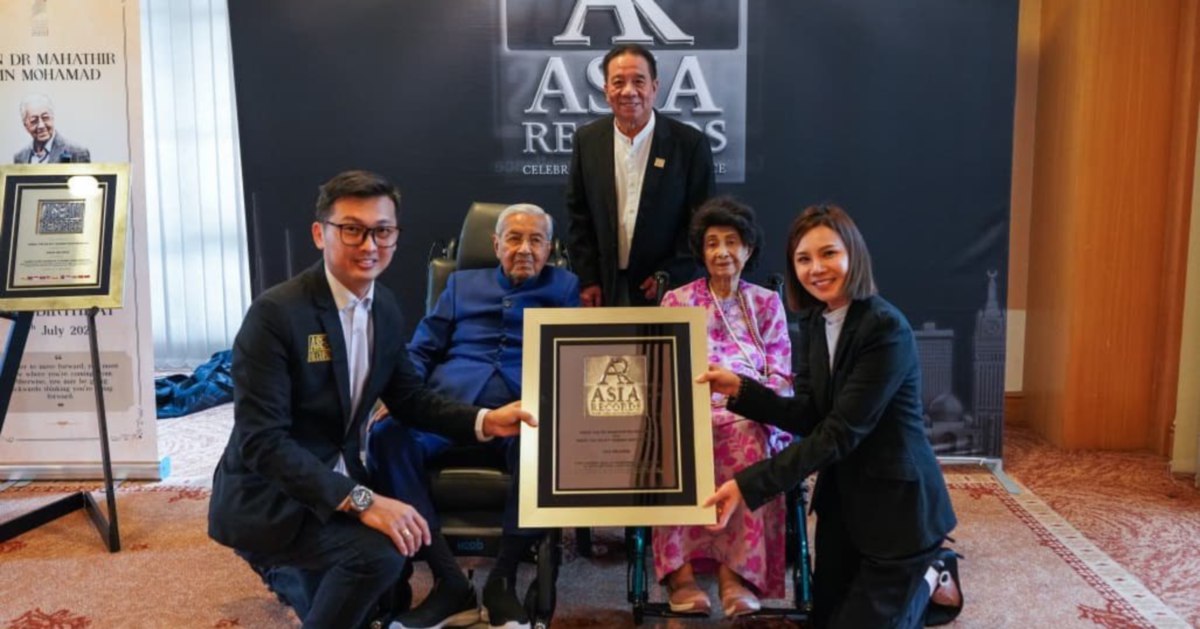
Former prime minister Tun Dr Mahathir Mohamad and his wife Tun Dr Siti Hasmah Mohd Ali have etched their names into the annals of Malaysian history after securing three official records documenting their extraordinary longevity and unprecedented status as a century-old married couple. The recognition underscores a unique milestone in the nation's modern era, reflecting the remarkable health and enduring partnership of two individuals who have witnessed and shaped nearly a century of Malaysian development and change.
The official records acknowledge not merely their individual survival into triple digits—a rare achievement in any nation—but more significantly, their joint milestone as a married couple where both have surpassed the century mark. This distinction carries profound cultural and social significance within Malaysia, where the achievement resonates beyond mere statistical longevity. The records serve as testament to their resilience, lifestyle choices, and the quality of life that has enabled them to remain active participants in public discourse and family life well into their second century.
Tun Mahathir, who served as Malaysia's fourth and seventh prime minister across two non-consecutive terms spanning 24 years, has long been recognised for his formidable intellect and unwavering work ethic. His continuation into his second century whilst maintaining mental acuity and public engagement stands as a remarkable testament to the vigour he has maintained throughout his life. His longevity has allowed him to remain a vocal commentator on national affairs, policy matters, and global developments, continuing to influence public discourse and shape conversations regarding Malaysia's trajectory.
Tun Dr Siti Hasmah, a distinguished physician in her own right, has equally impressed observers with her sustained vitality and grace. Her medical background and commitment to public health issues have made her more than merely a prime minister's spouse; she has carved an independent identity as a healthcare advocate and philanthropist. Her work in promoting health awareness and her dedication to various charitable causes throughout her adult life demonstrate that her achievements extend far beyond the household, touching countless lives through her professional and voluntary endeavours.
The couple's partnership, spanning several decades, presents a compelling narrative about companionship, mutual support, and shared purpose. In an era when marriage longevity itself has become less certain, their enduring relationship serves as an inspiration to many Malaysians. Their ability to navigate the demands of high office—with its attendant pressures, scrutiny, and relentless demands on time and energy—whilst maintaining a stable family unit offers valuable lessons about prioritising personal relationships alongside professional responsibilities.
The three official records capture different dimensions of their achievement. One recognises them as Malaysia's oldest centenarian couple, acknowledging that both partners have reached the exceptional age threshold. Another likely documents their combined age, a cumulative figure that represents an astonishing accumulation of years lived together. The third record may recognise the length of their marriage or other specific metrics of their partnership, though the precise parameters of each award underscore the multi-faceted nature of their historical significance.
For Malaysia specifically, this recognition arrives at a moment when the nation is grappling with demographic shifts and the challenges of an ageing population. The recognition of Tun Mahathir and Tun Dr Siti Hasmah's achievements could prompt broader societal reflection on ageing, health longevity, and the contributions that older citizens continue to make to their communities. As Malaysian life expectancy continues to rise, this couple's example becomes increasingly relevant to policy discussions around elderly care, active ageing, and the potential for productive engagement across the entire lifespan.
The international dimension of their achievement should not be overlooked. The establishment of records certifying their status as a centenarian couple places them within an exclusive global cohort. Few nations can claim such distinguished couples who have both reached one hundred years whilst remaining married to one another and maintaining public profiles. This international recognition elevates Malaysia's standing and provides the country with a compelling human-interest narrative that demonstrates the potential for quality of life and longevity in this region.
Tun Mahathir's career as prime minister, characterised by his Vision 2020 agenda and ambitious infrastructure projects, demonstrated a forward-thinking approach to governance. That he continues to live beyond this projected vision—which envisioned Malaysia achieving developed-nation status by that year—adds poignant resonance to his extended lifespan. He has effectively lived long enough to witness the partial realisation of his grand ambitions and to engage with the evolving outcomes of policies he championed decades ago.
For the medical community, the longevity of both Tun Mahathir and Tun Dr Siti Hasmah presents an intriguing case study. Their sustained health, cognitive function, and physical capability into extreme old age merit research attention regarding genetic factors, lifestyle choices, medical intervention, and psychological resilience. Understanding the contributing factors to their remarkable longevity could yield insights valuable to gerontological research and the optimisation of healthy ageing across populations.
The recognition afforded to this couple resonates with Malaysian values emphasising respect for elders and celebration of family bonds. Their achievement is positioned not as a private matter but as a national milestone worthy of public acknowledgement and commemoration. This public celebration reinforces cultural narratives about the value of longevity and the continued relevance of elder statespeople in providing wisdom and perspective to younger generations navigating contemporary challenges.
As Malaysia continues developing as a modern nation-state, the legacy of Tun Mahathir and Tun Dr Siti Hasmah provides a human focal point for understanding the nation's own development trajectory. Their journey from colonial-era Malaysia through independence, rapid industrialisation, and emergence as a regional economic power mirrors the nation's own coming-of-age story. Their record-breaking status as a centenarian couple thus becomes emblematic of Malaysian resilience and achievement, transcending individual biography to assume national significance.

