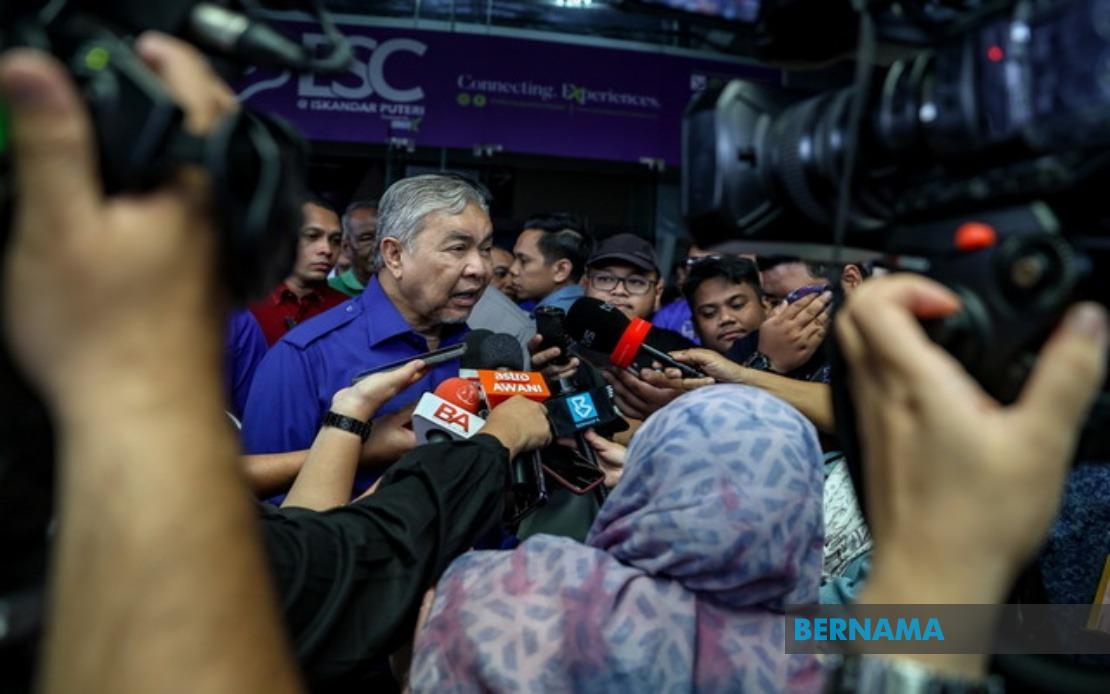
Malaysia's technical vocational education and training landscape is set for significant institutional reform, with Deputy Prime Minister Datuk Seri Dr Ahmad Zahid Hamidi announcing that a dedicated TVET Commission will be formally established before 2024 concludes. The new commission, which will supersede the current National TVET Council, represents a strategic pivot in how the government manages and implements technical skills training across the country. Ahmad Zahid made these remarks during his attendance at the Johor Darul Ta'zim TVET MARA Roadshow in Iskandar Puteri, signalling the administration's commitment to elevating vocational training as a national priority.
The transition from a council-based model to a dedicated commission reflects Malaysia's ambition to align its governance structure with practices established in developed economies. Ahmad Zahid, who holds the dual portfolio of Rural and Regional Development Minister as well as chairmanship of the National TVET Council, explained that the commission would operate with expanded authority compared to its predecessor. Rather than confining itself to advisory functions, the new body will take direct responsibility for formulating technical and vocational policies while simultaneously overseeing their implementation and enforcement across educational institutions and training providers.
The path toward finalising the TVET Commission has involved extensive preparatory groundwork. Ahmad Zahid disclosed that comprehensive consultation sessions with key stakeholders across the TVET sector are currently underway. These engagement exercises are essential for building consensus among educational institutions, industry players, workers' representatives, and other interest groups before advancing to the next procedural stages. Only after these stakeholder discussions conclude will the government proceed with submitting a Cabinet paper seeking formal approval for the commission's establishment.
While policy approval has already been secured, Ahmad Zahid acknowledged that the administration is still working through important legal and constitutional considerations before the legislation can be tabled in Parliament. The involvement of both the Dewan Rakyat and Dewan Negara reflects the significance of this institutional change, necessitating careful scrutiny of the legal framework and parliamentary procedures. This two-chamber approval process, though lengthier, ensures that the commission's structure and powers receive thorough examination and public accountability.
The establishment of the TVET Commission holds particular significance for Malaysia's economic trajectory and workforce development strategy. Technical and vocational training has become increasingly vital as the country seeks to address skills shortages in key sectors whilst maintaining competitiveness in a region increasingly focused on manufacturing, services, and emerging technologies. A more empowered and cohesive institutional framework could improve coordination between training providers, reduce duplication, and ensure that curriculum development better reflects employer needs and industry evolution.
During the same event in Johor, Ahmad Zahid addressed demographic shifts that are reshaping electoral dynamics in the state. Young voters aged 18 and above have assumed unprecedented political significance, with those aged 40 and below now representing approximately 52 percent of Johor's total eligible electorate. This generational concentration underscores the critical importance of attracting youth engagement with state-level governance and development initiatives. Ahmad Zahid's emphasis on youth participation reflects broader recognition that younger citizens hold disproportionate influence over electoral outcomes and policy priorities in key states like Johor.
The demographic transformation carries implications beyond mere voter numbers. Younger Malaysians increasingly expect responsive governance, digital service delivery, and policies addressing contemporary concerns including affordable housing, employment opportunities, and environmental sustainability. Political parties and state governments that fail to meaningfully engage this cohort risk losing electoral relevance in coming years. Ahmad Zahid's remarks suggesting that Johor's younger generation shares affinity with Menteri Besar Datuk Onn Hafiz Ghazi represent a strategic calculation that continuity in state leadership could appeal to voters prioritising stability and consistent development agendas.
As Barisan Nasional chairman, Ahmad Zahid framed the youth engagement strategy within the coalition's broader political interests in Johor. The positioning of Onn Hafiz as a younger leader attempting to bridge generational divides reflects a deliberate attempt to counter narratives that might portray BN as resistant to new thinking or dominated by older power structures. In competitive electoral environments where state governments face mounting pressure from opposition coalitions, the ability to mobilise youth support becomes a differentiating factor in determining electoral outcomes and government sustainability.
The Johor Darul Ta'zim TVET MARA Roadshow itself exemplifies the government's efforts to raise awareness about technical and vocational pathways among younger Malaysians. By hosting such events in major population centres like Iskandar Puteri, the authorities aim to position TVET as an attractive career option comparable to traditional university pathways. The involvement of MARA, alongside rural development ministries, suggests a coordinated approach to expanding technical skills training access across diverse communities and geographic regions.
Looking ahead, the successful establishment of the TVET Commission could serve as a model for institutional reforms in other sectors requiring clearer strategic direction and implementation capacity. Malaysia's broader development agenda increasingly depends on workers equipped with technical competencies across multiple sectors. The new commission's empowerment to both formulate and enforce policies positions it to drive more coherent national strategies regarding skills development, curriculum standards, and employment pathways from vocational institutions into the workforce.
The timing of Ahmad Zahid's announcement also reflects political imperatives around governance modernisation. As the government approaches the midpoint of its term, showcasing institutional innovations and policy delivery accomplishments helps maintain political momentum and demonstrate responsiveness to developmental challenges. The TVET Commission thus operates simultaneously as pragmatic governance reform and as a political statement about the administration's commitment to youth opportunity and economic competitiveness.
For Malaysia's regional positioning, strengthening TVET infrastructure gains added urgency amid increasing competition among Southeast Asian economies for manufacturing investment and skilled workers. Countries like Thailand, Vietnam, and Indonesia have invested heavily in technical training systems as part of broader industrial development strategies. Malaysia's institutional reforms to its TVET ecosystem signal recognition that demographic dividends and competitive advantage depend substantially on cultivating technically proficient workforces capable of commanding higher productivity and wage levels throughout their careers.

