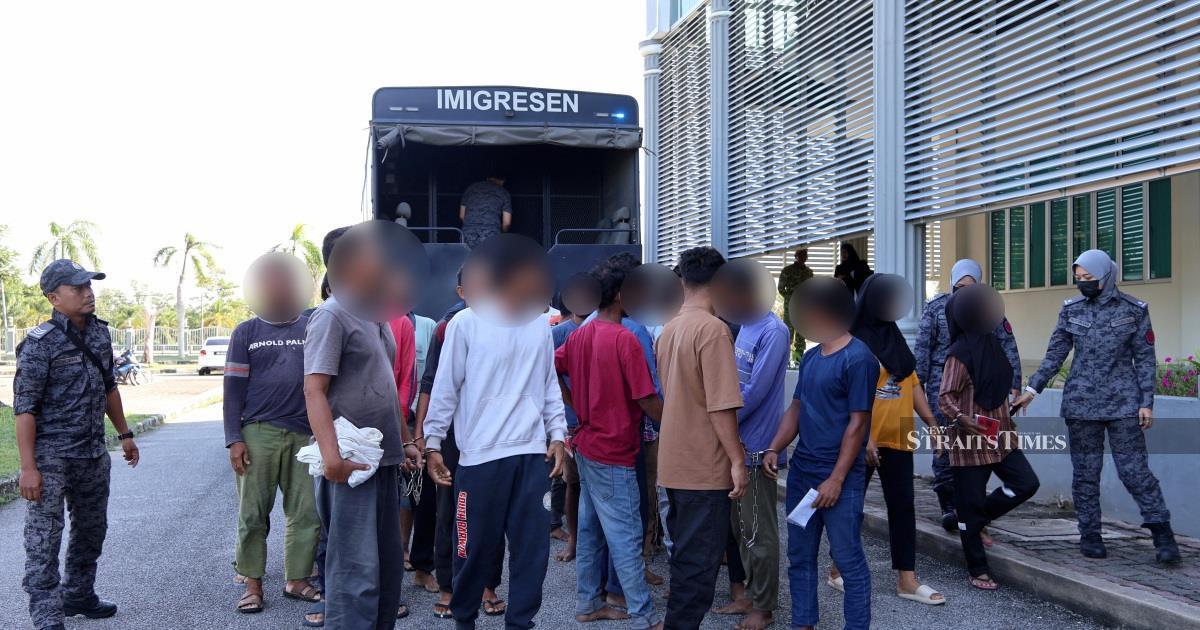
The Sessions Court in Pasir Mas has convicted and fined 29 undocumented migrants for immigration offences, with penalties ranging from RM1,000 to RM10,000. The group entered guilty pleas to charges encompassing illegal entry into Malaysian territory, overstaying beyond permitted periods, and fraudulent use or misuse of travel documents.
Immigration enforcement in Kelantan, where Pasir Mas is located, reflects broader challenges across Malaysia's borders and port of entry areas. The charges prosecuted in this batch of convictions represent the most serious immigration violations under Malaysian law, each carrying distinct penalties based on severity and individual circumstances. The graduated fine structure suggests that court assessments took into account variations in the nature and duration of each offence, as well as the migrants' circumstances.
Undocumented entry remains a persistent enforcement priority for the Immigration Department and the Royal Malaysian Police, particularly in northern states bordering Thailand. Pasir Mas, situated in the northern part of Kelantan, sits approximately 50 kilometres from the Thai border, making it a transit zone for irregular migration flows. The court proceedings underscore sustained efforts by authorities to process and penalise immigration violations through the formal legal system rather than administrative deportation alone.
The misuse of travel passes and documents—a charge affecting at least some of the 29 convicts—points to involvement with document brokers or organised smuggling networks. These intermediaries facilitate irregular migration by providing counterfeit or fraudulently altered travel permits, visas, or work passes. Such networks deliberately exploit gaps in document verification systems and remain difficult to dismantle despite cooperation between Malaysian and neighbouring enforcement agencies.
Overstaying, a charge common among this group, typically involves foreign nationals remaining in Malaysia beyond the expiry of their visit pass or temporary residence permit. While some overstays result from administrative delays or genuine misunderstanding of regulations, many reflect deliberate non-compliance among migrants seeking extended unauthorised employment. The prevalence of overstaying cases in Malaysian courts demonstrates that immigration rules are not uniformly respected among the estimated one to two million undocumented migrants residing in the country.
Malaysia's approach to immigration law enforcement combines court prosecution with administrative detention and deportation. Today's convictions represent the judicial arm of this strategy—holding offenders accountable through criminal sanctions rather than purely deportation. The financial penalties imposed serve multiple purposes: deterring future violations, generating revenue for government coffers, and signalling serious enforcement commitment to the public and neighbouring countries.
The financial burden of these fines may prove significant for migrants, many of whom earn minimal wages and remit earnings to dependent families abroad. The inability to pay fines can result in additional detention or conversion to imprisonment under Malaysian law. This enforcement mechanism, while legally sound, raises human rights considerations that civil society observers monitor closely in countries across Southeast Asia.
Beyond individual penalties, today's convictions form part of a steady stream of immigration cases processed through Malaysian courts. The Immigration Department handles thousands of illegal entry and overstaying cases annually, though available data suggests only a fraction result in formal prosecution. Many undocumented migrants are administratively detained and deported without court proceedings, while others operate undetected in the informal economy.
The concentration of undocumented migrants in specific sectors—construction, manufacturing, agriculture, and domestic work—sustains networks of illegal employment that operate parallel to formal labour markets. Fines imposed by courts do little to disrupt employers' incentive structures, particularly in sectors where wage theft and exploitation occur routinely. Some analysts argue that Malaysia's enforcement strategy over-emphasises migrant penalties while under-investing in employer accountability mechanisms that could address root causes of irregular migration demand.
Regional context matters significantly. Thailand, Myanmar, and Bangladesh remain primary source countries for undocumented migrants apprehended in Malaysia. Cross-border displacement driven by poverty, conflict, and limited legal employment pathways ensures sustained migration pressure regardless of enforcement intensity. The Pasir Mas court proceedings reflect Malaysia's ongoing struggle to regulate migration flows through legal and administrative tools designed for smaller-scale cross-border movement rather than current volumes.
These convictions also highlight Malaysia's reliance on formal justice processes in handling immigration matters. Unlike some neighbouring countries that rely more heavily on administrative procedures, Malaysia pursues court prosecution for serious violations, ensuring legal due process but also creating resource demands on an already strained judiciary. The guilty pleas entered by today's defendants represent an efficient resolution mechanism, avoiding lengthy trials while securing convictions and penalties.
Moving forward, immigration enforcement outcomes depend partly on international cooperation frameworks and partly on domestic labour market dynamics. Tighter bilateral agreements with source countries, improved document security standards, and enhanced border surveillance contribute to the enforcement mix. However, sustained demand from Malaysian employers for cheaper migrant labour—combined with limited legal pathways for low-skilled migration—will continue generating undocumented entry and overstaying pressures that courts will process case by case.

