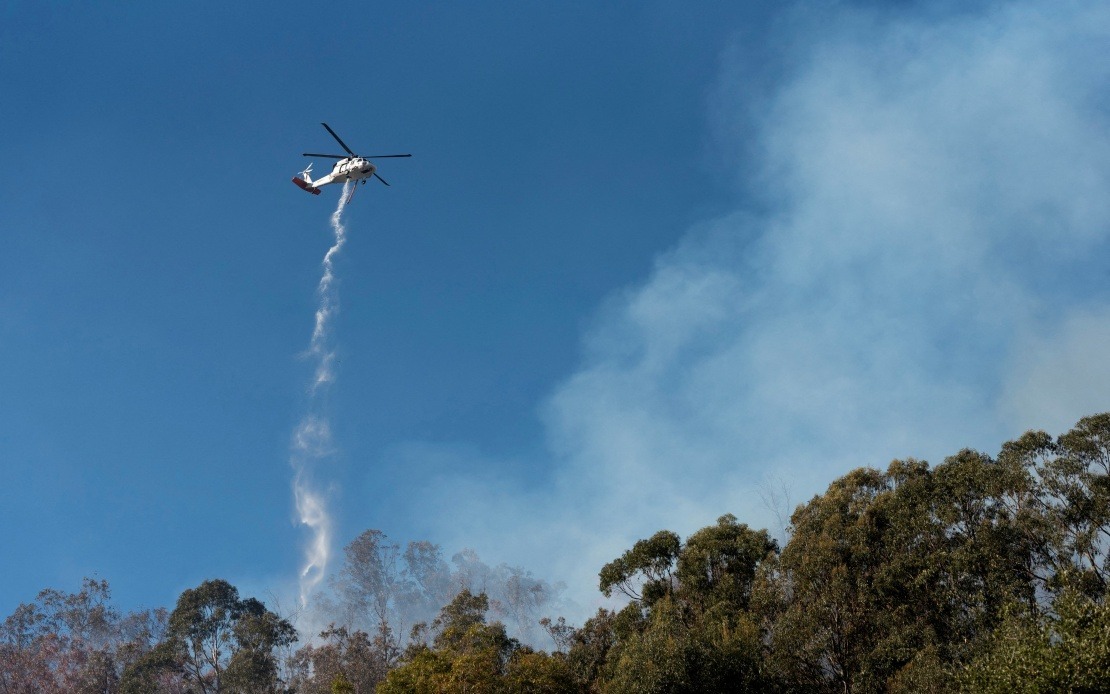
A tragic accident unfolded in the remote terrain of central Utah on Friday when a helicopter contracted for wildfire suppression operations plummeted to the ground near Richfield, claiming the lives of two aviation professionals. The Sikorsky S-64 aircraft, operating under contract with the US Forest Service, went down at approximately 10 am local time while supporting firefighting activities on the Widemouth 2 Fire, one of the most significant conflagrations facing the state this season. Authorities confirmed the deaths of the pilot and one crew member, though their identities remained undisclosed at the time of reporting. The National Transportation Safety Board has assumed leadership of the investigation into the crash, which occurred under circumstances that remain unclear.
The incident exposed the extraordinary hazards inherent in aerial wildfire suppression operations, which demand split-second decision-making and precision flying in environments where visibility, weather patterns, and terrain create compounding risks. The Federal Aviation Administration and the National Interagency Fire Centre jointly documented the accident, underscoring the coordinated federal response to such catastrophic events. The challenging geography and active fire conditions surrounding the crash site initially prevented ground crews from reaching the wreckage, delaying both rescue operations and the formal investigation. Adding to the peril, the helicopter impact itself ignited additional flames in the surrounding vegetation, further restricting access and magnifying safety concerns for responders attempting to recover the remains and secure the area.
Utah Governor Spencer Cox issued a statement reflecting on the broader dimensions of this tragedy, noting that wildland firefighting ranks among the world's most hazardous professions. His remarks acknowledged the moral weight of the moment and the extraordinary commitment shown by firefighters who regularly expose themselves to life-threatening conditions. Cox urged residents to grant investigators and emergency personnel adequate time and space to complete their work, recognizing that such tragedies demand measured, thorough responses rather than rushed conclusions. The governor's intervention highlighted how such incidents resonate at the highest levels of state government, reminding communities of the human cost embedded within emergency response infrastructure.
The Widemouth 2 Fire itself began on July 27 after a lightning strike ignited dry vegetation across the Fishlake National Forest near Kanosh, a small settlement in the heart of Utah. The fire's rapid expansion through the intervening days revealed how quickly conditions can deteriorate when multiple meteorological factors align unfavourably. Intense heat, prolonged drought conditions, and unpredictable wind patterns combined to drive the fire's growth beyond initial containment projections. The conflagration forced residents to evacuate their homes and resulted in the destruction of at least six structures, with property damage assessments continuing as suppression efforts advanced.
By the time of the helicopter crash, the Widemouth 2 Fire had consumed more than 114,000 acres—equivalent to approximately 461 square kilometres—across the region. State fire management data indicated that containment efforts had secured roughly 24 percent of the perimeter, suggesting that substantial portions of the fire remained uncontrolled and capable of spreading further. This scale of destruction positions the Widemouth 2 among Utah's most significant wildfires in recent memory, comparable to other notable incidents that have shaped the state's emergency response protocols and resource allocation strategies.
For Malaysian and Southeast Asian observers, this tragedy offers sobering insights into the escalating risks posed by wildfire management in an era of climate volatility. While Malaysia's tropical climate differs markedly from Utah's arid environment, the underlying principle remains universal: environmental degradation and atmospheric instability create cascading emergencies that demand increasingly perilous interventions. The helicopter crash underscores that even highly trained professionals operating sophisticated equipment face mortality when confronting nature's destructive force. As regional nations develop their own aerial firefighting capabilities in response to transboundary haze and forest fire events, the Utah incident serves as a cautionary reminder that technological solutions cannot eliminate inherent risks.
The investigation led by the National Transportation Safety Board will likely generate findings relevant to aviation safety protocols and wildfire operations procedures globally. Preliminary indications of unknown circumstances surrounding the crash suggest that investigators will scrutinize factors ranging from mechanical failure to weather conditions to pilot decision-making processes. Each of these dimensions carries implications for how firefighting agencies train personnel, maintain equipment, and establish operational boundaries for aerial suppression work. The Board's technical expertise and systematic methodology will eventually produce recommendations that filter through international aviation communities, potentially preventing similar accidents elsewhere.
The Widemouth 2 Fire represents a larger pattern within the American West, where extended fire seasons and intensified burning conditions have strained suppression resources and challenged traditional response models. Helicopter operations form a critical component of modern firefighting infrastructure, enabling water and retardant drops that ground crews cannot replicate, evacuating personnel from advancing flames, and providing reconnaissance that informs tactical decisions. The loss of even a single aircraft removes valuable capacity from an already stretched system, while the death of experienced aviation professionals diminishes the accumulated expertise necessary for safe operations.
As investigations proceed and the full implications of this incident become clear, Utah's firefighting community faces both immediate operational challenges and longer-term questions about risk management. The state's agencies must balance the urgent need to suppress active fires with the professional obligation to protect personnel from unnecessary danger. This tension, inherent to emergency response work, cannot be fully resolved but must be continuously reassessed as new data emerge regarding equipment performance, environmental conditions, and operational effectiveness. The two individuals who perished in this crash will be remembered not merely as accident victims but as professionals who accepted substantial risk to protect their communities from natural disaster.

