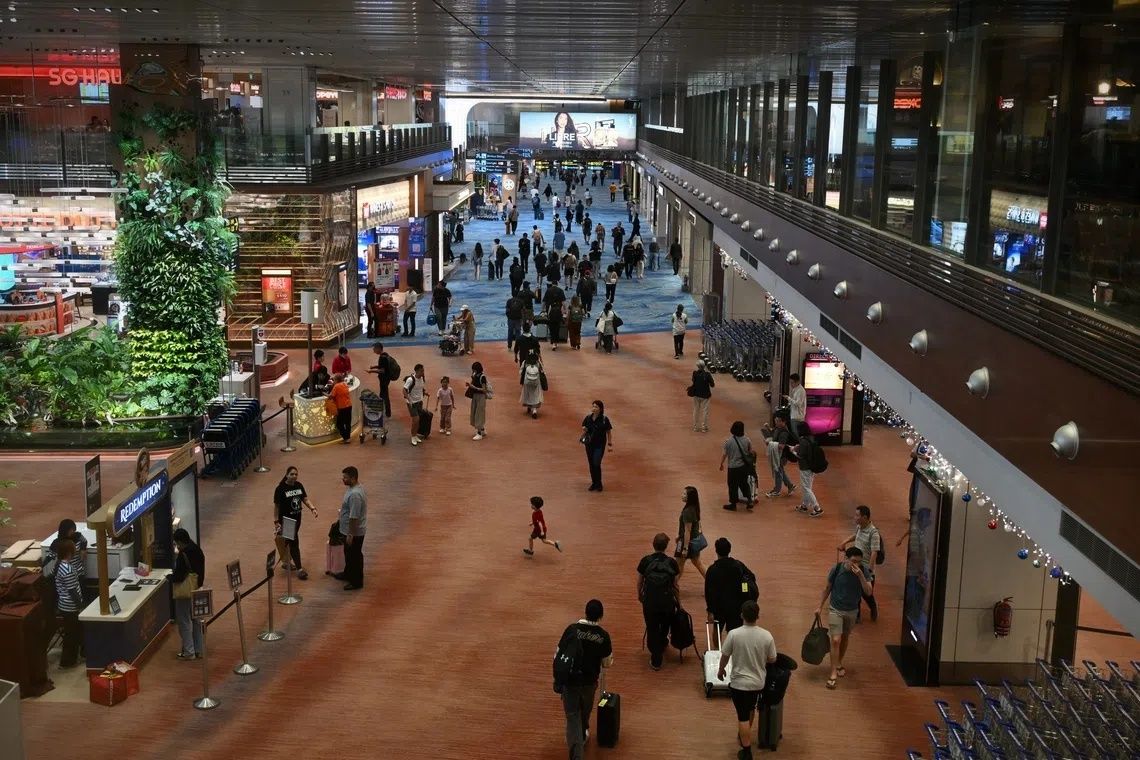
Two international travellers face theft charges following separate incidents at Singapore's Changi Airport that have renewed focus on retail security in one of Asia's busiest aviation hubs. A 37-year-old Australian national and a 50-year-old American man have been arrested for allegedly shoplifting high-value fragrances from airport duty-free and transit-area retailers. Both suspects are scheduled to appear in court on August 17, with police emphasising that the cases underscore the serious consequences of retail theft in the airport's commercial zones.
The first incident dates back to November 2025, when staff at a perfume outlet in Changi Airport Terminal 2's transit area discovered boxes of fragrance missing from a display shelf. Security footage analysis pinpointed the Australian man as the culprit, capturing him removing approximately $430 worth of merchandise at 4.50pm before departing without payment. Despite initial difficulties in apprehending him, the suspect's identity was eventually established through systematic investigation.
What makes this case particularly notable is the extended timeline between the alleged theft and arrest. The Australian man managed to leave Singapore and evade immediate detection, remaining at large for more than eight months. His capture came only when he transited through Changi Airport again on August 4, presenting another opportunity for authorities to intercept him. This development illustrates both the challenges airports face in tracking offenders who flee jurisdictions and the effectiveness of passenger screening systems that ultimately enabled his arrest.
The American suspect's case unfolded over a much shorter timeframe but revealed a more extensive pattern of theft. Police received notification of a missing perfume box from a Terminal 1 retail outlet in the early morning hours of August 5, approximately 45 minutes after staff discovered the loss. Upon reviewing closed-circuit television recordings, investigators identified the man taking merchandise valued at just over $310 without payment. Crucially, officers managed to apprehend him before his scheduled departure, preventing his escape from the airport.
Subsequent investigation of security footage revealed the American man had not limited his activities to a single theft. He had targeted at least two additional retail locations within the transit area, acquiring a second perfume box worth approximately $170 and a fragrance tester bottle valued at more than $230. The cumulative value of items stolen across all three incidents exceeded $717, with all merchandise recovered following his arrest. The discovery of these additional thefts suggests either a deliberate shopping expedition within the airport or opportunistic criminality across multiple visits to retail outlets.
The legal framework surrounding airport retail theft in Singapore carries significant penalties aimed at deterring such offences. Charges under the theft statute applicable in airport and building settings carry potential sentences of up to seven years imprisonment, monetary fines, or both. This formidable sentencing structure reflects authorities' determination to protect retail environments and maintain order within critical transportation infrastructure. The court proceedings scheduled for mid-August will determine whether both men proceed to full prosecution or negotiate alternative outcomes.
Airport Commissioner of Police M. Malathi issued a statement emphasising the police force's zero-tolerance approach to retail crime at Changi Airport. He highlighted that the arrests demonstrate how modern surveillance technology has fundamentally altered criminals' ability to escape detection, even when they successfully flee the country initially. The commissioner's remarks stress that sophisticated video monitoring systems have become integral to investigative capabilities, allowing officers to identify suspects retrospectively and pursue prosecutions across extended periods.
The official police statement carries a clear warning to potential offenders: advancement in surveillance technology means that evading immediate capture no longer guarantees avoiding eventual prosecution. Security footage analysis has become sufficiently refined that investigators can identify individuals through biometric analysis, facial recognition software, and temporal reconstruction of movements throughout airport zones. The extended gap between the Australian man's alleged theft and arrest serves as compelling evidence of this investigative persistence.
Changi Airport's law enforcement apparatus has prioritised strengthening coordination between police units and retail stakeholders to prevent future incidents. The airport police unit continues developing relationships with commercial operators, sharing intelligence about known offenders, suspicious patterns, and emerging retail theft methodologies. This collaborative approach acknowledges that a facility processing millions of passengers annually faces unique challenges in balancing accessibility with security.
For Malaysian travellers and retailers operating in airport duty-free zones throughout Southeast Asia, these cases offer instructive lessons about heightened scrutiny of airport retail environments. As regional aviation hubs develop increasingly sophisticated security infrastructure, the consequence profile for petty theft has shifted markedly upward. What might once have been overlooked shoplifting now triggers international police cooperation, biometric data collection, and coordinated prosecution efforts spanning months or years.
The incidents also reflect broader trends in retail crime targeting luxury goods within airport environments. Fragrances represent high-value, easily concealable merchandise with robust secondary markets, making them attractive targets for opportunistic and organised theft operations. Retailers have responded by implementing enhanced display security, reducing inventory on open shelves, and increasing security personnel presence during peak transit periods.
These cases arrive amid ongoing efforts by Changi Airport operators to maintain their reputation as a secure, well-managed facility critical to Singapore's economic positioning. The swift apprehension of the American suspect and eventual capture of the Australian national demonstrate institutional competence, yet also highlight ongoing vulnerabilities within transit-area retail environments where thousands of people move hourly. Moving forward, the balance between retail accessibility and loss prevention will remain a central concern for airport management and law enforcement alike.

