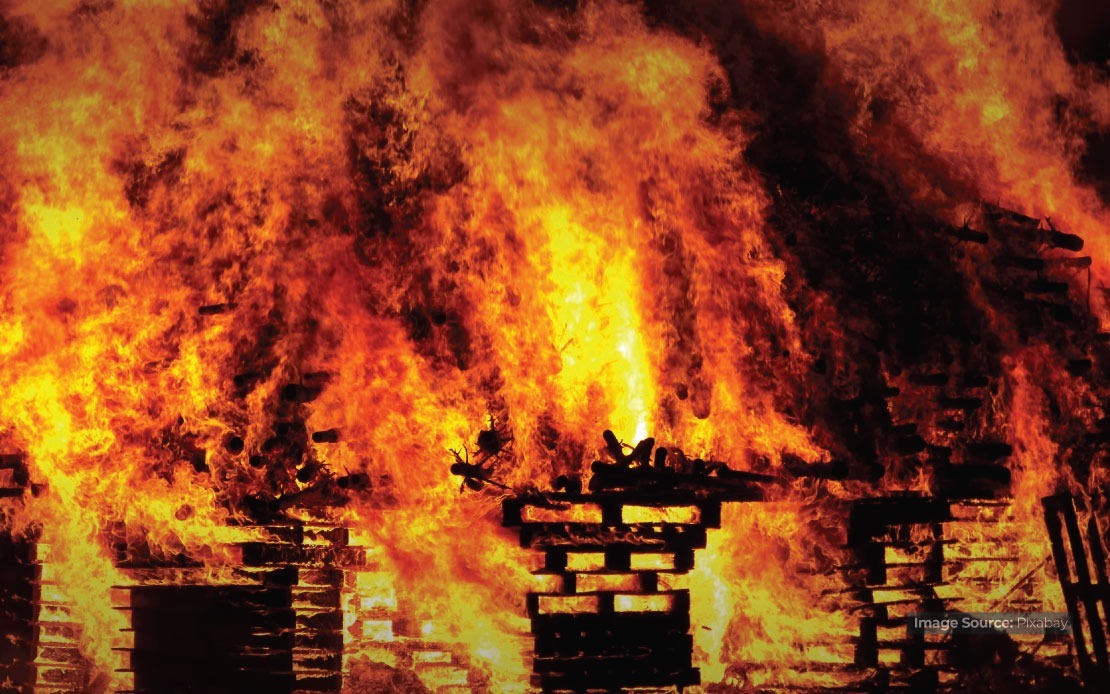
France has lost two firefighters in the line of duty as they battled a blaze that erupted in the vicinity of Bordeaux Airport in the country's southwestern region. French Interior Minister Laurent Nuñez made the announcement to parliament on Tuesday, confirming that the pair perished while fighting flames that had consumed two buildings near the airport's facilities.
The fire's origins traced back to land adjacent to the airport's long-term parking zone, according to reporting by regional publication Sud Ouest. The incident highlights the dangerous conditions emergency personnel face as they respond to fires across France during a period of elevated risk. The flames spread with sufficient intensity to create visible plumes that could be observed from Bordeaux itself, demonstrating the scale of the incident and the challenge confronting firefighting teams.
The timing of this tragedy comes as the Gironde region, whose administrative centre is Bordeaux, operates under the highest level of wildfire alert. France has implemented red-level warnings throughout the area due to meteorological and environmental conditions that substantially elevate the danger of forest fires spreading rapidly. Such alerts indicate that any fire outbreak carries the potential for swift escalation, placing enormous pressure on emergency responders to contain blazes before they expand beyond control.
Airport operations experienced disruption as authorities prioritised fire suppression and safety measures. Departures from Bordeaux Airport were halted temporarily, while officials maintained the capacity to receive incoming aircraft. An evening service destined for Munich was expected to proceed according to schedule, suggesting that the situation, while serious, remained largely containable within a defined area without necessitating a complete operational shutdown.
The response to the incident mobilised multiple firefighting resources beyond the primary regional fire service. Airport authorities deployed their dedicated firefighting unit to support suppression efforts, extending the available manpower and equipment. Additionally, aerial firefighting capabilities were activated, with a specialised aircraft brought into operation to assist ground crews in containing and extinguishing the flames. This multi-layered approach underscores the severity with which French authorities treated the incident.
The deaths represent a sobering reminder of the occupational hazards that firefighters encounter routinely. These professionals operate in environments characterised by extreme heat, reduced visibility, structural instability, and toxic fumes, accepting substantial personal risk to protect lives and property. The loss of these two personnel resonates within French emergency services and raises questions about operational safety protocols during periods of heightened fire danger.
From a regional perspective, this incident illustrates how climatic pressures and seasonal conditions can create cascading challenges for public safety infrastructure. The Gironde region's red-level alert status suggests that authorities had anticipated elevated fire risk before this particular incident occurred. The combination of environmental factors and human tragedy creates a context in which emergency management systems operate at heightened capacity, stretching resources and personnel to their limits.
For Southeast Asian audiences, the incident provides perspective on how developed European nations confront seasonal fire emergencies. France's institutional response—including parliamentary notification, coordinated multi-agency response, and rapid mobilisation of specialist equipment—demonstrates established protocols for crisis management. By contrast, many Southeast Asian countries face similar or more severe wildfire challenges with comparatively constrained resources, highlighting disparities in emergency preparedness capacity across regions.
The implications of this tragedy extend beyond the immediate loss of life. Firefighter deaths typically prompt institutional reviews of operational procedures, safety equipment, and decision-making protocols. French emergency services will likely examine circumstances surrounding the incident to identify systemic improvements and risk mitigation strategies. Such reviews often result in updated training regimens, enhanced protective equipment specifications, and modified tactical approaches to similar situations.
Climate science suggests that elevated fire risk periods will become more frequent across Europe, including in southwestern France. This trajectory implies that emergency personnel will increasingly operate under extreme-alert conditions, confronting the dual challenge of managing heightened fire activity while maintaining operational safety standards. The deaths near Bordeaux Airport represent a data point in this broader pattern of intensifying climate-related hazards affecting professional emergency responders.
The incident also underscores infrastructure vulnerabilities at major transportation hubs. Airports represent critical nodes in both national and international connectivity, making fire incidents at or near such facilities particularly consequential. Disruption to flight operations creates cascading effects across supply chains, business operations, and passenger connectivity. The fact that Bordeaux Airport maintained landing capability while suspending departures reflects prioritisation of immediate safety while minimising broader economic disruption.

