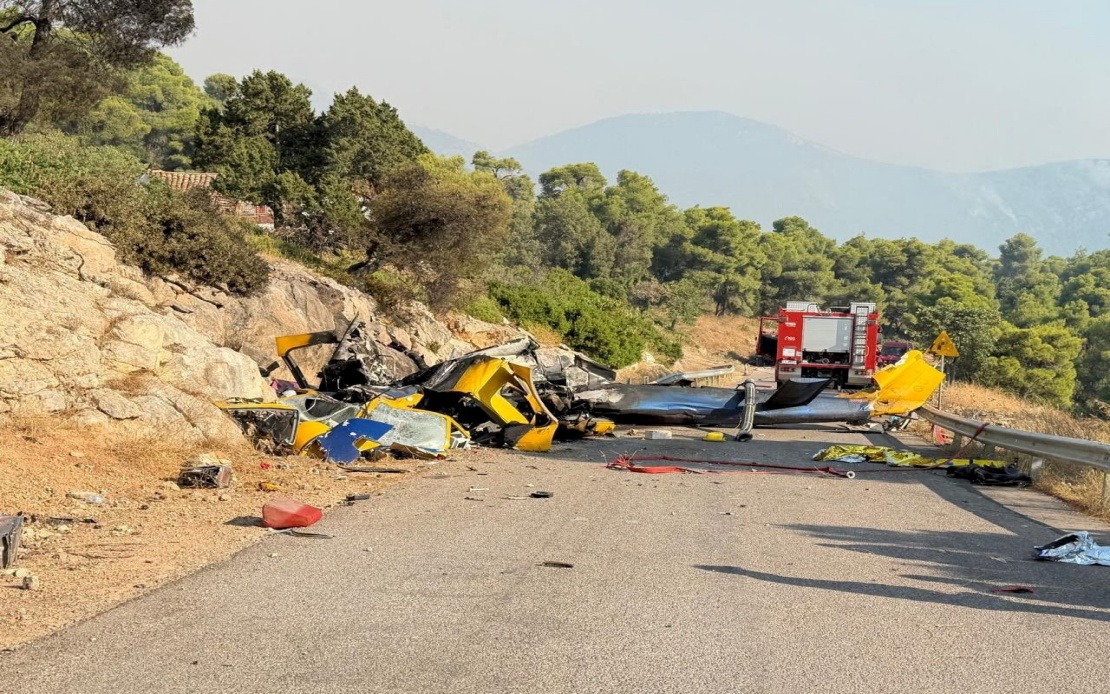
A tragic collision between two firefighting helicopters has claimed two lives as Greece grapples with an ongoing wildfire crisis in its western regions. The incident occurred on Sunday near the coastal community of Psatha in Attica, when the aircraft collided during aerial firefighting operations. Fire Service spokesperson Vassilis Vathrakogiannis confirmed at a press conference that a Danish pilot and a Greek firefighting coordinator perished in the accident, while a British pilot and another Greek firefighting coordinator survived, with one sustaining injuries from the impact.
The two Bell helicopters, each crewed by two personnel, were engaged in active firefighting operations against a major wildfire spreading across the Attica and Boeotia regions when the tragedy unfolded. Both aircraft had been leased specifically to supplement Greece's aerial firefighting capabilities during the current emergency. The collision prompted immediate search and rescue operations in the area, though investigators have not yet determined the precise cause or circumstances leading to the mid-air impact. Greek authorities have initiated a comprehensive investigation into the accident, which is expected to examine factors including visibility conditions, communication protocols, and operational procedures.
The fatality of the Danish pilot underscores the international dimension of Greece's emergency response to natural disasters. Firefighting operations of this scale routinely require multinational cooperation and expertise, with personnel and equipment sourced from across Europe to combat massive blazes that can rapidly overwhelm domestic resources. The Greek firefighting coordinator killed in the collision represents the direct sacrifice made by local emergency services personnel who work on the frontlines of these dangerous operations.
This incident occurs against the backdrop of an exceptionally severe wildfire season in Greece, driven by an unusual combination of meteorological factors that have created ideal conditions for rapid fire spread. Exceptionally high temperatures, persistent drought conditions, and strong winds have collectively overwhelmed firefighting resources across the country. The Greek authorities have been stretched thin managing multiple simultaneous large-scale fires, and the reliance on contracted helicopter support reflects the intensity and geographic distribution of current threats.
The use of rented Bell helicopters demonstrates how European nations coordinate resources during major emergencies that exceed their own operational capacity. These aircraft represent critical infrastructure for modern wildfire management, capable of delivering water and fire retardants to inaccessible terrain and extracting personnel from danger. Their loss to the collision represents not only a human tragedy but also a temporary reduction in Greece's immediate aerial firefighting capacity at a moment of peak demand.
For Southeast Asian readers, the incident carries particular relevance given the region's own vulnerability to transboundary haze and wildfire disasters. Countries including Malaysia, Indonesia, and Singapore have experienced similar challenges during dry seasons, requiring emergency procurement of aerial resources and international cooperation. The Greek experience illustrates how even developed European nations can face operational challenges when natural disasters exceed normal capacity thresholds, offering lessons for regional disaster management coordination.
The investigation into the helicopter collision will likely examine standard safety protocols including minimum safe separation distances, real-time positioning systems, and communication procedures between aircraft operating in the same airspace. Such inquiries typically drive improvements in international firefighting aviation standards, as findings and recommendations are shared across operating jurisdictions. The tragic loss of experienced personnel in this collision may ultimately contribute to enhanced safety protocols that protect future firefighting operations worldwide.
Greece's current wildfire crisis reflects broader climate change impacts affecting Mediterranean and southern European regions, where rising temperatures and changing precipitation patterns have extended fire seasons and increased severity. The scale of resources being deployed—including international personnel and equipment—indicates recognition of the escalating threat posed by these natural disasters to populated areas, infrastructure, and the environment.
The survivors of the collision will likely provide crucial testimony regarding the events immediately preceding the impact, potentially helping investigators reconstruct the sequence of events. Their accounts, combined with aircraft telemetry data and witness observations, should establish a factual foundation for understanding how two helicopters operating in the same geographic area failed to maintain safe separation distances.
As Greece continues managing the broader wildfire emergency, the helicopter collision adds a sobering dimension to the human cost of these disasters. The deaths of international firefighting personnel underscore that emergency operations carry inherent risks that persist despite modern safety equipment and protocols. The incident serves as a reminder of the dedication and sacrifice required from emergency services personnel globally who respond to nature's most violent phenomena.

