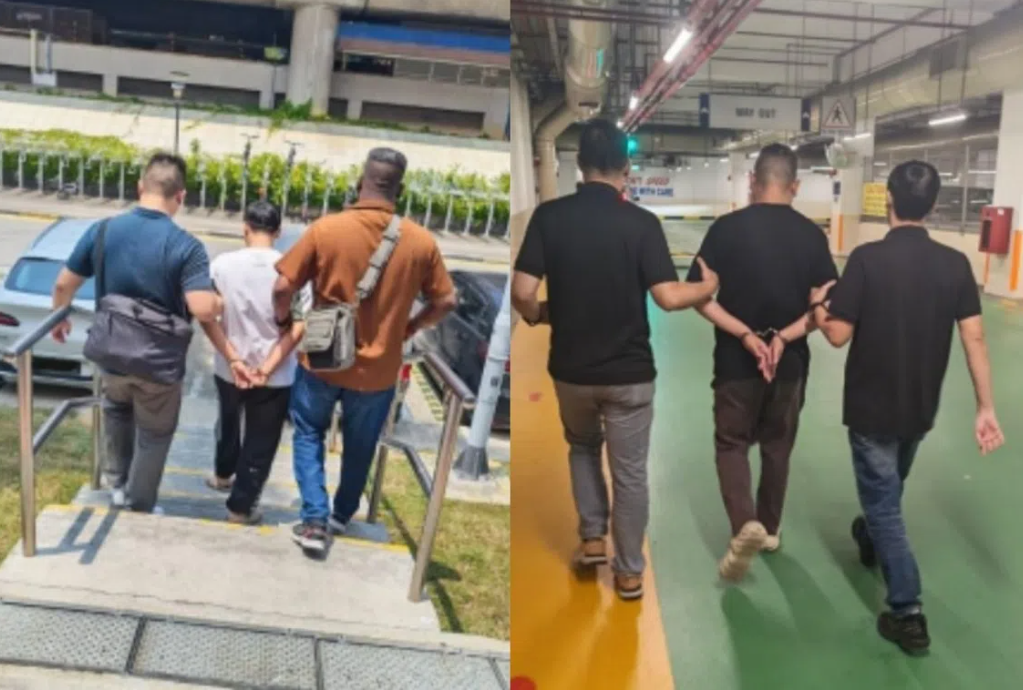
Singapore police have arrested two Malaysian nationals employed at mobile phone retail outlets for their suspected orchestration of a sophisticated identity fraud operation targeting the city-state's digital authentication system. The men, aged 25 and 47, were detained on Tuesday, 25 August, and are accused of systematically obtaining Singpass login credentials from unsuspecting customers to establish fraudulent e-payment accounts. The investigation, coordinated between the police's Cyber Command division and the Singpass Trust & Safety team at the Government Technology Agency of Singapore, uncovered a sprawling criminal network that compromised the digital identities of more than 170 Singaporeans and migrant workers across the island.
The modus operandi exploited a position of trust in the retail environment where customers routinely shared sensitive personal information. In at least one documented case, a suspect leveraged a customer's need to update Singpass credentials while purchasing a SIM card, using that opportunity to secretly establish a LiquidPay account without consent. LiquidPay, a digital wallet and payment application operated by the Singapore-based fintech firm Liquid Group, emerged as the vehicle for converting stolen identities into functional money-laundering conduits. The perpetrators created more than 160 LiquidPay accounts through compromised Singpass credentials, systematically building an infrastructure designed to receive and aggregate illicit funds from broader scam operations.
The scale of financial loss associated with the scheme became apparent through subsequent investigation. Since early March 2026, at least 20 Singapore citizens and work permit holders have been identified as participants in registering LiquidPay accounts that collectively received approximately S$110,063 derived from various scams. This figure likely represents only documented transactions within a specific investigative window, suggesting the actual ecosystem of fraud may extend considerably beyond the initially identified cases. The involvement of legitimate account holders in the registration process indicates either coercion, deception, or direct participation in the criminal enterprise, with police maintaining separate investigations into this secondary layer of culpability.
The targeting of Singpass—Singapore's government-issued digital identity credential—represents a particularly concerning vulnerability given its central role in the digital economy and governance infrastructure. Citizens and residents rely on Singpass for accessing healthcare services, filing tax returns, conducting financial transactions, and numerous government services. When individuals voluntarily or unknowingly relinquish their Singpass credentials to third parties, they inadvertently create entry points for sophisticated cybercriminals to establish footprints within the legitimate financial ecosystem. The fact that mobile phone retailers served as the primary compromise vector suggests that criminal networks actively target customer-facing service industries where identity information flows naturally during transaction processing.
For Malaysian readers and cross-border commerce participants, this case underscores serious risks in the regional digital payments landscape. The involvement of Malaysian nationals working in Singapore highlights how transnational criminal operations leverage employment mobility across Southeast Asia to execute coordinated fraud schemes. Workers positioned in Singapore's retail sector gain access to customer data and local financial infrastructure knowledge that enhances the operational sophistication of schemes executed for syndicates potentially based elsewhere in the region. The ease with which legitimate e-wallet platforms can be weaponized—once fraudulent credentials secure access—demonstrates that verification procedures at fintech companies may inadequately confirm genuine identity ownership during account registration.
The legal consequences articulated in Singapore's charging framework reflect the serious nature of identity-based financial crime. The two Malaysian suspects face charges under provisions criminalizing assistance in retaining benefits derived from criminal conduct, carrying sentences of up to 10 years imprisonment, fines reaching S$500,000, or both. This severity underscores official recognition that such offences strike at the foundations of digital economy integrity. Separately, Singapore citizens and work permit holders investigated for voluntarily relinquishing Singpass credentials face maximum penalties of three-year prison terms and S$10,000 fines, indicating that knowingly compromising one's own government identity credentials carries substantial legal jeopardy beyond civil liability.
The operational structure uncovered through police investigations reveals hallmarks of organized syndicate activity rather than opportunistic fraud. The systematic nature of credential harvesting, account creation at scale, and integration with downstream scam money flows suggest coordination among multiple actors across different functional roles. The Cyber Command's involvement alongside the Government Technology Agency indicates cross-institutional cooperation essential for unraveling sophisticated digital crime. Such investigations typically reveal supply chains: individuals compromising credentials, technical specialists creating fake accounts, money movers laundering proceeds, and external scam operations generating the underlying criminal revenue.
Singapore's aggressive pursuit of this matter reflects broader Southeast Asian concerns regarding payment system integrity as digital wallets and e-commerce platforms proliferate. Malaysia, as a significant economic partner and source of cross-border workers, faces its own vulnerability to similar schemes whereby Malaysian citizens working abroad participate in or become victims of regional fraud networks. The case demonstrates that geographic boundaries provide limited protection when digital infrastructure enables transnational criminal activity. Scams originating in one jurisdiction can launder proceeds through compromised accounts in another, obscuring money trails and complicating enforcement across borders.
The ongoing investigation into Singpass users who voluntarily surrendered credentials suggests authorities are pursuing both criminal and victim identification simultaneously. Some individuals may have been unwitting participants deceived about account purposes, while others may represent peripheral involvement in money-laundering chains with incomplete understanding of ultimate criminal objectives. This differentiated approach reflects sophisticated law enforcement practice acknowledging that digital crime ecosystems contain various culpability levels. The investigation's continuation indicates that full network exposure may yet yield additional suspects and victim identifications.
For Malaysian residents with Singpass accounts—whether for Singapore employment, studies, or business—this incident carries practical implications regarding credential security practices. The ease with which mobile retailers obtained sensitive information suggests that casual disclosure during routine transactions poses genuine risk. Regulatory authorities across Southeast Asia may increasingly demand enhanced customer authentication procedures, potentially including biometric verification or two-factor authentication requirements at point of account creation for sensitive identity systems. The incident underscores why government digital identity systems require robust protective architectures resistant to social engineering and insider threats inherent in retail environments.
The case also illuminates challenges faced by fintech companies operating across borders in Southeast Asia. LiquidPay's integration with Singpass—while offering convenience and interoperability benefits—created potential vulnerabilities when upstream identity verification relied on systems compromised through retail-sector manipulation. Fintech platforms increasingly face regulatory pressure to implement sophisticated know-your-customer procedures that verify genuine customer intent rather than merely confirming credential validity. This incident will likely trigger industry-wide review of account registration protocols, particularly where government identity systems serve as foundational authentication layers.
Beyond immediate legal consequences, the incident reflects evolving criminal adaptation to digital payment systems. As traditional cash-based and banking channels become increasingly monitored through anti-money laundering frameworks, criminal networks demonstrate sophistication in identifying emerging fintech platforms as alternative conduits. The speed with which new payment applications proliferate across Southeast Asia—often outpacing regulatory oversight—creates temporal windows during which criminal operators can establish infrastructure before compliance controls achieve full maturity. Singapore's rapid identification and disruption of this scheme suggests government agencies increasingly monitor emerging platforms, though similar vigilance across other regional jurisdictions remains inconsistent.

