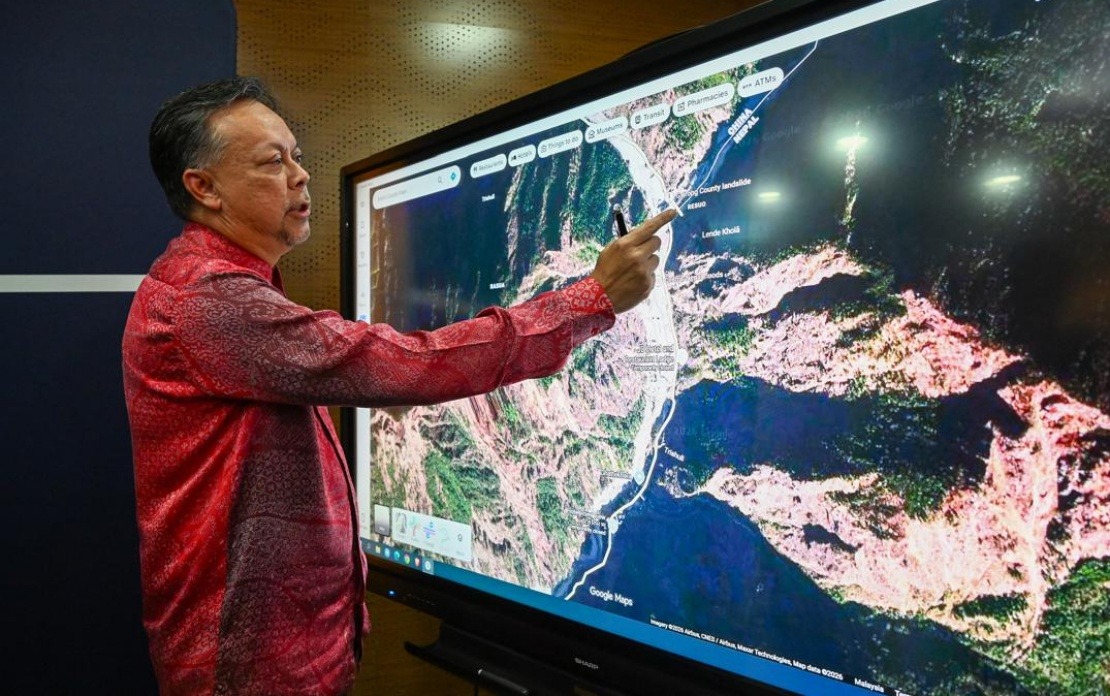
Two Malaysians trapped in Nepal following devastating flash floods and landslides have been successfully located and confirmed safe, though their precise circumstances remain under investigation. The breakthrough emerged as authorities grapple with an ongoing crisis affecting at least 55 other Malaysian nationals whose whereabouts remain unknown in the affected regions. Foreign Ministry Deputy Secretary-General (Bilateral Affairs) Datuk Syed Mohamad Hasrin Tengku Hussin disclosed the development in Putrajaya on Wednesday, cautioning that verifying the identities and status of the two found individuals was essential before releasing fuller details to prevent confusion or duplicative reporting.
The confirmation that two individuals have been accounted for represents a modest gain in what remains an overwhelmingly challenging situation. Officials emphasize that cross-checking procedures are deliberately meticulous, reflecting the complex coordination required when collating information from multiple Nepalese agencies, tourism board records, local operators and frantic family members contacting authorities from Malaysia. The remaining figure of 55 unaccounted Malaysians is itself provisional and subject to adjustment as verification processes continue. This methodical approach, while potentially frustrating to anxious relatives, aims to eliminate false duplications or misidentifications that could divert precious rescue resources or generate false hope.
The catastrophe unfolded on August 26 when the Bote Koshi River catastrophically overflowed in the Rasua district, unleashing flash floods and triggering landslides that swept through populated areas with little warning. The natural disaster has crippled critical infrastructure across the region, destroying bridges, severing roads, and severing both electricity and telecommunications networks. These infrastructure failures have created a cascading humanitarian crisis that extends far beyond the immediate human casualties. By mid-morning on August 28, Nepalese rescue authorities reported recovering 528 survivors—predominantly Nepalese nationals at 490, alongside 38 foreign individuals—yet notably no Malaysians had been formally identified among those extracted from the disaster zone.
Foreign Minister Datuk Seri Mohamad Hasan mobilized the Malaysian diplomatic apparatus in response, instructing the Foreign Ministry to escalate monitoring efforts and accelerate the location of remaining nationals. In a tangible demonstration of commitment, Putrajaya dispatched a specialist official from the Malaysian High Commission in Dhaka directly to Kathmandu to reinforce the already-stretched embassy operations. This individual is coordinating intelligence gathering, managing liaison with Nepalese counterparts, and systematizing the flow of information between Malaysian authorities and Nepal's emergency response infrastructure. The Malaysian Embassy itself has established parallel coordination channels with Nepalese government agencies, the Nepal Tourism Board, and private tour operators who maintained client lists in affected areas.
The isolation created by infrastructure destruction represents one of the most intractable obstacles to effective crisis response. Roads leading into and out of the affected zones have been rendered impassable; bridges that would normally facilitate evacuation have collapsed into ravines. Communications systems that would ordinarily enable authorities to contact residents have been obliterated, leaving vast swathes of territory essentially cut off from external contact. For Malaysian tourists and business travellers in the region, many of whom may have been traversing remote hiking routes or trekking trails in the mountains, this communications blackout compounds their vulnerability. Weather conditions continue deteriorating, with forecasters warning of further potential water overflow from border regions, adding urgency to ongoing search operations while simultaneously constraining their scope.
Nepalese authorities have cautioned that the situation in affected zones remains unstable and potentially volatile. Safety conditions could shift abruptly, requiring search teams to withdraw or reposition. The Nepalese government itself is absorbing enormous strain as it manages rescue operations for its own citizens—the vast majority of confirmed casualties. This reality has deliberately tempered Malaysian officials' expectations; while intensive efforts continue, the sheer scale of Nepal's domestic crisis means international rescue coordination operates within realistic constraints. Infrastructure degradation means even reaching the most affected areas requires hazardous travel, specialist equipment, and detailed knowledge of terrain that may have shifted or changed following the floods.
Malaysia's Foreign Ministry has established a 24-hour crisis operations centre in Putrajaya to coordinate the response and maintain open channels with families of missing persons. This facility manages incoming intelligence from multiple sources, cross-references details against passenger manifests, local authority records, and information voluntarily provided by families and associates back in Malaysia. The operations room has fielded between 12 and 15 distressed calls within the first few hours after activation, reflecting the urgency and anxiety among Malaysian families. Each communication must be meticulously recorded, verified against existing databases to identify duplicate reports, and logged with precise details including full names, passport numbers, known travel itineraries, last confirmed locations, and contact information. This systematic documentation proves essential for efficient search coordination.
Authenticating information has proven labour-intensive precisely because multiple sources generate overlapping and sometimes contradictory reports. Family members, tour operators, hotel proprietors, and local Nepalese authorities each provide fragments of the overall picture, creating a mosaic that must be carefully assembled to avoid both false leads and overlooked individuals. The possibility of transcription errors, surname variations, or mistaken identity increases when information flows through numerous intermediaries and translation layers. By insisting on rigorous cross-verification before publicizing specific details, Malaysian authorities reduce the risk of launching ineffective rescue efforts in wrong locations or wasting resources pursuing phantom sightings. Transparency and urgency must be balanced against accuracy and operational efficiency.
The scale of Malaysian tourism engagement with Nepal has positioned the nation as a significant source of visitors to the Himalayan republic. Trekking expeditions, mountain climbing adventures, and cultural tourism have attracted thousands of Malaysian travellers annually to regions now devastated by the floods. This established pattern of Malaysian tourism activity explains why such a substantial population of Malaysian nationals was present in the disaster zone. Tour operators who regularly conduct expeditions have become critical information conduits, as they maintain detailed client records and communication channels with guides and local contacts. Many Malaysian travellers were likely distributed across remote locations deliberately chosen for their scenic or adventurous qualities—precisely the areas now most difficult to access or verify.
The crisis illustrates the particular vulnerabilities confronting citizens abroad when natural disasters strike regions with underdeveloped infrastructure or limited redundancy in communications and transportation systems. Unlike developed nations with extensive backup systems and rapid recovery capabilities, areas like rural Nepal face exponentially longer recovery timelines. Malaysian families now experience the anguished helplessness of separation from loved ones across an international border, with communication channels severed and rescue progress measured in incremental gains rather than wholesale recoveries. The Foreign Ministry's establishment of open channels—telephone at +603 8887 4570 and email at [email protected]—attempts to centralize family outreach and prevent scattered efforts that could overwhelm already-saturated local authorities.
As search and rescue operations proceed under constrained conditions, Malaysian officials have calibrated public communications to avoid either false optimism or despair. The confirmation that two individuals have been located provides tangible evidence that contact is possible despite formidable obstacles, yet the persistence of 55 other missing persons underscores the severity and ongoing complexity of the crisis. Recovery operations will likely continue for weeks or months as terrain stabilizes, communications networks are gradually restored, and access to remote areas becomes feasible. The international community's response, combined with Nepal's substantial domestic rescue efforts, will determine ultimate outcomes for the Malaysian nationals still unaccounted for. Meanwhile, families in Malaysia await news with the acute awareness that each passing hour increases both hope and dread in equal measure.

