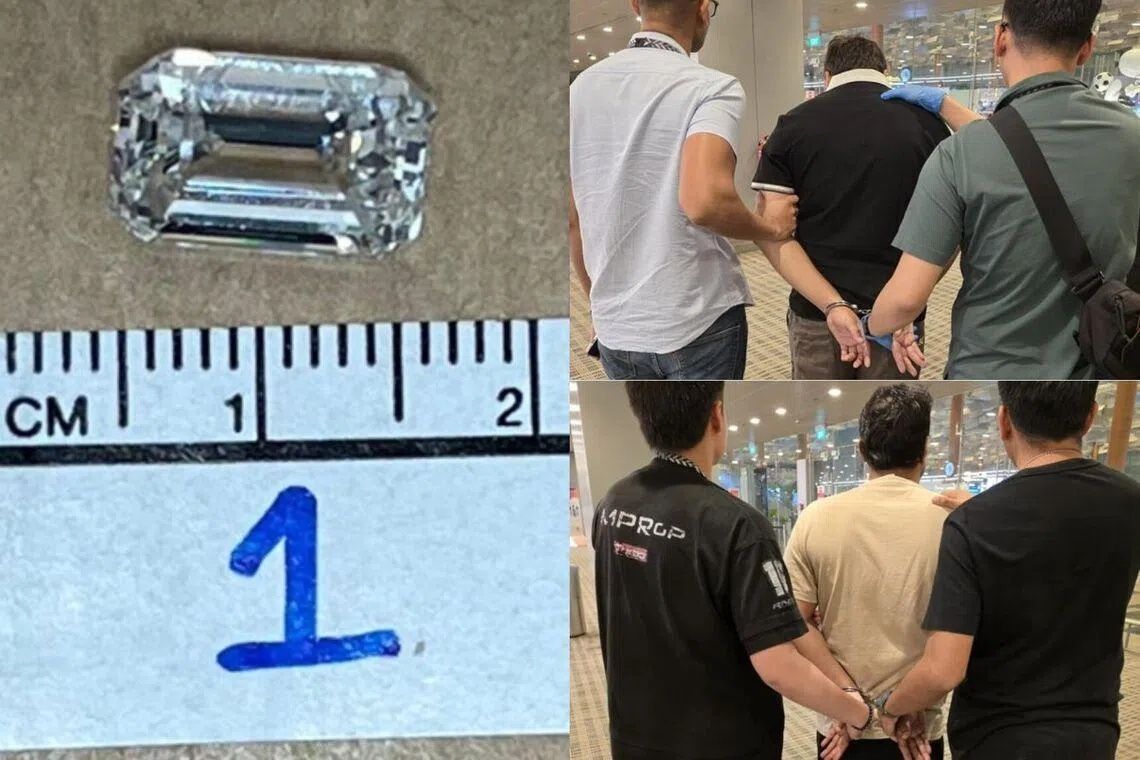
Singapore police have arrested two men in connection with the theft of a high-value diamond from a Chinatown jewellery store, marking another significant case of organised retail theft targeting luxury goods. The 30-year-old and 42-year-old suspects were taken into custody at Changi Airport Terminal 3 on Friday, June 19, just hours after the crime was reported. The diamond, valued at more than S$235,000, was recovered during the arrest, though authorities have withheld details about the suspects' nationalities as investigations continue.
The theft came to light when shop staff at the Kreta Ayer Road establishment noticed something amiss during a routine inspection. Police received an emergency call at 3.40pm on June 19 reporting the incident, prompting a rapid response from the Central Police Division and Police Operations Command Centre. The speed of the arrests underscores the effectiveness of Singapore's surveillance infrastructure and investigative protocols, which have become hallmarks of the nation's law enforcement approach to serious crimes involving significant financial losses.
Detectives reconstructed the crime through methodical examination of CCTV footage and police camera recordings, which proved instrumental in identifying the suspects. The investigation also incorporated traditional ground enquiries and follow-up interviews with witnesses, demonstrating a balanced approach combining modern technology with established detective work. This multi-layered investigative strategy enabled officers to move swiftly from initial report to apprehension, a critical factor in preventing the suspects from fleeing Singapore entirely.
The modus operandi employed by the two men reveals a sophisticated understanding of retail vulnerabilities and customer service protocols. According to preliminary findings, both individuals had deliberately shown interest in purchasing the diamond while examining it in the store. This calculated engagement with staff created a veneer of legitimacy, allowing them to handle the merchandise without arousing immediate suspicion. During this critical moment, they executed a sleight-of-hand substitution, replacing the genuine stone with a counterfeit replica so skilfully that the deception initially went undetected.
What ultimately unraveled their scheme was the behaviour pattern that followed the exchange. The men's decision to exit the store without completing a purchase struck the shop assistant as unusual and potentially suspicious. This heightened vigilance, likely developed through experience in the jewellery sector, prompted the staff member to conduct a closer examination of the diamond. Upon scrutiny, the substitution became apparent, triggering the urgent call to police and initiating the manhunt that culminated in the airport arrests.
The timing of the arrests at Changi Airport carries particular significance, suggesting the suspects had planned an immediate departure from Singapore following the heist. This detail indicates the theft was pre-planned rather than opportunistic, with the perpetrators having mapped out an exit strategy before entering the jewellery store. The airport interception prevented what could have become a significantly more complicated cross-border investigation, potentially involving Interpol and multiple jurisdictions across Southeast Asia and beyond.
Both men now face serious criminal charges under Singapore's theft provisions. They are slated to be formally charged on June 20 with theft in dwelling committed with common intention, a charge that acknowledges their coordinated actions and shared criminal purpose. If convicted on these charges, each faces a maximum prison sentence of seven years and financial penalties. The severity of these potential consequences reflects the seriousness with which Singapore's legal system treats organised theft of high-value items, particularly those stolen through cunning rather than force.
The recovery of the diamond before it could enter the underground market represents a significant victory for law enforcement. Once such high-value goods disappear into networks of fences and collectors, recovery becomes exponentially more difficult. The swift intervention prevented not only the financial loss to the store owner but also potentially disrupted a larger criminal enterprise that may have been operating systematically across the region. This suggests the investigation may extend beyond these two individuals to examine whether they were part of a larger organised crime network.
Singapore's police force has seized the recovered diamond as a case exhibit, preserving crucial evidence for prosecution. In their official statement, authorities emphasised their uncompromising stance on retail theft and luxury goods crimes. The police stated they maintain "zero tolerance for such acts of crime and will spare no effort to apprehend offenders and deal with them in accordance with the law," underscoring the government's commitment to protecting Singapore's reputation as a secure destination for high-end commerce and tourism.
Recognising that this incident reflects a broader pattern of sophisticated retail theft, police have issued a targeted alert to merchants dealing in luxury items. The advisory specifically warns shop owners and managers to remain vigilant against the sleight-of-hand substitution technique employed in this case. Business owners have been urged to implement robust verification protocols, including immediate authentication checks following any customer handling of high-value merchandise. This guidance reflects lessons learned from the investigation and represents a collaborative approach to loss prevention that extends beyond enforcement to include community and business participation.
For Malaysian readers, this case serves as a sobering reminder of the transnational nature of organised retail theft. Similar substitution schemes have been documented across Southeast Asia, including in Kuala Lumpur and Penang, suggesting perpetrators may operate flexibly across border regions. The incident highlights how luxury goods retailers throughout the region face mounting pressure from increasingly sophisticated criminal operations that exploit cultural expectations of customer service and the difficulty of quickly authenticating high-value items under normal commercial conditions.
%22%2F%3E%3C%2Fpattern%3E%3C%2Fdefs%3E%3Crect%20width%3D%22100%25%22%20height%3D%22100%25%22%20fill%3D%22url(%23ph24rdpg)%22%2F%3E%3Crect%20width%3D%22100%25%22%20height%3D%22100%25%22%20fill%3D%22url(%23ph24rdpp)%22%2F%3E%3Ctext%20x%3D%2250%25%22%20y%3D%2250%25%22%20text-anchor%3D%22middle%22%20dominant-baseline%3D%22central%22%20fill%3D%22rgba(255%2C255%2C255%2C0.95)%22%20font-family%3D%22Georgia%2C%20'Times%20New%20Roman'%2C%20serif%22%20font-weight%3D%22700%22%20font-size%3D%22170%22%20letter-spacing%3D%22-0.02em%22%3EMalaysia%3C%2Ftext%3E%3C%2Fsvg%3E)
%22%2F%3E%3C%2Fpattern%3E%3C%2Fdefs%3E%3Crect%20width%3D%22100%25%22%20height%3D%22100%25%22%20fill%3D%22url(%23ph16szhg)%22%2F%3E%3Crect%20width%3D%22100%25%22%20height%3D%22100%25%22%20fill%3D%22url(%23ph16szhp)%22%2F%3E%3Ctext%20x%3D%2250%25%22%20y%3D%2250%25%22%20text-anchor%3D%22middle%22%20dominant-baseline%3D%22central%22%20fill%3D%22rgba(255%2C255%2C255%2C0.95)%22%20font-family%3D%22Georgia%2C%20'Times%20New%20Roman'%2C%20serif%22%20font-weight%3D%22700%22%20font-size%3D%22136%22%20letter-spacing%3D%22-0.02em%22%3ECourt-Ord%E2%80%A6%3C%2Ftext%3E%3C%2Fsvg%3E)