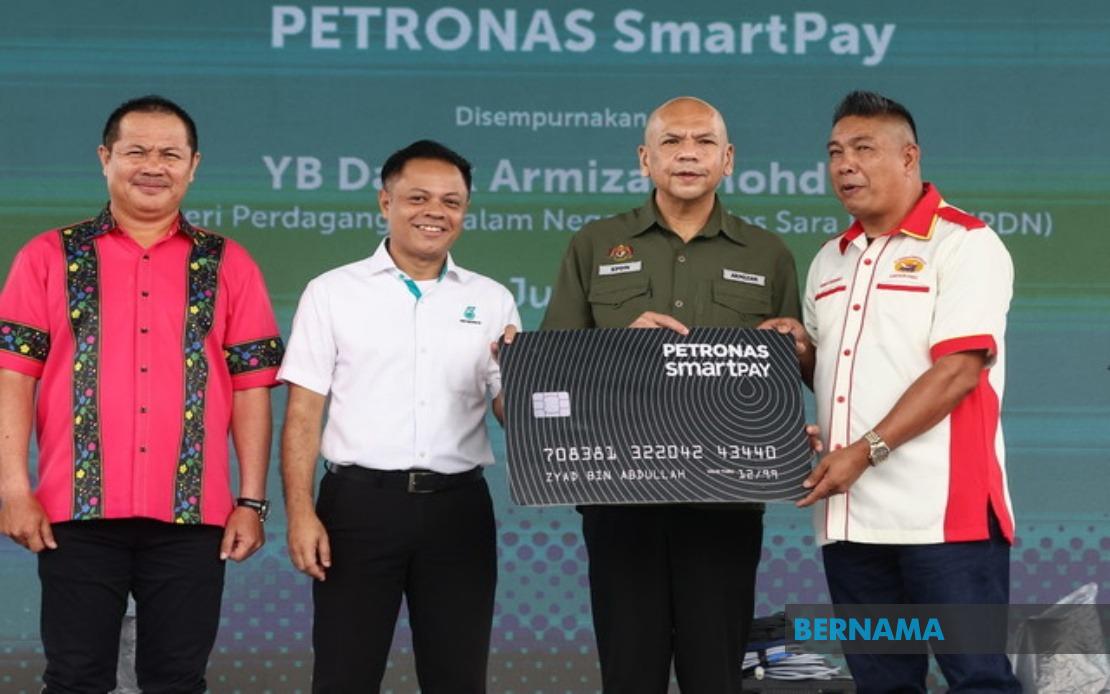
The expanded Subsidised Diesel Control System (SKDS) has demonstrated particular appeal to businesses in East Malaysia, with Domestic Trade and Cost of Living Minister Datuk Armizan Mohd Ali revealing that companies in Sabah, Sarawak and Labuan account for nearly 70 per cent of all registrations under the scheme's newly extended sector. Speaking in Sandakan on July 26 during a fleet card handover ceremony coinciding with the Jom Malaysia Festival, Armizan highlighted that the eastern regions' strong participation underscores the programme's relevance to commercial operators across Malaysia's diverse economic landscape.
Since the programme's eligibility expansion commenced on July 3, a total of 15,388 companies nationwide have registered under the SKDS framework, bringing 25,781 vehicles within the subsidy mechanism. The concentration of beneficiaries in East Malaysia is particularly striking: the three regions account for 10,453 companies operating 18,538 vehicles. This geographical distribution suggests that the subsidy structure resonates most strongly with business models prevalent in Sabah, Sarawak and Labuan, where smaller commercial operators form a substantial segment of the transport and logistics sector.
The recent expansion specifically opened the SKDS programme to a previously ineligible category: sole proprietorships and partnerships utilising jeeps and pickup trucks registered under private use classifications. These operators can now access a RM300 diesel subsidy per transaction through the SKDS mechanism, provided they meet other eligibility criteria and obtain fleet cards from participating petroleum retailers. This revision represented a significant broadening of the scheme, which had previously concentrated on larger commercial transport operators and agricultural commodities traders.
The SKDS framework currently encompasses three distinct sectors, each serving different commercial niches within Malaysia's transport ecosystem. Beyond the newly expanded jeep and pickup category, the system supports public land transport operators—including taxi, bus and lorry services—and companies engaged in transporting consumer goods. All approved registrants gain access to fleet cards issued by oil companies, enabling them to purchase diesel at subsidised rates. This tiered approach attempts to calibrate subsidy distribution across the transport supply chain while maintaining cost controls.
Armizan's ministry holds regulatory responsibility for 35 categories of commercial vehicles eligible for diesel subsidies, establishing eligibility criteria and overseeing the distribution mechanism. However, this mandate represents only part of Malaysia's broader subsidy architecture. The Ministry of Finance independently administers programmes targeting individual users, specifically the Budi Diesel scheme for personal diesel vehicle owners and the Budi Agri-Komoditi programme supporting agricultural producers. This bifurcated governance structure occasionally generates tension between federal agencies regarding subsidy standardisation and eligibility harmonisation.
During his Sandakan visit, Armizan acknowledged representations from local stakeholders concerning subsidy eligibility conditions, particularly regarding the Budi95 petrol and Budi Diesel programmes accessible to individuals and households. Regional representatives have advocated for standardised eligibility criteria across different subsidy categories, suggesting that driving license status should serve as a uniform qualification threshold regardless of programme type. These proposals reflect growing concern that inconsistent rules create administrative complexity and potentially favour certain population segments over others.
Armizan indicated that such policy suggestions would be channelled through the Sabah State Secretary's office rather than processed directly by his ministry, reflecting the constitutional division of responsibilities between federal trade regulation and state-level implementation. He noted that concerns regarding vehicle registration nomenclature—specifically whether vehicles must be registered in individual or corporate names—would similarly be escalated through established federal-state coordination mechanisms. This procedural approach acknowledges that subsidy reform requires synchronisation between the Ministry of Domestic Trade, the Ministry of Finance, and both Sabah and Sarawak state administrations.
The ministry has simultaneously urged companies meeting SKDS eligibility requirements but not yet enrolled to submit applications immediately through the MySubsidi portal. This digital registration platform represents the government's effort to streamline subsidy access and reduce administrative friction. The appeal suggests that significant untapped demand may exist among eligible operators, particularly in regions where awareness of the expanded programme remains incomplete or where previous ineligibility created a perception that small operators could not participate.
From a policy perspective, the concentrated uptake in Sabah, Sarawak and Labuan reflects both geographic economic structures and the distribution of eligible vehicle types in these regions. The relatively higher proportion of small commercial operators using pickup trucks and light utility vehicles in East Malaysian commerce appears to have created natural alignment with the newly expanded SKDS categories. For businesses in sectors ranging from agricultural production to construction materials distribution and small-scale logistics operations, the RM300 per transaction subsidy can materially improve operating margins.
Armizan's commitment to ongoing collaboration between his ministry, the Ministry of Finance, state governments, oil companies and other stakeholders suggests that the SKDS framework remains subject to refinement. The minister acknowledged that continuous strengthening of the programme reflects evolving commercial realities and feedback from business operators. This stance indicates receptiveness to further modifications, though any significant restructuring would require inter-agency coordination and potentially cabinet-level approval given the budgetary implications of diesel subsidy expansion.
The success of the SKDS expansion in attracting East Malaysian registrations carries implications for subsidy programme design more broadly. It demonstrates that carefully targeted eligibility expansions can generate substantial participation when they align with actual commercial practices and business structures. The concentration of beneficiaries in Sabah, Sarawak and Labuan may also reflect these regions' smaller average business size and heavier reliance on commercial vehicles for economic activity compared to peninsular Malaysia's more diversified industrial base.
Looking forward, the ministry's attention to standardisation requests from regional representatives suggests that subsidy policy may evolve toward greater consistency. Harmonising eligibility criteria across SKDS and Budi programmes could simplify administration while potentially expanding access to previously marginalised operator categories. However, such changes would require careful fiscal planning given Malaysia's ongoing commitment to fuel subsidies, a significant budget item that influences overall government expenditure priorities and macroeconomic stability.

