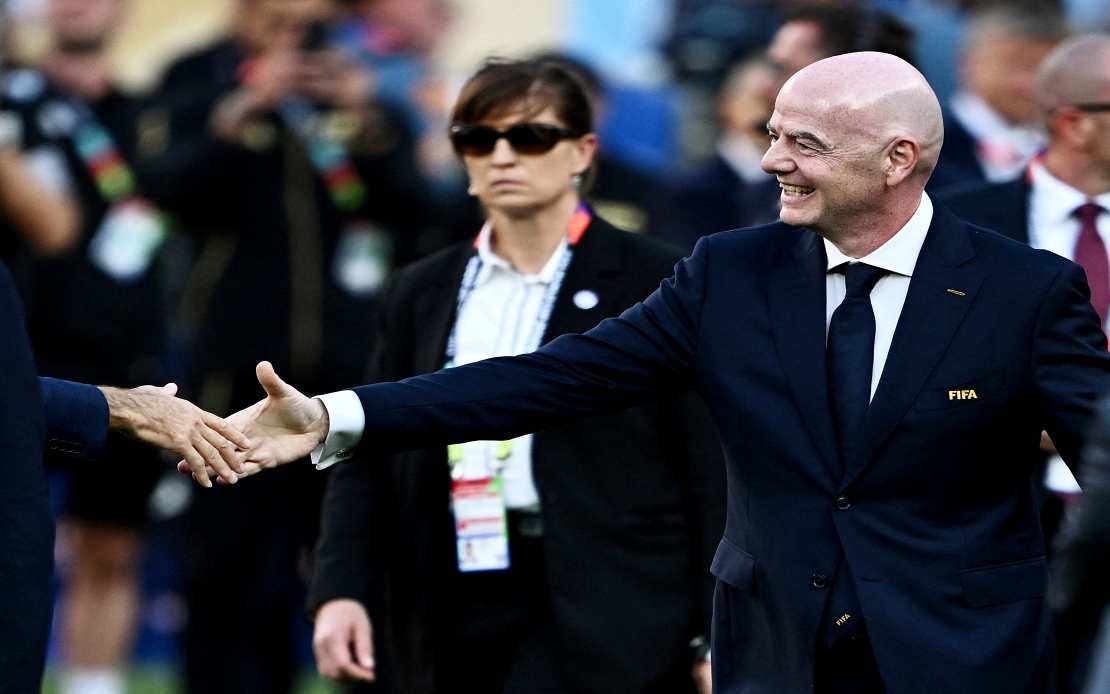
The Union of European Football Associations has escalated its dispute with FIFA by formally notifying President Gianni Infantino that it is considering filing a lawsuit and demanding the preservation of all documents related to a controversial scheme to privatise the organisation's commercial operations. The written notice, delivered to FIFA's leadership, marks a significant intensification of tensions between Europe's football governing body and the world federation over governance and financial transparency at the highest levels of the sport.
The dispute centres on FIFA's announcement in early August that it intended to raise US$4.2 billion by offloading approximately 20 per cent of a newly created entity responsible for managing FIFA's media and commercial rights, including the lucrative World Cup broadcasting and sponsorship packages. The plan represented one of the most ambitious attempts to monetise football's global commercial assets and would have fundamentally altered FIFA's financial structure by introducing private investment into operations traditionally controlled by the international federation.
Reports indicating that Joshua Kushner's foundation was among potential investors intensified scrutiny of the proposal, given the investment firm's connections to the Trump family through Kushner's brother Jared, former US President Donald Trump's son-in-law. The international dimension of the investment triggered concerns across European football about the concentration of power and decision-making within FIFA and the lack of meaningful consultation with continental confederations that represent national football associations.
UEFA responded swiftly and decisively, announcing that all its member associations would boycott FIFA competitions unless the proposal was completely withdrawn. This threat posed an existential challenge to FIFA's competitive calendar and commercial viability, as European nations represent a significant proportion of global football's revenue and audience reach. The prospect of Europe's withdrawal from FIFA-organised tournaments would have created unprecedented disruption to international football's governance structure and commercial arrangements.
Confronted with this coordinated opposition and facing the collapse of its flagship competitions, FIFA abruptly abandoned the commercialisation scheme within days. Infantino announced the withdrawal amid mounting controversy, effectively capitulating to UEFA's ultimatum. However, media investigations revealed that the original proposal would have substantially increased the FIFA president's annual compensation from 3 million euros to 30 million euros, suggesting that personal financial incentives may have motivated the initiative and raising broader questions about executive accountability within international sporting organisations.
Yet UEFA's decision to pursue formal legal action despite FIFA's reversal indicates that European football's leadership views the episode as symptomatic of deeper governance failures requiring accountability mechanisms. In a formal letter quoted by The Telegraph, UEFA stated it was "actively considering legal action, arbitration, and/or regulatory complaints arising out of and in connection with the FFE plan proposed by Fifa and all related matters." The notice demands that Infantino and FIFA "take immediate steps to identify, locate, and preserve all documents and electronically stored information" pertaining to the scheme.
The document preservation notice is a critical legal manoeuvre that prevents FIFA from destroying evidence or communications related to the proposal's development, approval, and promotion. Such notices are typically issued when organisations anticipate litigation and seek to prevent the opposing party from eliminating potentially damaging materials. UEFA's decision to employ this tactic suggests the European confederation views the episode as reflecting systemic governance defects rather than a single misstep that can be remedied through simple withdrawal.
UEFA's subsequent statement explicitly articulated a loss of confidence in FIFA's leadership and signalled determination to hold those responsible for conceiving and advancing the commercialisation plan accountable. This framing transforms what might have been interpreted as a tactical dispute over a specific proposal into a broader indictment of FIFA's governance culture and decision-making processes. The threat of legal action indicates UEFA is prepared to pursue remedies through arbitration and regulatory bodies, extending the dispute beyond FIFA's internal structures.
For Malaysian and Southeast Asian football stakeholders, the UEFA-FIFA dispute carries significant implications. Any restructuring of FIFA's commercial arrangements affects how broadcasting rights, sponsorship revenues, and competition formats are distributed globally. The episode demonstrates that continental confederations possess sufficient collective leverage to challenge FIFA's unilateral decision-making, establishing a precedent that regional bodies can mobilise coordinated opposition when governance concerns arise. The dispute also illustrates how opacity regarding executive compensation and commercial decision-making can trigger institutional crises, lessons relevant to governance practices across Southeast Asian sporting organisations.
The conflict reflects broader tensions within FIFA regarding the balance between the international federation's autonomy and the legitimate interests of continental bodies in shaping decisions affecting global football. Infantino's willingness to advance a scheme that would substantially increase his own compensation without apparent consultation with major stakeholders suggests organisational dynamics requiring stronger checks on executive power and greater transparency in decision-making processes affecting football's commercial future.
As UEFA pursues legal remedies, the dispute will likely establish important precedents regarding FIFA's governance obligations and the extent to which continental confederations can challenge executive decisions. The outcome may influence how FIFA structures commercial decision-making going forward and whether enhanced consultation mechanisms with regional bodies become established practice. For football stakeholders across Southeast Asia, the episode underscores the importance of maintaining vigilance regarding governance standards at the international level and ensuring that commercial developments affecting the sport's global structure proceed transparently and with appropriate stakeholder input.

