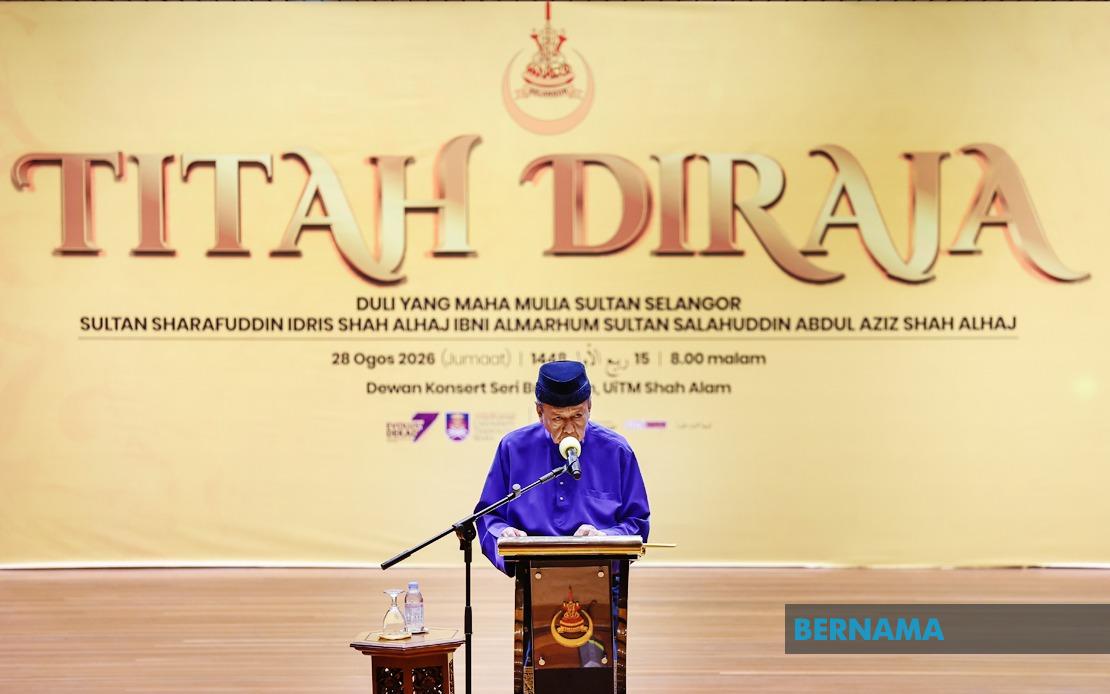
The Sultan of Selangor, Sultan Sharafuddin Idris Shah, has reinforced his vision that Universiti Teknologi MARA must continue serving as a transformative educational gateway for disadvantaged Malay and Bumiputera communities, particularly those from rural areas and low-income households. Speaking at UiTM's Royal Address ceremony at Dewan Konsert Seri Budiman in Shah Alam, His Royal Highness expressed concern that as the institution scales new heights, it should not lose sight of the marginalised groups it was originally designed to serve. This appeal carries particular weight given the broader national conversation about meritocracy, affirmative action, and inclusive access to higher education in Malaysia.
The Sultan's message underscores a tension that many established institutions face globally: balancing growth and prestige with fidelity to founding principles. UiTM, which began modestly in 1965 with just 219 students and 11 lecturers, has evolved into one of Southeast Asia's largest tertiary institutions. Yet that exponential expansion raises legitimate questions about whether excellence and equity can coexist, or whether pursuit of one inevitably compromises the other. Sultan Sharafuddin's intervention suggests that in UiTM's case, they must remain inseparable. The institution's legitimacy, he implied, rests not on rankings or graduate numbers alone, but on whether it fulfils its foundational promise to open doors for the children of farmers, fishermen, factory workers, and rural families who might otherwise remain trapped in cycles of poverty.
Within its first decade, UiTM had grown to accommodate nearly 7,000 students with approximately 1,000 teaching staff, offering around 60 academic programmes across multiple state campuses. That trajectory has continued spectacularly: today the university produces over 40,000 graduates annually, with a cumulative alumni base exceeding one million individuals. These figures reflect not merely institutional success but the scale of human potential unlocked across Malaysia's workforce. UiTM alumni occupy leadership positions in finance, engineering, medicine, law, architecture, public service, corporate management, the arts, and media. Many have founded enterprises, created employment, and driven sectoral development. From a purely economic perspective, UiTM's social returns have been substantial, generating human capital that has accelerated Malaysia's development trajectory.
Yet Sultan Sharafuddin's address carries an implicit warning: institutional prestige can subtly erode accessibility. As universities compete internationally and pursue research excellence, admissions standards may unconsciously shift toward applicants from better-resourced backgrounds. Teaching staff, increasingly focused on publication metrics and grant acquisition, may invest less in student mentoring. Campus culture can become increasingly consumerist, pricing out the genuinely poor. These dynamics are not unique to UiTM—they plague universities worldwide—but they threaten to hollow out UiTM's distinctive mission. The Sultan's emphasis on maintaining accessibility reflects acute awareness of this risk.
Crucially, Sultan Sharafuddin proposed a concrete mechanism to strengthen UiTM's financial position whilst deepening alumni engagement: a voluntary monthly contribution scheme of RM10 per alumnus, or RM100 annually. Mathematically, if even half of UiTM's one-million-plus alumni participated, the scheme could generate RM50 million annually; if uptake reached 100 percent, contributions could exceed RM100 million yearly. These sums dwarf many government allocations to higher education and could be channelled directly toward student financial aid, infrastructure improvements, and programme development. The Sultan framed this not as a tax but as reciprocal gratitude—alumni giving back to the institution that transformed their prospects.
This proposal carries deeper psychological resonance too. By institutionalising alumni contributions, UiTM would reinforce a culture of mutual obligation and institutional stewardship. Graduates paying RM10 monthly would maintain tangible connection to their alma mater, creating ongoing psychological investment in its welfare and mission. For underprivileged current students receiving scholarships or subsidised fees funded partly by such alumni generosity, the connection becomes visceral: their own senior counterparts are directly enabling their education. This creates a virtuous cycle of institutional loyalty and philanthropic engagement that purely tax-funded models struggle to generate.
The Sultan's reference to the slogan "UiTM Dihatiku" (UiTM in My Heart)—routinely invoked by students, staff, and alumni—suggests that institutional affection already exists; it simply requires channelling toward concrete institutional benefit. Malaysian universities, particularly UiTM, often struggle with fundraising and philanthropy compared to institutions in developed nations. A structured alumni giving programme, endorsed by royal patronage and framed as cultural obligation rather than guilt-based solicitation, could unlock significant voluntary resources whilst strengthening the UiTM community's collective identity.
Regionally, this intervention resonates with broader Southeast Asian challenges around educational equity. Malaysia, like Thailand, Indonesia, and the Philippines, has dramatically expanded higher education access over recent decades. Yet expansion alone does not guarantee that disadvantaged groups benefit proportionally. Without deliberate policy and institutional commitment, expansion can reproduce existing inequalities at scale. UiTM's founding principle—to create pathways for underrepresented Bumiputera communities—remains relevant precisely because such inequalities persist. The Sultan's restatement of this principle signals that despite Malaysia's development progress, targeted interventions remain necessary.
More broadly, Sultan Sharafuddin's address challenges a particular conception of meritocracy that dominates contemporary higher education discourse. Meritocracy, in its strictest interpretation, suggests that admission and advancement should depend solely on individual ability, regardless of circumstance. Yet this view ignores how initial circumstances shape ability: a child from a wealthy suburb with excellent schools, private tutoring, and stable nutrition differs fundamentally in opportunity from a rural child with underfunded schooling and food insecurity, even if both possess equivalent innate potential. UiTM's founding acknowledged this reality and created institutional structures to compensate. The Sultan's message reaffirms that such compensation remains not merely justified but essential to social justice and national development.
The timing of this address also merits attention. Malaysia faces renewed debates about affirmative action, Bumiputera rights, and educational access as demographic and economic pressures intensify. Political movements question the necessity or fairness of targeted programmes. Against this backdrop, the Sultan's intervention—rooted in institutional history and national development rationale—provides authoritative reinforcement for UiTM's continued commitment to inclusive access. Royal patronage lends legitimacy to discussions that might otherwise be dismissed as sectional interests.
Implementation of the alumni contribution scheme will require careful design. UiTM must establish transparent mechanisms ensuring funds reach students in genuine hardship, rather than disappearing into administrative overhead. The institution should publicise success stories—graduates whose lives were transformed by UiTM support, now paying forward to lift the next generation. Such narratives would motivate contributions and reinforce cultural meaning around the scheme. Additionally, UiTM should develop tiered contribution options, recognising that alumni earnings vary significantly. A recent graduate earning modest income might contribute RM5 monthly initially, increasing as career progresses, whilst senior executives might contribute substantially more.
For Malaysian policymakers and other university leaders, the Sultan's address offers instructive lessons. Higher education expansion must be coupled with deliberate institutional commitment to serving disadvantaged populations. Growth and mission fidelity need not conflict if universities consciously design structures—admission policies, financial aid systems, alumni engagement programmes—that embed equity principles into operations. UiTM's four-decade trajectory demonstrates that institutional focus on social mobility is compatible with academic quality and graduate employment outcomes. The Sultan's call to reaffirm this commitment, buttressed by proposed alumni engagement mechanisms, suggests pathways through which other Malaysian institutions might similarly strengthen their social contribution whilst securing sustainable funding.
Ultimately, Sultan Sharafuddin's message transcends UiTM, touching fundamental questions about what universities are for. Are they credentialing machines producing credentials for labour markets, or transformation engines enabling social mobility? Should access be merit-based in narrow academic terms, or should institutions consciously compensate for unequal starting points? These questions animate educational policy debates globally. Malaysia's experience, embodied in UiTM's founding and development, offers distinctive insights into how targeted institutional missions can serve both equity and excellence. The Sultan's reaffirmation of UiTM's foundational purpose invites the nation to recommit to that vision whilst modernising its implementation through schemes like the proposed alumni contribution programme.

