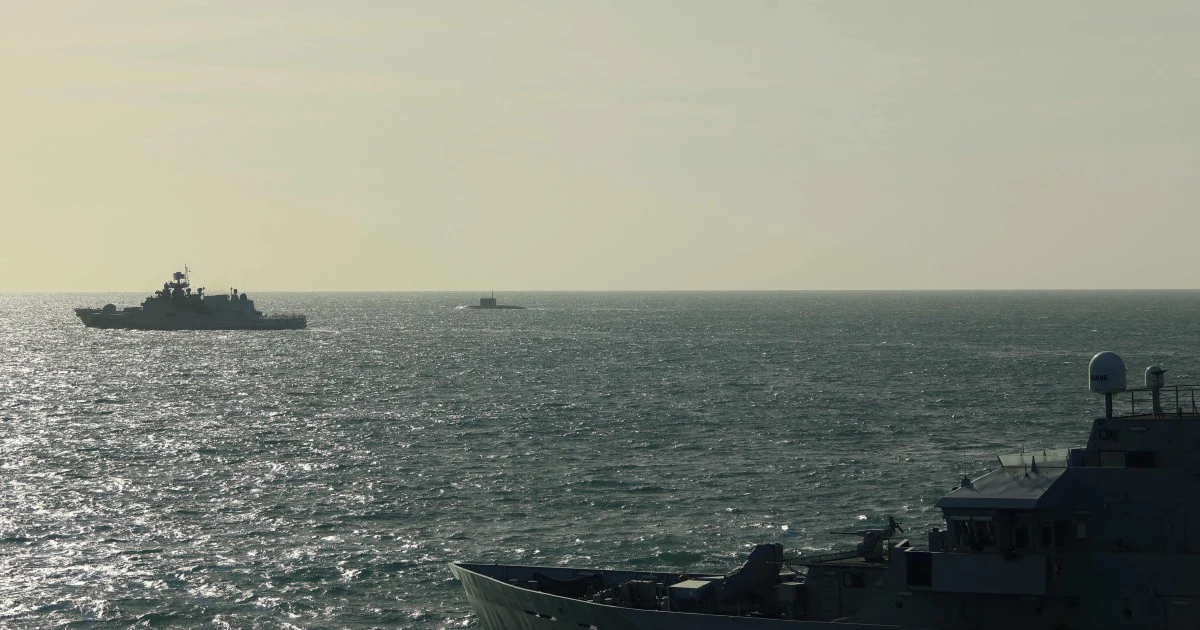
British Prime Minister Keir Starmer attempted to strike a careful diplomatic line on Wednesday when addressing the latest military confrontation between London and Moscow, describing warning shots discharged by a Russian naval vessel near a yacht in the English Channel as "reckless" conduct rather than deliberately "sinister" action. The distinction in language reflects the delicate balance Britain maintains in responding to escalating naval tensions with Russia while seeking to avoid further inflammatory rhetoric that could intensify the standoff.
The incident involving the Russian warship and the British vessel marks another flashpoint in the increasingly tense relationship between the two nations, particularly regarding maritime activities in waters that Britain considers part of its legitimate sphere of influence. The English Channel has become a recurring stage for military posturing between Western naval forces and Russian assets, with both sides operating in close proximity and testing each other's resolve. This particular encounter underscores the fragility of unwritten rules governing naval movements and the potential for miscalculation in crowded, strategically important waterways.
Starmer's characterisation of the incident as "reckless" rather than "sinister" suggests an effort to acknowledge Russian military assertiveness and the genuine dangers posed by such manoeuvres without formally attributing deliberate hostile intent. This nuanced language choice carries significant diplomatic weight, as labelling action as "sinister" would typically imply premeditation and a desire to provoke, potentially obligating a more severe British response and escalating the crisis. By framing the episode as a result of reckless behaviour rather than calculated provocation, the Prime Minister leaves room for diplomatic interpretation and avoids locking the UK into a predetermined escalatory path.
The warning shots incident reflects broader patterns of Russian military activity in European waters that have intensified in recent years, particularly since heightened tensions with NATO member states and allied nations. Russian naval vessels have become increasingly visible in international waters, challenging established norms and testing Western responses to their movements. For Malaysia and other Southeast Asian nations watching from afar, such confrontations in European waters demonstrate how great power competition translates into tense military standoffs and the thin margins separating accidents from intentional acts of aggression.
Britain has historically maintained a careful approach to Russian military activities in its waters, distinguishing between monitored provocations and genuine threats requiring immediate escalation. The Royal Navy routinely intercepts and shadows Russian vessels transiting through UK territorial waters or approaching British interests, creating a pattern of encounter that has become almost routine despite underlying tensions. These interactions occur within a framework of international maritime law, though both sides frequently push against the boundaries of accepted practice.
The diplomatic language Starmer employed also reflects awareness that excessive British bellicosity could undermine efforts to maintain communication channels with Moscow. Despite the profound differences between London and Washington on one side and Russia on the other, military powers typically recognise the importance of avoiding unintended escalation that could spiral beyond either side's control. Naval incidents particularly carry this risk, as decision-makers at sea may have limited real-time communication with political leadership and must make split-second judgments under pressure.
For regional observers in Southeast Asia, this English Channel episode offers instructive lessons about managing great power competition in contested waters. The South China Sea, where multiple nations including Malaysia hold maritime interests, faces similar dynamics of rival powers operating in proximity and occasionally conducting military activities that test regional tolerance. The British approach of absorbing military provocations while maintaining diplomatic communication pathways suggests one model for how smaller and medium powers can navigate situations where stronger nations flex military capabilities in their waters.
The incident also highlights Russia's apparent willingness to risk diplomatic friction in pursuit of operational objectives and the testing of Western boundaries. Russian military doctrine appears increasingly comfortable with grey-zone activities that fall short of outright warfare but exceed previously accepted norms of military conduct. This pattern concerns Western nations and creates uncertainty about how far Russia might push in any given confrontation before circumstances spiral into unintended conflict.
Starmer's response also served domestic audiences in Britain, communicating that the government takes Russian actions seriously while avoiding the appearance of panic or weakness. Characterising the incident as reckless demonstrates British awareness of the danger without suggesting that Moscow has fundamentally changed its strategic posture toward the UK. This calibrated response aims to satisfy domestic constituencies demanding a strong stance on security while preserving diplomatic flexibility and avoiding actions that could accelerate an arms-race dynamic with Russia.
The broader context encompasses NATO's eastern flank concerns, ongoing Ukrainian conflict ramifications, and Europe's evolving security architecture in response to Russian actions. Britain's role as a NATO member and major European power requires balancing firm security commitments with pragmatic recognition of mutual vulnerabilities and the risks inherent in military brinkmanship. Starmer's language choice ultimately reflects a sophisticated understanding that surviving repeated confrontations with Russia requires managing not just the immediate incident but the accumulated psychological and diplomatic dimensions of long-term competition.
Moving forward, such incidents will likely persist as Russia maintains its assertive maritime posture and Britain defends its interests in adjacent waters. The challenge for policymakers involves establishing sustainable patterns of response that neither encourage further provocations nor create incentive structures for escalation. Starmer's approach of distinguishing between recklessness and sinister intent suggests British confidence in managing this delicate equilibrium, though future incidents could test whether such diplomatic language can indefinitely substitute for deeper resolution of underlying strategic tensions.