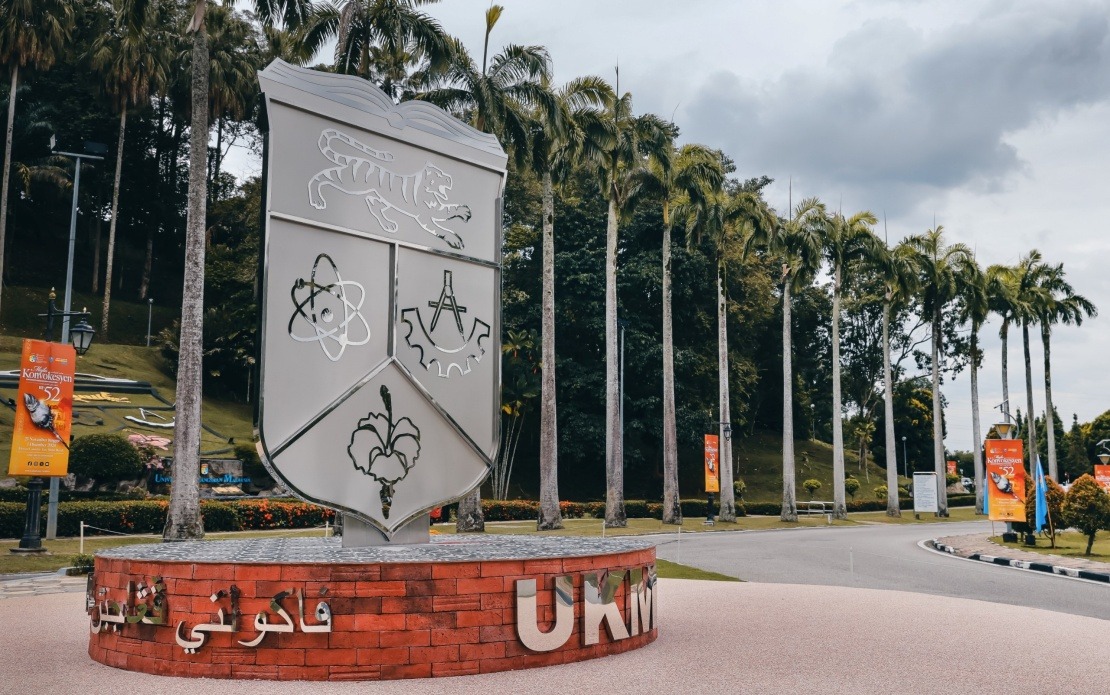
Universiti Kebangsaan Malaysia has moved swiftly to counter misleading claims circulating on social media that misrepresent the composition of its student body. A viral video has alleged that the premier research institution maintains a 5:1 ratio of international to local students, a figure the university categorically denies as entirely fabricated. The institution's response highlights growing concerns among Malaysian universities about the spread of misinformation through digital platforms and its potential to damage institutional credibility and community trust.
According to UKM's official data compiled by its Academic Management Centre and Centre for Continuing Education and Professional Studies, the university currently enrolls a total of 46,151 students across all programmes and levels. Within this cohort, only 3,917 are international undergraduates, a figure that fundamentally undermines the sensational claim making rounds online. These official records provide a clear documentary basis for the institution's rebuttal and serve as empirical evidence against the unsubstantiated allegations.
The actual proportion of international undergraduates at UKM represents merely eight per cent of the total student population, translating to approximately one international student for every twelve enrolled locally. This ratio stands in stark contrast to the alleged 5:1 configuration, which would require international enrolments to comprise roughly 83 per cent of the student body—a scenario fundamentally inconsistent with UKM's mission and Malaysia's higher education policies. The scale of the discrepancy underscores how dramatically false narratives can distort public perception when disseminated without verification or scrutiny.
The university has signalled its determination to protect its institutional reputation by explicitly warning of potential legal consequences for those who continue spreading defamatory or inaccurate information. This stance reflects broader tensions within Malaysia's higher education sector regarding information integrity and the responsibility of social media users to verify claims before amplification. UKM's firm posture suggests that Malaysian universities are increasingly prepared to pursue judicial remedies against persistent campaigns of misinformation that could undermine enrolment, funding, or public confidence.
UKM has reiterated its foundational commitment to advancing educational opportunities primarily for Malaysian citizens, emphasizing that international student admissions operate within a carefully controlled framework designed to complement rather than displace local opportunities. The university's position aligns with the Ministry of Higher Education's broader strategic vision of internationalizing Malaysia's higher education landscape while preserving domestic accessibility and opportunity. This balancing act remains central to how Malaysian public universities navigate competing pressures to enhance global competitiveness whilst maintaining fidelity to their domestic mandate.
The controlled admission of international students serves multiple institutional and national purposes beyond simple revenue generation. International enrolments contribute to campus diversity, enhance research collaborations across borders, and strengthen Malaysia's soft power in the region by building networks of alumni throughout Southeast Asia and beyond. By contextualizing international admissions within this strategic framework, UKM seeks to reframe the discussion from a zero-sum competitive dynamic to one emphasizing complementary benefits for both local and international student populations.
The institution has explicitly encouraged the public to rely exclusively on its official communication channels when seeking accurate information about campus operations, policies, and statistics. This appeal reflects the broader challenge facing Malaysian universities in an era of rapid information diffusion through unregulated digital platforms. UKM's guidance implicitly acknowledges that viral content often proliferates precisely because it triggers emotional responses—whether outrage or defensiveness—that bypass critical evaluation, making official channels and verified reporting essential counterweights to speculative social media narratives.
The episode illustrates how anxieties about internationalization can crystallize into conspiracy-style claims that oversimplify complex institutional realities. Public concerns about the balance between international and domestic student intake, while legitimate topics for policy discussion, become distorted when presented through unverified social media assertions. UKM's response demonstrates that Malaysian universities recognize the necessity of proactive communication to address misperceptions before they calcify into accepted wisdom within particular communities or demographic segments.
Beyond the immediate institutional dimension, this incident reflects broader patterns within Southeast Asia regarding tensions surrounding international mobility in higher education. As countries in the region compete to position themselves as regional education hubs, questions inevitably arise about whether international recruitment occurs at local students' expense. Malaysia, with its established tradition of welcoming international students and its aspirations to become a premier destination for regional talent, will likely continue encountering such challenges as demographic pressures and economic competition intensify. How universities respond—through transparent communication, robust data, and clear articulation of strategic rationales—will substantially influence public trust and policy trajectories across the sector.

