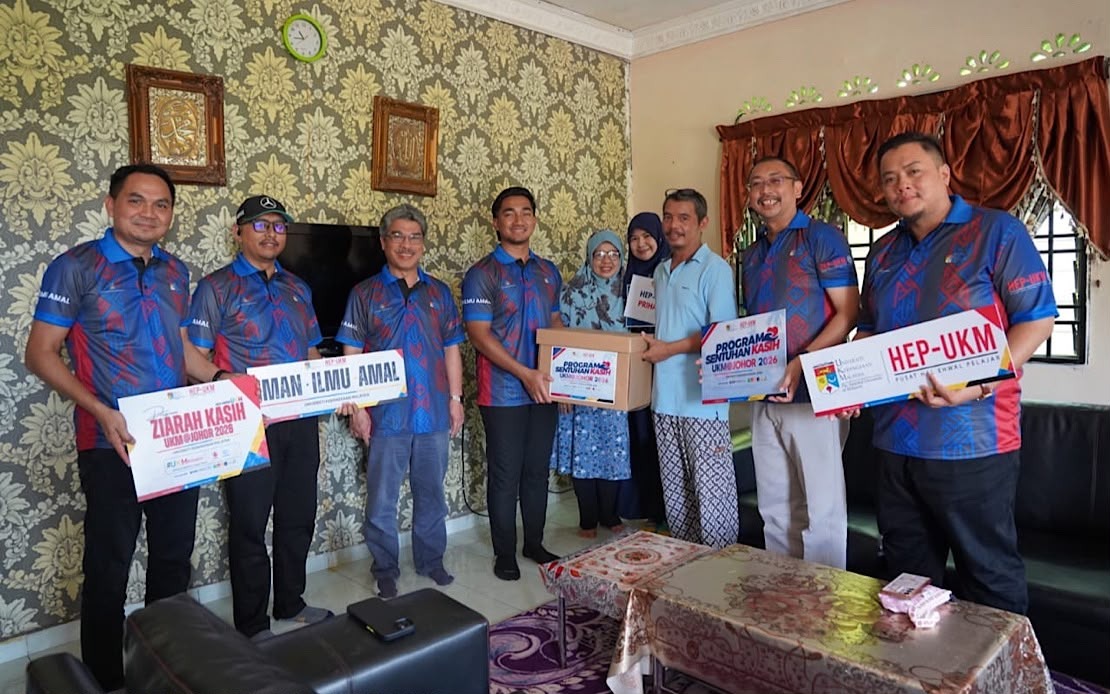
Universiti Kebangsaan Malaysia has deepened its connection with Johor communities through an ambitious weekend outreach initiative that drew nearly 1,000 local residents and demonstrated the institution's commitment to extending university values beyond the campus perimeter. The Sentuhan Kasih UKM@Johor programme, coordinated by the university's Student Affairs Centre, transformed multiple neighbourhoods into hubs of direct engagement, with 78 university participants distributing resources, knowledge and collaborative spirit throughout working-class areas in Johor Bahru.
The two-day initiative unfolded across four distinct locations—Kota Masai, Pasir Gudang, Kampung Baru Sri Aman and Taman Jaringan in Skudai—under the overarching theme "Dari Kampus ke Komuniti, Menyebar Kasih dan Bakti" (From Campus to Community, Spreading Love and Service). This geographic spread reflected a deliberate strategy to reach multiple demographic segments rather than concentrating efforts in a single neighbourhood, maximizing the programme's footprint and demonstrating institutional accessibility to residents across the Johor landscape. The presence of Higher Education Minister Datuk Seri Dr Zambry Abd Kadir underscored federal recognition of university-led community engagement as a policy priority in Malaysia's tertiary education sector.
The programme's activities balanced practical community benefit with educational value for participating students. Gotong-royong initiatives—the traditional Malaysian concept of collective voluntary work—created visible impact through infrastructure maintenance and environmental improvements that residents directly experienced. Parallel to these physical contributions, mental health screening services addressed a wellness dimension often overlooked in industrial communities where residents typically prioritise income-generation over preventive health measures. Sports activities functioned as accessible entry points for intergenerational interaction, breaking down psychological barriers between university students and working-class families who might otherwise perceive higher education as socially distant.
Associate Professor Dr Darfizzi Derawi, directing the Student Affairs Centre and chairing the programme, articulated a philosophy challenging the traditional ivory-tower positioning of Malaysian universities. His assertion that universities cannot remain confined within campus boundaries reflects a broader shift in tertiary education thinking, recognising that student development requires exposure to societal complexity beyond textbook scenarios. The emphasis on students developing adaptive capacity, communication proficiency and soft skills through real community interaction rather than simulation acknowledges that Malaysian employers increasingly demand graduates capable of navigating diverse social contexts and collaborative environments beyond their professional specializations.
Plans to expand Sentuhan Kasih periodically across Malaysia's states signal UKM's intention to institutionalise community engagement rather than treating outreach as episodic public relations. This expansion strategy carries implications for how Malaysian universities position themselves within their regional ecosystems and how they measure institutional success beyond research output and graduate employment metrics. Systematising engagement across geographies also creates data and feedback loops that can inform curriculum development and research directions aligned with authentic community priorities rather than purely academic interests.
Local community feedback highlighted a crucial challenge affecting programme design and timing: approximately 80 per cent of residents in participating areas work in the industrial sector, meaning weekends represent their only available leisure time despite fatigue from work schedules. Kota Delima Zone Community Leader Herman Ismadi Ismail's observation that participation remained encouraging despite these constraints reflects resident hunger for university engagement and information about institutional opportunities. For many industrial workers and their families, direct interaction with university representatives may represent the most accessible pathway to understanding higher education options and support systems otherwise mediated through institutional websites or distant admissions offices.
The programme extended beyond immediate neighbourhood activities to encompass welfare checks on university students from disadvantaged backgrounds, with UKM conducting outreach visits to seven families in Tiram and Puteri Wangsa areas. This dual-focus approach—simultaneously supporting external communities and buttressing student welfare—reveals sophisticated understanding that student success depends on stabilising home environments and family circumstances alongside academic provision. For students from industrial working-class backgrounds, recognising that the institution cares about their families' circumstances can fundamentally shift their sense of institutional belonging and psychological safety.
UKM Vice-Chancellor Prof Datuk Dr Sufian Jusoh framed these initiatives as extensions of the university's holistic human capital development philosophy, distinguishing institutional ambitions beyond purely academic excellence toward nurturing graduates embodying compassion, social responsibility and collaborative capacity. This framing positions universities as instruments for broader social cohesion rather than narrowly economic productivity engines. In Malaysia's context, where inter-communal harmony and shared prosperity remain essential national objectives, universities consciously modelling service values and direct engagement with diverse communities contribute to social capital accumulation across the nation.
The characterisation of student support extending beyond financial assistance to encompassing family stability recognition represents a significant philosophical statement about student welfare in Malaysian higher education. By positioning investment in students' home circumstances as catalysing greater academic focus, confidence and competitiveness, UKM acknowledges that financial barriers interact with psychological, social and family-based obstacles to educational attainment. This systemic understanding has particular resonance in Malaysia's diverse socioeconomic landscape, where talented students from working-class backgrounds frequently face compounding challenges that institutional financial aid alone cannot resolve.
The Sentuhan Kasih initiative demonstrates how Malaysian universities can operationalise civic engagement commitments through structured programming that delivers genuine community benefit while creating authentic learning environments for students. By embedding students directly in community problem-solving rather than positioning them as passive recipients of classroom instruction, UKM models alternative pedagogical approaches increasingly recognised as essential for developing graduates capable of navigating contemporary Malaysia's complexity. The programme's expansion trajectory suggests growing institutional recognition that university legitimacy increasingly depends on demonstrable community value creation alongside traditional markers of academic prestige.

