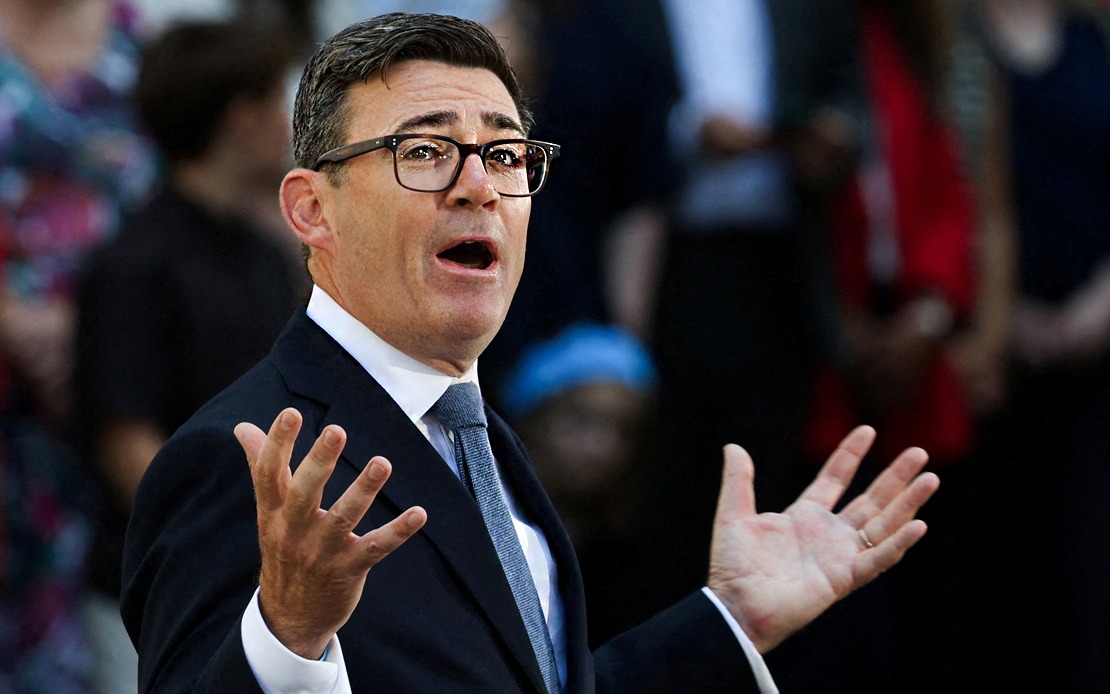
Andy Burnham has assumed office as the United Kingdom's new Prime Minister following King Charles III's acceptance of his predecessor's resignation. In his maiden address from Downing Street on Monday, Burnham outlined an ambitious agenda to fundamentally reshape British governance and economic policy, characterising his administration as a decisive break from the status quo. The former Mayor of Greater Manchester framed his tenure as a critical turning point, declaring his intention to deliver transformative changes not witnessed in the British political landscape for several generations.
During his remarks outside the prime minister's official residence, Burnham articulated a sweeping vision that encompasses both structural reforms to the machinery of government and a reimagining of Britain's economic foundations. He specifically committed to establishing what he termed a "circuit breaker" moment, suggesting his government would fundamentally interrupt established patterns of governance and economic management. The emphasis on comprehensive renovation rather than incremental adjustment signals Burnham's belief that Britain's challenges require bold intervention rather than modest policy adjustments.
The new Prime Minister directed particular criticism toward decisions made during the 1980s, contending that those decades established trajectories that continue to hamper contemporary British society. Burnham identified the concurrent centralisation of political authority and privatisation of economic assets as consequential missteps that triggered cascading regional decline. His framing suggests that the symptoms visible today—persistent regional inequality, diminished economic vitality in formerly industrial communities, and widespread pessimism about future prospects—are direct consequences of policies implemented and consolidated across the past forty years.
Burnham characterised large portions of the United Kingdom as remaining trapped in a state of ongoing deterioration, with residents experiencing not merely current hardship but a pervasive sense that remedial change lies beyond their collective capacity. This diagnosis extends beyond material poverty to encompass psychological dimensions—the erosion of agency and hope among communities that once possessed robust industrial bases and stable employment prospects. The Prime Minister's acknowledgment of this psychological dimension suggests recognition that restoring economic metrics alone will prove insufficient without simultaneously rebuilding community confidence and perceived possibility.
Central to Burnham's stated agenda is a recalibration of Britain's political culture toward collaborative problem-solving and away from adversarial point-scoring. This rhetorical pivot reflects an implicit critique of Westminster's traditional gladiatorial parliamentary dynamics, where opposition parties gain advantage by attacking government positions regardless of substantive merit. Burnham's invocation of collaborative governance suggests aspirations to depoliticise certain policy domains and establish cross-party consensus on matters affecting national wellbeing, a notable shift from the confrontational approach that has dominated recent British political discourse.
For Malaysian and Southeast Asian observers, Burnham's ascension and policy orientation merit attention for several reasons. Britain remains an influential voice within international institutions and a significant trading partner for the region. The structural critiques Burnham raises regarding the consequences of 1980s-era liberalisation and privatisation strategies resonate across the developing and post-industrial world, where similar policy prescriptions generated comparable outcomes of regional inequality and deindustrialisation. Burnham's willingness to explicitly challenge the ideological consensus that dominated the past four decades suggests a broader intellectual reorientation occurring within major Western democracies.
The transition from Keir Starmer's premiership to Burnham's represents a continuation of Labour Party governance but with potentially different emphases and personnel. Burnham's background as a regional politician and his emphasis on devolution and regional empowerment suggest possible rebalancing of centre-periphery power dynamics within the UK political system. This realignment could have ramifications for how Britain approaches its international relationships and development partnerships, potentially opening space for different collaborative frameworks with Southeast Asian nations.
Burnham's commitment to establishing a "new political model" alongside a "new economic model" indicates recognition that sustainable reform requires simultaneous transformation of both institutional processes and underlying economic structures. This holistic framing acknowledges that governance and economic organisation are deeply intertwined—that political models reflecting unequal power distribution perpetuate economic outcomes favouring established interests, while economic systems concentrating wealth reinforce political marginalisation of disadvantaged constituencies. Achieving meaningful change therefore demands coordinated intervention across both domains.
The incoming Prime Minister's emphasis on reversing regional decline and restoring agency to communities across Britain positions his government as oriented toward redistribution and decentralisation after an extended period emphasising centralisation and concentration. Whether such aspirations can translate into durable institutional changes remains uncertain, particularly given the constraints imposed by global capital flows, international economic integration, and established bureaucratic interests. Nevertheless, the explicit articulation of such goals signals a reorientation of political discourse that may influence policy debates across allied democracies including within the Commonwealth and among Western European nations.

