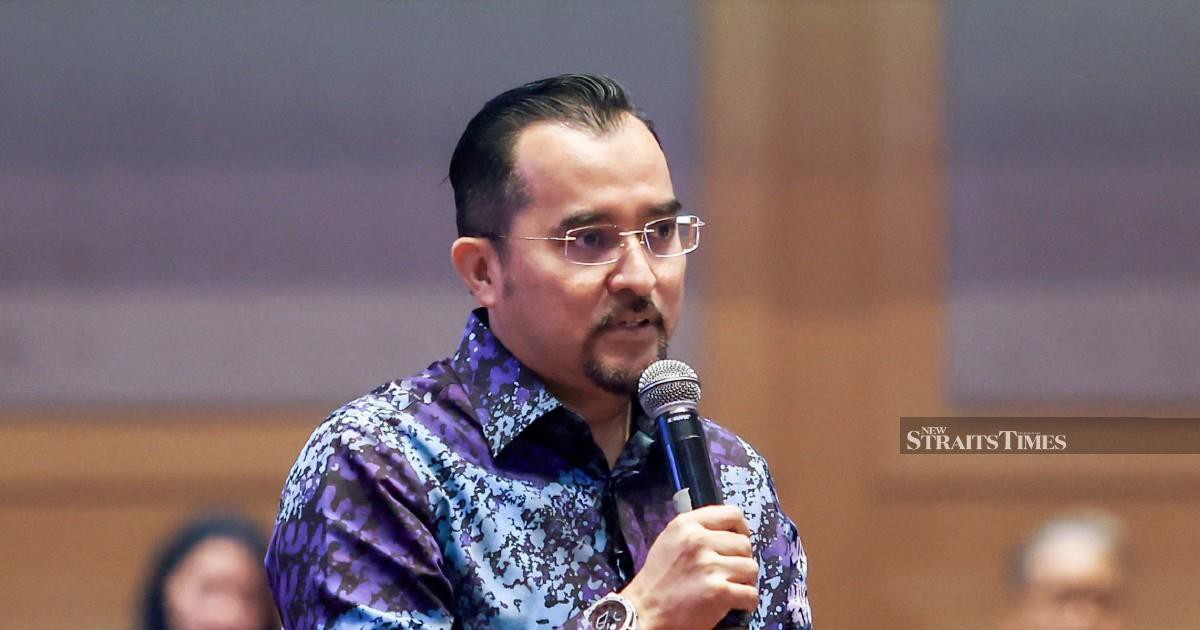
The controversy surrounding Lembaga Tabung Haji's financial troubles has deepened with Umno secretary-general Datuk Dr Asyraf Wajdi Dusuki firmly denying that his party has deliberately orchestrated any scheme to shield those held accountable for wrongdoing at the Islamic pilgrim fund. The assertion marks a significant moment in the ongoing debate about accountability and transparency in one of Malaysia's most significant financial institutions serving millions of Muslim Malaysians.
The Tabung Haji scandal, which has unfolded over recent years, has emerged as one of the most consequential governance crises affecting the savings of millions of Malaysians, particularly those from lower and middle-income households who entrust their hajj funds to the institution. The organisation's financial distress, estimated to run into billions of ringgit, has triggered extensive scrutiny of management decisions, investment strategies, and the administrative oversight that allowed substantial losses to accumulate. This situation carries particular weight given Tabung Haji's role as a sacred repository of savings for Malaysian Muslims preparing for one of Islam's five pillars.
Allegations that a political cover-up may be underway strike at fundamental questions about institutional integrity and whether Malaysians can trust their elected representatives and the institutions they oversee. The accusation that Umno, as the dominant political force that governed Malaysia until 2018 and has substantially shaped the administration of major institutions, might be orchestrating a smokescreen to protect implicated figures represents a serious charge with implications extending beyond party politics into the realm of public accountability and the rule of law.
Datuk Dr Asyraf Wajdi's rebuttal indicates that Umno views these allegations as threatening to its political standing and credibility. The party has sought to distance itself from suggestions that it would compromise institutional integrity for partisan advantage. However, the very necessity of issuing such denials underscores the deep public cynicism about Malaysian governance that has accumulated following earlier corruption scandals and charges of political mismanagement during the Barisan Nasional era.
For Malaysian citizens and observers of institutional accountability, the Tabung Haji situation exemplifies the challenges facing the nation's regulatory environment. The fund's collapse in real terms exposes gaps in oversight mechanisms, external auditing procedures, and the separation between political influence and fiduciary responsibility. Questions persist about whether management failures were adequately investigated and whether those bearing responsibility have faced proportionate consequences.
The broader context involves multiple layers of concern. Beyond the immediate financial crisis at Tabung Haji lies the question of systemic weaknesses that allowed such significant losses to occur without being detected and arrested earlier. The institution had numerous checkpoint mechanisms that theoretically should have identified problems before losses reached critical levels. The apparent failure of these safeguards has prompted questions about whether negligence, incompetence, or deliberate concealment played a role.
From a regional perspective, Malaysia's handling of this affair carries implications for investor confidence and the credibility of the country's governance frameworks. Southeast Asian and international observers monitoring Malaysian political stability and institutional reliability assess cases like Tabung Haji as indicators of whether the country is genuinely committed to transparent, accountable governance or whether political connections continue to supersede legal and ethical obligations.
The allegations of a political "charade" fundamentally challenge whether Malaysia's current political administration, in which Umno holds significant influence, will pursue genuine accountability or settle for superficial reforms that preserve political relationships while appearing to address public concerns. This tension between substantive reform and performative action has characterised Malaysian governance debates for decades.
For Malaysian Muslims relying on Tabung Haji for hajj preparations, the implications are deeply personal. Their savings, accumulated over years, have suffered substantial diminution, and many have postponed or cancelled their hajj plans as a result. Beyond the financial loss lies a sense of betrayal regarding the stewardship of funds entrusted to an institution that held special cultural and religious significance for millions of Malaysians.
Moving forward, the credibility of institutions and political leadership will depend on demonstrable commitment to thorough investigation, transparent disclosure of findings, and proportionate accountability for those culpable. Mere denials, however forcefully articulated, may prove insufficient to restore public confidence in systems that have visibly failed ordinary Malaysians. The ultimate test will involve concrete actions: whether comprehensive independent audits occur, whether findings are fully publicised, and whether consequences are equitably applied irrespective of political affiliation.
The Tabung Haji episode continues to resonate throughout Malaysian civil society as a touchstone case for evaluating whether institutional reform is genuinely possible within existing political arrangements or whether structural changes are required to subordinate political considerations to public accountability. Umno's emphatic denials represent merely the opening positions in what will likely remain a prolonged examination of governance failures and questions about institutional trustworthiness that extend well beyond the immediate scandal itself.

