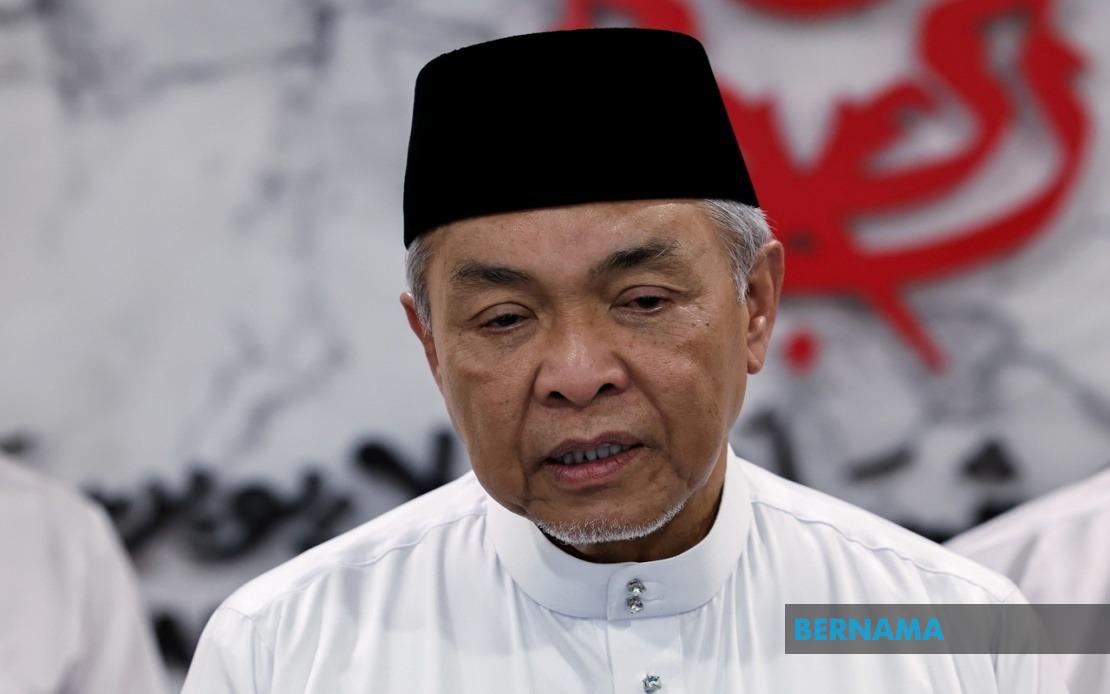
UMNO has signalled it will not enter into formal coalition negotiations for the forthcoming Melaka state election until the state legislative assembly is officially dissolved, according to party president Datuk Seri Dr Ahmad Zahid Hamidi. The Deputy Prime Minister made this clear when addressing reporters in Kuala Lumpur on August 30, establishing a procedural boundary that the party intends to observe as it contemplates its electoral strategy in the southern state. This measured approach reflects UMNO's institutional preference for maintaining clear separation between preliminary consultations and binding political arrangements.
The responsibility for steering these negotiations will fall to Melaka Chief Minister Datuk Seri Ab Rauf Yusoh, whom Ahmad Zahid identified as the lead figure who will engage with potential coalition partners once the formal dissolution process is completed. This delegation of authority represents a strategic choice to position the state-level leadership at the forefront of coalition discussions, potentially offering greater flexibility in negotiations and allowing decisions to be calibrated to local political conditions. The Chief Minister's role underscores how Malaysian state elections frequently involve different coalition configurations than those operating at the federal level.
Ahmad Zahid drew a deliberate distinction between the preliminary conversations currently occurring and the formal negotiations that lie ahead. While acknowledging that informal discussions may already be taking place among party officials and other potential allies, he emphasised that these preliminary talks carry no binding weight. This sequential approach provides UMNO with tactical advantages: it permits exploratory conversations without committing the party to specific arrangements, while the formal process remains suspended until procedural requirements are satisfied. For Malaysian political observers, such careful calibration of communication timelines often signals parties are weighing multiple coalition options.
The query that prompted Ahmad Zahid's remarks specifically concerned the possibility of UMNO cooperating with Perikatan Nasional (PN) in the Melaka contest. This question reflects the ongoing realignment of Malaysian politics, where state-level elections frequently feature fluid coalition patterns differing markedly from federal arrangements. PN's emergence as a significant political force has created both opportunities and complexities for UMNO's state-level strategies, particularly in Melaka where the party has traditionally held substantial influence. Ahmad Zahid's response deliberately avoided committing UMNO to any particular partnership arrangement, maintaining maximum flexibility as the party assesses its options.
Prior to his public statement, Ahmad Zahid had already engaged UMNO's Melaka political apparatus in comprehensive deliberations about the upcoming election. He consulted the entire UMNO Melaka Political Bureau, which presented detailed preparations and strategic assessments for the state contest. These internal discussions provided the party leadership with granular intelligence about local political dynamics, candidate viability, and potential electoral outcomes. Such extensive groundwork within the state party structure reflects how modern Malaysian political campaigns operate on multiple levels simultaneously, with state-level bodies gathering specific local data that informs national-level strategic decisions.
Following these state-level consultations, Ahmad Zahid brought the discussion before UMNO's Supreme Council (MKT), the party's highest decision-making body. This escalation enabled the national party leadership to engage in detailed examination of intelligence compiled through UMNO Melaka's war room operations. The war room system, increasingly standard in Malaysian political campaigns, represents sophisticated data gathering and analysis infrastructure designed to track voter sentiment, identify campaign vulnerabilities, and optimise resource allocation. By presenting this locally-gathered information to the highest national council, UMNO ensured that any coalition decisions would be grounded in substantive evidence rather than assumption.
The timing and sequencing of UMNO's approach to the Melaka election reflects broader patterns in contemporary Malaysian politics. State elections have become occasions where federal coalitions frequently reconfigure, allowing parties to test different electoral strategies, negotiate from different positions of strength, or respond to local political circumstances. The clear demarcation between informal and formal negotiations that Ahmad Zahid established creates space for political manoeuvre while maintaining institutional discipline. This approach also provides cover for any subsequent shifts in UMNO's stated position, since preliminary discussions ostensibly carry no formal weight.
For regional observers and Malaysian political analysts, UMNO's cautious positioning on Melaka reflects the party's broader predicament as it navigates post-2022 Malaysian politics. Having regained the Deputy Prime Minister's portfolio and substantial ministerial representation, UMNO seeks to project strength while managing internal divisions and maintaining flexibility in coalition partnerships. State-level elections like Melaka's offer opportunities to demonstrate this strength without the existential stakes of federal contests. The party's insistence on deferring formal negotiations until assembly dissolution also serves a signalling function: it indicates UMNO's commitment to procedural propriety and institutional governance, qualities the party has emphasised in its political messaging.
The implications for Melaka voters and the broader Southeast Asian political landscape merit consideration as these developments unfold. State elections in Malaysia frequently set precedents for federal-level coalition arrangements, making them consequential far beyond their local significance. How UMNO and its potential partners ultimately configure their electoral alliance in Melaka will send signals about broader coalition possibilities in subsequent federal elections. The coming months will test whether UMNO's stated commitment to formal procedures after assembly dissolution masks predetermined coalition preferences or genuinely reflects ongoing negotiations among multiple potential partners. For regional politics observers monitoring Malaysia's continued democratic evolution and coalition dynamics, the Melaka election represents a significant test case of how major parties navigate electoral strategy in an increasingly fragmented political environment.

