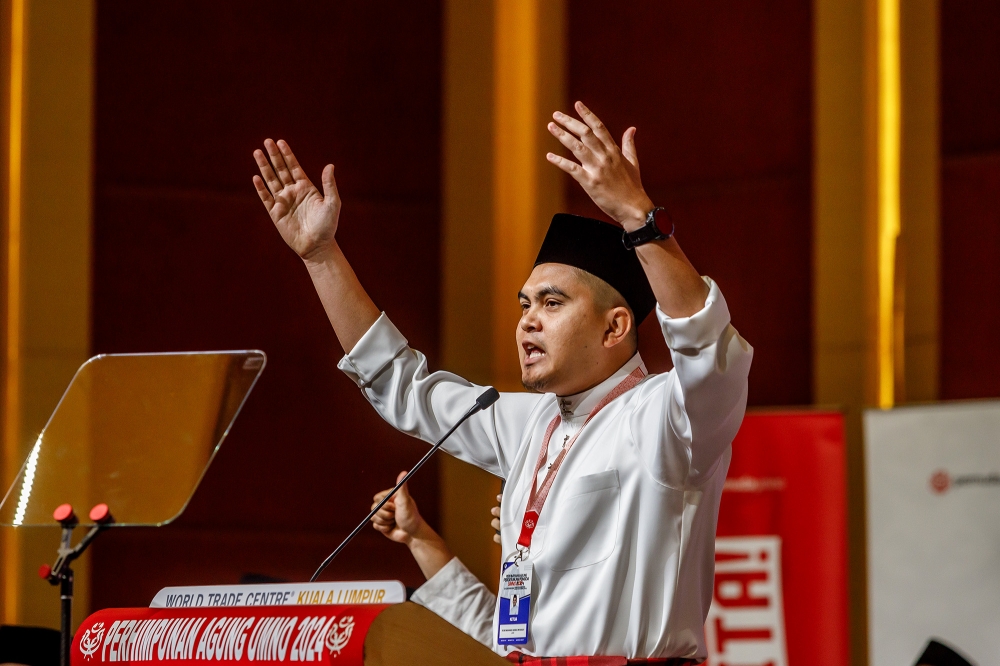
In a pointed political riposte, Umno Youth chief Datuk Dr Akmal Saleh has challenged the opposition Pakatan Harapan alliance to demonstrate intellectual consistency when addressing concerns about electoral partnerships and government participation. Speaking in Kuala Lumpur on July 19, Saleh posed a direct question to his counterparts in the PH Youth wing: if the Barisan Nasional coalition faces calls to withdraw from government over alliance-related matters, why should the ruling coalition escape equivalent scrutiny from within its own support base?
The rhetorical challenge strikes at the heart of Malaysian political discourse, where different standards sometimes apply to governing and opposition coalitions. Saleh's intervention suggests growing frustration within Umno's youth wing over what party figures perceive as unequal treatment in public and media commentary regarding coalition arrangements and their impact on governance. The comment reflects broader tensions within Malaysia's multi-coalition political ecosystem, where smaller parties and internal factions frequently leverage alliance grievances as leverage in negotiations.
Umno Youth's intervention carries particular weight given the organization's role as the grassroots mobilization engine within the party structure. Youth divisions across Malaysian political parties traditionally serve as barometers of membership sentiment and potential sources of internal pressure on party leadership. By framing the question in terms of logical consistency rather than direct partisan attack, Saleh employs a rhetorical strategy designed to shift the burden of justification onto PH while avoiding direct accusations that might escalate coalition tensions further.
The timing of this statement reflects Malaysia's complex post-election political environment, where government formation and maintenance require careful balancing of coalition interests. Since the 2022 general election, both the federal government and state-level administrations have navigated intricate coalition arrangements, with various smaller parties and independent representatives holding crucial swing votes. These structural realities mean that alliance management and internal coalition discipline have become central to Malaysia's political narrative.
For Malaysian readers, understanding this exchange requires recognition that coalition stability directly affects policy implementation and resource allocation. When ruling coalitions face internal pressures or demands for realignment, government effectiveness may suffer through delayed decision-making or compromised policy outcomes. Conversely, excessive party solidarity can prevent legitimate internal debate and democratic accountability. The question Saleh raises touches on fundamental governance principles applicable across Southeast Asia's multi-party democracies.
Pakatan Harapan's position as the opposition coalition adds another dimension to this debate. While PH does not control the federal government, it governs several significant states and maintains substantial parliamentary representation. This dual role means that PH policies and internal dynamics carry consequences for both opposition effectiveness and state-level governance quality. Youth wings within opposition coalitions often serve as sources of ideological consistency and internal criticism, making their institutional voice relevant to broader coalition health.
The reference to electoral alliances proves particularly significant in the Malaysian context, where pre-election seat-sharing arrangements frequently become sources of internal dispute once voting concludes. Different parties bring divergent expectations to these arrangements, and post-election recalibration often requires difficult negotiations. When smaller coalition members feel disadvantaged by electoral outcomes or power-sharing terms, they may threaten withdrawal, creating the instability that parties like Umno have highlighted as problematic.
Saleh's challenge implicitly raises questions about whether opposition coalitions have adequately addressed internal alliance management issues before assuming power. If Pakatan assumes future government responsibility, similar pressures that now face Barisan Nasional may inevitably confront PH as well. The recognition that no coalition can govern without managing internal tensions and satisfying multiple constituent parties' demands constitutes an important structural reality in Malaysian politics that transcends partisan divides.
For Umno specifically, Saleh's statement serves multiple functions within party strategy. It reframes Umno's current coalition participation not as a liability requiring withdrawal, but as a manageable governance challenge that opposition parties would equally face. This rhetorical positioning seeks to normalize BN's coalition arrangements while simultaneously questioning the logical coherence of demands that apply selectively to ruling rather than opposition coalitions. The move reflects sophisticated political communication that shifts substantive debate toward procedural and fairness arguments.
The broader implication for Malaysian governance centres on coalition management best practices and institutional design. Whether ruling or opposition coalitions prove stable depends less on the number of constituent parties than on mechanisms for dispute resolution, benefit-sharing mechanisms, and leadership consensus on priority policies. The challenge Saleh articulates, while delivered in partisan context, touches on genuine governance questions that shape policy effectiveness and democratic stability across Southeast Asia's coalition-based systems.
Moving forward, how both Barisan Nasional and Pakatan Harapan respond to internal coalition pressures will establish precedents for Malaysia's political future. Should either coalition fragment or face forced realignment, the consequences would ripple through state governments and parliamentary dynamics. Saleh's intervention signals that Umno Youth intends to shape that discussion by demanding consistency in how Malaysian politics evaluates coalition participation and internal accountability standards.

