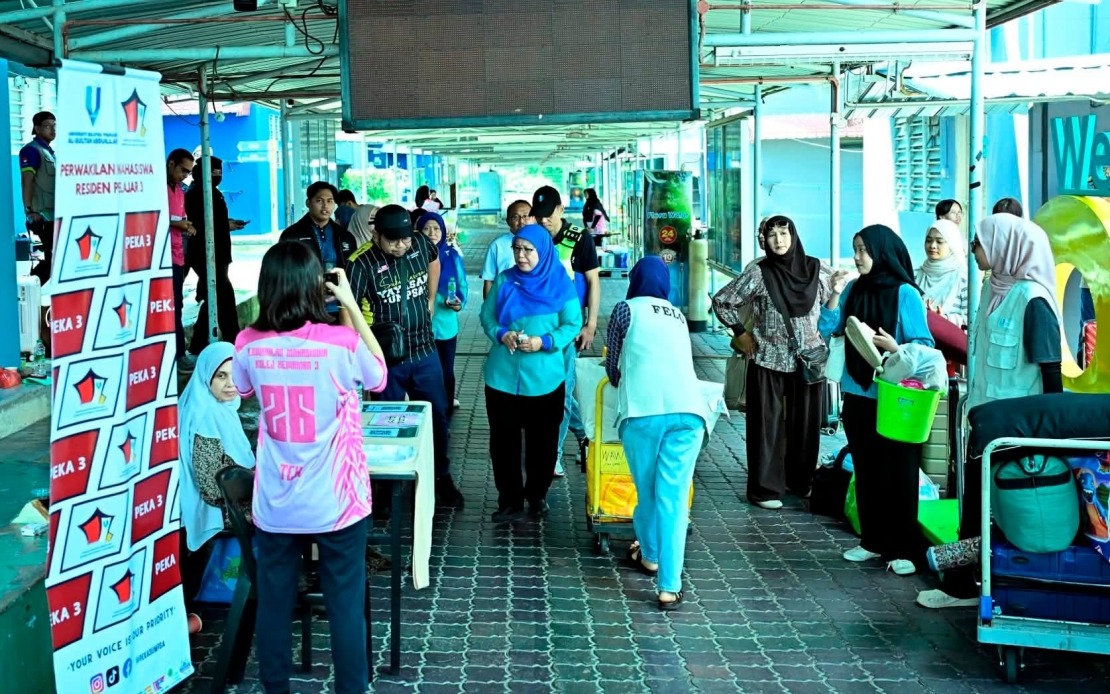
Universiti Malaysia Pahang Al-Sultan Abdullah (UMPSA) has reiterated its commitment to supporting financially disadvantaged students, positioning student welfare as a cornerstone of institutional policy as the university welcomes its largest cohort of new learners since its founding. Vice-Chancellor Prof Dr Yatimah Alias made the declaration during the latest registration period in Kuantan, emphasising that access to quality higher education remains non-negotiable regardless of a student's economic background. The university's approach reflects a broader recognition that financial barriers should not determine educational outcomes, particularly as Malaysia seeks to develop its talent pool across all socioeconomic segments.
The timing of UMPSA's welfare emphasis coincides with a significant milestone in the institution's development. A total of 1,045 new diploma students have registered for the 2026/2027 academic session, representing the highest enrolment surge since the university's establishment. This expansion underscores growing demand for accessible tertiary education pathways in Malaysia, particularly through diploma programmes that offer both affordability and career-relevant skills. The surge reflects shifting student preferences toward institutions that balance rigorous academic standards with practical support systems designed to facilitate completion and progression.
To translate commitment into concrete action, UMPSA has implemented a multi-layered support framework targeting students facing financial hardship. During the recent registration cycle, the university distributed scholarships to 20 qualifying students, with packages encompassing full tuition fee coverage and monthly living allowances. These scholarships address one of the most significant obstacles disadvantaged students encounter: the combined burden of educational costs and sustenance expenses. By bundling tuition and stipend support, UMPSA removes the mathematical impossibility that often forces capable students to abandon studies midway through their programmes.
Beyond headline scholarship schemes, the institution has introduced targeted emergency assistance designed to address immediate financial crises. The Early Education Incentive programme, underwritten by the UMPSA Foundation, distributed RM1,000 grants to students in acute financial need during the current registration period. This initiative recognises that unexpected expenses—whether medical emergencies, family hardships, or equipment costs—frequently derail students who otherwise possess the academic capacity to succeed. By maintaining accessible emergency reserves, UMPSA creates a safety net that prevents temporary financial shocks from becoming permanent educational disruptions.
The funding architecture supporting these programmes reflects institutional strategy rather than charitable afterthought. The UMPSA Foundation serves as the operational vehicle channelling resources toward student welfare, institutionalising support rather than relying on ad-hoc donor generosity. This structural approach provides predictability and continuity essential for students planning their educational journeys. Malaysian universities have increasingly recognised that sustainable student support requires dedicated funding mechanisms rather than sporadic initiatives dependent on leadership transitions or budget fluctuations.
Prof Dr Yatimah's personal engagement during registration—spending time directly with new students—signals that welfare commitments extend beyond policy documents into institutional culture. When senior leadership visibly prioritises student welfare, it communicates organisational values more powerfully than any press release. This hands-on approach also provides administrators with direct insight into student concerns and circumstances, informing responsive rather than theoretical policymaking. The vice-chancellor's presence during registration also created opportunities for meaningful dialogue about academic expectations and available support services.
The emphasis on equal educational opportunity carries particular significance for Pahang and East Coast regions, where economic disparities remain pronounced compared to developed urban centres. UMPSA's positioning as a responsive institution willing to invest in disadvantaged cohorts strengthens the university's role as an engine of social mobility. Students from lower-income backgrounds gain access not merely to credentials but to networks, mentorship, and professional connections historically concentrated among more privileged populations. This democratisation of educational access has compounding effects across generations and communities.
The record diploma intake reflects strategic programming aligned with labour market realities. Diploma qualifications have gained employers' recognition as providing specialised competencies often more immediately applicable than generic bachelor degrees. By removing financial barriers to diploma access, UMPSA expands pathways into skilled employment for populations that might otherwise lack viable alternatives. This approach acknowledges that not all students require or benefit from traditional university progression routes; diverse pathways strengthen overall educational ecosystem resilience.
Looking forward, UMPSA's welfare framework faces the perpetual challenge of matching resources to demand. With 1,045 new diploma students arriving, the university must ensure that support systems remain adequately funded and accessible rather than becoming congested or rationed. The integration of Foundation funding with institutional budgets will require careful planning to maintain service quality as cohort sizes expand. Malaysian higher education institutions increasingly recognise that scaling operations without proportionally scaling support systems degrades educational experience across all students, not merely disadvantaged cohorts.
The institutional commitment also reflects national imperatives around human capital development. Malaysia's transformation agenda depends upon expanding the talent pipeline and ensuring that capability rather than circumstance determines educational and career trajectories. When universities like UMPSA systematically remove financial obstacles, they unlock potential that would otherwise remain dormant. This efficiency imperative aligns welfare commitments with national economic interests, positioning student support as investment rather than expense. As regional competition for skilled workers intensifies, institutions demonstrating genuine commitment to inclusive excellence will attract and retain the most capable students regardless of background.

