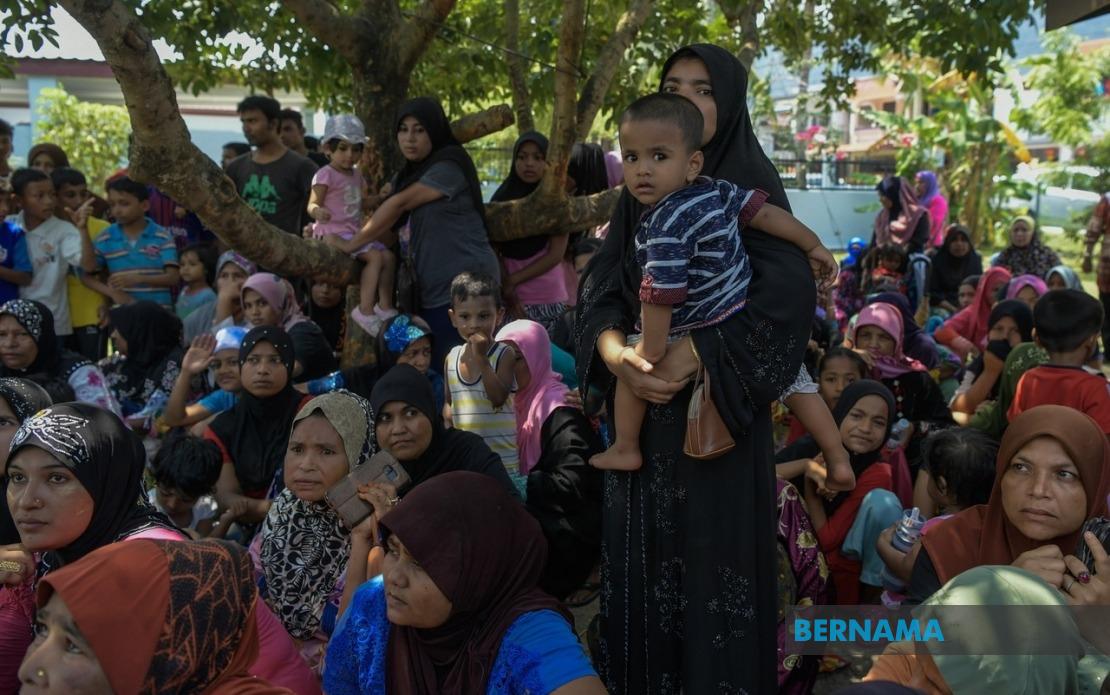
Malaysia's Economy Minister Datuk Akmal Nasrullah Mohd Nasir has issued a clear statement distinguishing the status of UNHCR documentation within the Malaysian legal framework, emphasising that possession of a UNHCR card confers no exemption from national laws or enforcement actions. The clarification, delivered during a briefing on the country's economic situation, directly addresses mounting public apprehension regarding refugee administration and the perceived legal protections afforded to asylum seekers and registered refugees residing in Malaysia.
The minister's remarks underscore the government's determination to maintain distinct boundaries between humanitarian recognition and legal accountability. While the UNHCR card serves as documentation for individuals registered with the United Nations body, it operates independently of Malaysia's domestic legal system and carries no authority to shield cardholders from criminal investigation or prosecution. This distinction has become increasingly important as public discourse surrounding migration and security has intensified across the region, particularly following concerns about organised criminal elements exploiting refugee populations and documentation systems.
The clarification emerged during deliberations at the National Economic Action Council meeting, chaired by Prime Minister Datuk Seri Anwar Ibrahim at Parliament, where the Home Ministry presented a comprehensive update on refugee administration and related security concerns. The discussion centred on escalating public worries regarding documentation integrity, the involvement of human trafficking networks, and the broader implications of refugee populations for community safety. These anxieties reflect genuine concerns about the potential for organised criminal exploitation of vulnerable migrants and the capacity of existing administrative systems to manage complex cross-border population movements.
In response to these challenges, the Home Ministry, operating through the Immigration Department, has accelerated implementation of the Refugee Registration Document programme, which incorporates sophisticated biometric systems alongside comprehensive screening protocols. This initiative represents a technological and procedural advancement in how Malaysia processes and monitors refugee populations, moving beyond traditional document verification toward integrated identification systems capable of cross-referencing individuals against multiple data sources and criminal databases. The programme's emphasis on biological markers and digital records reflects contemporary international best practices in population management and security screening.
The government has committed substantial financial resources to strengthen these infrastructure elements, allocating RM1.2 billion across multiple agencies for border security and control initiatives. This investment demonstrates the administration's serious intent to upgrade Malaysia's capacity to manage its porous borders effectively, particularly given the country's geographic position as a transit point for irregular migration flows originating from conflict zones and economically distressed regions across Asia. Enhanced border management directly influences not only refugee policy but also the state's broader security posture and its ability to combat trafficking networks that exploit vulnerable populations.
Coordinated enforcement operations designed to dismantle smuggling and human trafficking syndicates have been designated for expansion, with particular emphasis on preventing document fraud and intercepting individuals attempting unauthorised border crossing. These operations operate across multiple jurisdictions and require sophisticated coordination between immigration authorities, police forces, and regional partners. The intensification of such efforts reflects recognition that irregular migration networks operate as complex criminal enterprises capable of deploying substantial resources and exploiting regulatory gaps across multiple countries.
The government has signalled its intention to deploy data analytics and advanced monitoring technologies to enhance the identification of emerging security risks and to provide actionable intelligence supporting enforcement operations. This technological dimension represents a significant evolution in how Malaysian authorities approach refugee management, moving beyond reactive responses to individual incidents toward predictive systems capable of anticipating trafficking movements and identifying high-risk individuals within refugee populations. Such systems require substantial investment in infrastructure, personnel training, and sustained institutional commitment.
Acceleration of the Malaysian Border Control and Protection Agency's operational scope forms another critical component of the government's strategy to consolidate border management functions and improve enforcement effectiveness. Expanding this agency's mandate and resources aims to create a more cohesive border management framework, reducing bureaucratic friction between multiple agencies and establishing clearer chains of command during crisis situations. The agency's enhanced role reflects the government's recognition that effective border security requires unified command structures and rapid decision-making capacity.
For Malaysia, which hosts one of Asia's largest refugee populations and functions as a crucial transit point for irregular migration, these policy developments carry significant implications. The clarification regarding UNHCR card status directly addresses concerns within Malaysian society that vulnerable refugee populations might exploit documentation to evade criminal accountability, a perception that has fuelled political pressure on the government to demonstrate assertive management of the refugee issue. By explicitly stating that UNHCR cards provide no legal immunity, the minister has sought to reassure the Malaysian public that refugee status does not equate to exemption from the rule of law.
Regionally, Malaysia's approach provides instructive precedent for neighbouring countries wrestling with comparable migration pressures. The integration of biometric technology, inter-agency coordination, and substantial financial investment in border infrastructure reflects a model increasingly adopted across Southeast Asia as countries attempt to balance humanitarian obligations with security imperatives. However, these developments also highlight tension between protecting vulnerable populations and preventing exploitation by criminal networks, a tension that remains unresolved across the region.
The government's simultaneous discussion of food security and manufacturing sector resilience during the same economic council meeting illustrates the interconnected nature of contemporary policy challenges. Refugee populations and irregular migration flows intersect with broader economic concerns, as labour availability, supply chain stability, and food security all depend partially on managing population movements effectively. This holistic framing suggests that Malaysian policymakers recognise refugee management not as an isolated humanitarian matter but as an integral component of national economic stability and security planning.

