Universiti Malaysia Perlis (UniMAP) has emerged as a critical pipeline for technical talent, graduating nearly 2,000 students annually who are entering the country's electrical and electronics and semiconductor industries. This output represents a substantial contribution to Malaysia's broader technological ambitions, particularly as the nation seeks to consolidate its position as a global semiconductor powerhouse. The university's role underscores the critical linkage between higher education institutions and industrial workforce development—a relationship that will determine whether Malaysia can sustain its competitive advantage in advanced manufacturing.
Datuk Prof Dr Zaliman Sauli, UniMAP's Vice-Chancellor, emphasized that the institution's graduate pipeline directly aligns with the government's National Semiconductor Strategy, which targets the development of 60,000 skilled workers and engineers by 2030. This alignment is deliberate and strategic; Malaysia faces intensifying global competition from nations like South Korea, Taiwan, and Vietnam, all seeking to capture market share in semiconductor manufacturing and design. By channelling university output towards this goal, policymakers hope to build institutional capacity that mirrors the rapid growth of the sector itself. The numbers are modest relative to the 60,000-worker target, suggesting that UniMAP alone cannot satisfy demand and pointing to the need for expanded participation from other universities and vocational institutions across the country.
Data on graduate employment outcomes provides concrete evidence of UniMAP's sectoral focus. Employment statistics for 2024 and 2025 reveal that over 30 per cent of UniMAP graduates launched their careers within the electrical and electronics sector. This figure demonstrates not merely academic output, but successful market placement—graduates are finding positions aligned with national priorities. For Malaysian readers, this suggests that pursuing electronics and semiconductor-related qualifications at UniMAP carries tangible employment prospects, though the corollary is that 70 per cent of graduates pursue other fields, indicating that even a focused university maintains significant diversity in its graduate career paths.
Semiconductors have transcended their historical role as a niche industrial component to become foundational infrastructure for the digital economy. From consumer devices like smartphones to cutting-edge applications in artificial intelligence, autonomous vehicles, and cloud computing infrastructure, semiconductor chips are indispensable. Malaysia's strategic positioning within this ecosystem reflects decades of industrial development dating back to the 1970s, when multinational corporations first established assembly and testing operations in the country. Today's National Semiconductor Strategy represents an evolution of that legacy, seeking to move Malaysia beyond contract manufacturing into higher-value design, innovation, and advanced processing.
Malaysia's current standing in global semiconductor trade underscores the scale of opportunity. The country ranks as the world's sixth-largest semiconductor exporter, a position that commands respect but also invites scrutiny regarding quality and innovation. Malaysian exports represent seven per cent of global chip trade, a meaningful share that reflects both market presence and competitive strength. More tellingly, Malaysia commands 13 per cent of the global Assembly, Testing and Packaging (ATP) market—the segment of semiconductor production focused on finishing and preparing chips for deployment. This specialisation reflects Malaysia's traditional strengths in precision manufacturing, though it also raises questions about whether the country can transition toward higher-margin design and fabrication activities.
Universities cannot transform industrial ecosystems in isolation; success requires intentional collaboration between academic institutions, government agencies, and private firms. UniMAP has adopted multiple strategies to bridge academia and industry, recognising that theoretical knowledge must be coupled with practical exposure to contemporary workplace challenges. The university's Industry-on-Campus initiatives bring company professionals into academic settings, while Industry Advisory Panels ensure that curricula remain responsive to employer needs rather than calcifying around obsolete technologies. International Adjunct Professors provide exposure to global best practices, and industry-recognised professional certification programmes create pathways through which students can acquire credentials valued by employers before graduation.
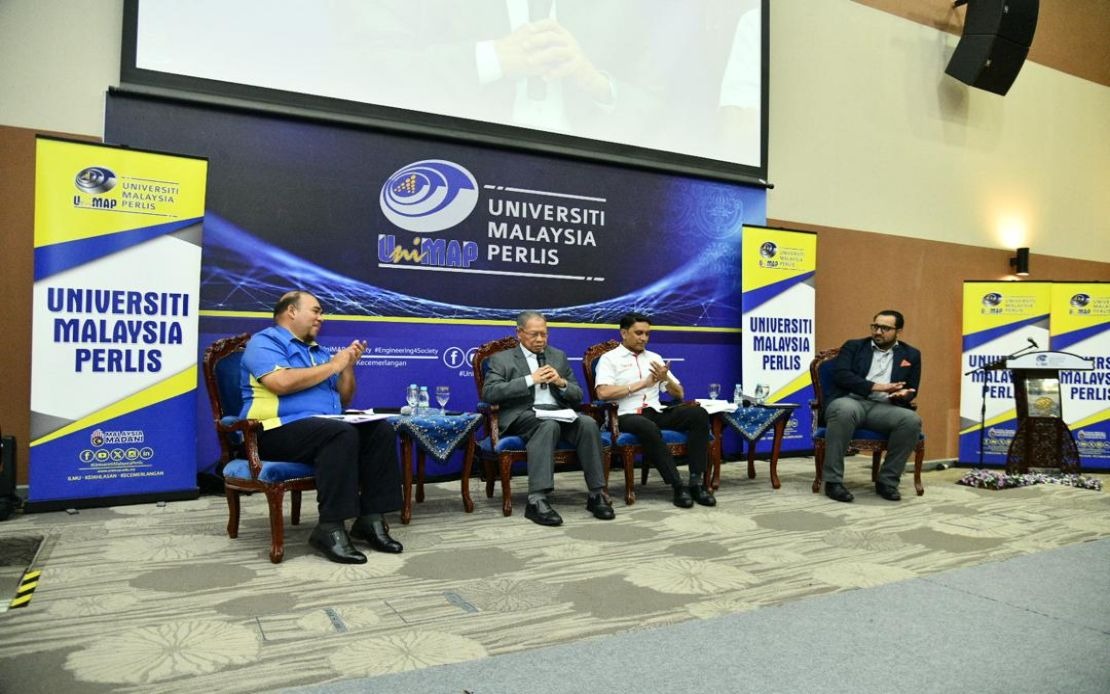
The forum that brought together Zaliman with former International Trade and Industry Minister Datuk Seri Dr Mustapa Mohamed, Northern Corridor Implementation Authority Chief Executive Datuk Mohamad Haris Kader Sultan, and representatives from multinational semiconductor firms like Micron Technology Inc signals the multi-stakeholder nature of Malaysia's semiconductor ambitions. These discussions reflect recognition that workforce development cannot proceed in parallel tracks—government industrial policy, regional economic development initiatives, university education systems, and corporate investment strategies must reinforce one another. When alignment exists, momentum accelerates; when misalignment occurs, bottlenecks emerge and opportunities migrate elsewhere.
The Northern Corridor's involvement in this forum carries particular significance for Malaysia's regional disparities. While Kuala Lumpur and Selangor capture disproportionate shares of high-tech investment and talent, the northern states—where UniMAP is located—represent an opportunity to distribute advanced manufacturing capability geographically. Success in Perlis and surrounding states could catalyse regional development, attract investment beyond the traditional corridors, and distribute employment benefits more widely. This spatial dimension matters for political stability and social cohesion across Malaysia, making UniMAP's contribution relevant not merely to sector performance but to national equity considerations.
Universities like UniMAP face persistent challenges in sustaining graduate competitiveness. The semiconductor industry evolves rapidly, with technological paradigms shifting within years rather than decades. Curriculum development lags behind industry innovation; by the time a programme is established and students graduate, new skills may be in demand. International competition for semiconductor talent is fierce, with countries offering attractive incentives that may lure Malaysian graduates abroad. Brain drain remains a persistent concern, particularly as Malaysia competes with higher-income countries offering premium compensation packages and cutting-edge research environments.
Malaysia's semiconductor strategy depends fundamentally on whether universities can sustain output while maintaining quality and relevance. UniMAP's contribution of nearly 2,000 graduates annually represents genuine progress, yet the gap between current output and the 60,000-worker target demands acceleration across the higher education system. This acceleration will require investment—in faculty recruitment, laboratory equipment, and industry partnerships—at a time when public budgets face competing demands. The private sector may need to invest more directly in human capital development, moving beyond advisory roles into meaningful financial partnership with universities.
The competitive landscape surrounding semiconductors is intensifying as governments worldwide recognise the sector's strategic importance. China's aggressive capacity-building, Taiwan's continued dominance in advanced fabrication, and recent U.S. efforts to reshore manufacturing through subsidies create headwinds for Malaysian competitiveness. In this environment, Malaysia cannot rely on historical advantages or incremental improvement. Instead, the country must pursue distinctive positioning—perhaps in advanced packaging, specialised chip applications, or emerging technologies where established players have not yet solidified dominance. Universities like UniMAP must anticipate these opportunities and prepare graduates for frontier work rather than consolidating competence in mature domains.
Zaliman's emphasis on government-industry-university collaboration articulates the fundamental insight that no sector develops in isolation. Malaysia's semiconductor future depends on whether policymakers sustain commitment to industrial strategy, whether multinational corporations continue viewing Malaysia as an attractive base, and whether universities like UniMAP can evolve faster than their students' skills become outdated. The 2,000 annual graduates from UniMAP represent both genuine achievement and a baseline from which acceleration must occur. The real measure of success will emerge over the next five years, as the 60,000-worker target comes into sharper focus and the adequacy of current institutional capacity becomes apparent.

