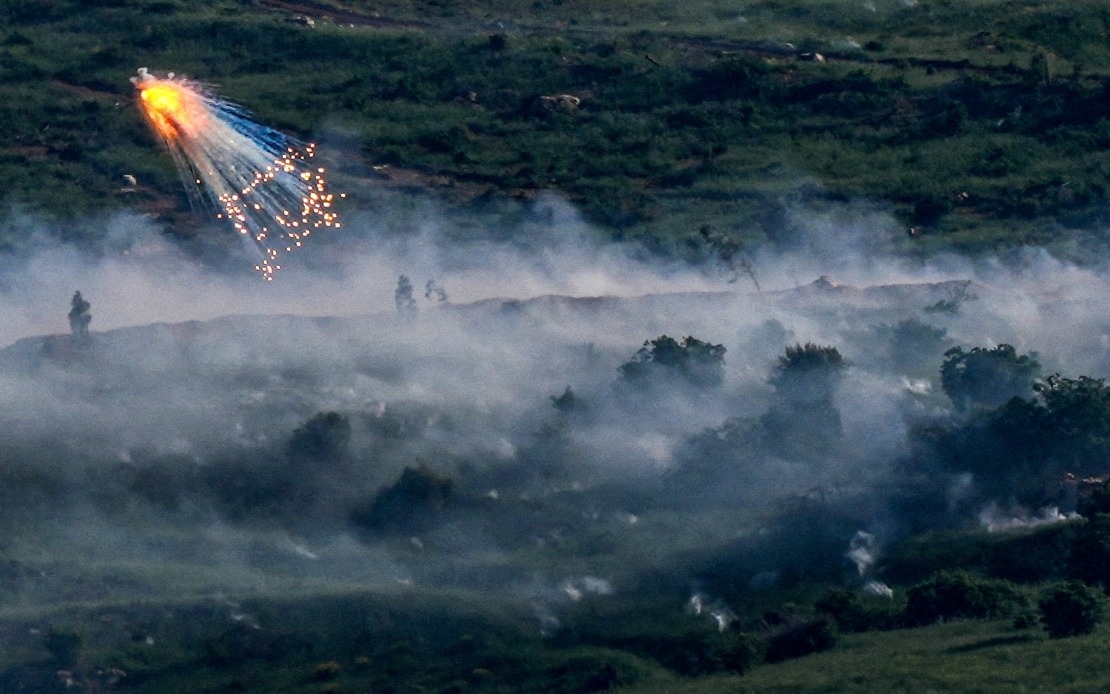
The United States has instructed its citizens to avoid travel to Lebanon and northern regions of Israel, citing mounting tensions across West Asia and the potential for sudden security deterioration. The advisory, issued simultaneously by American diplomatic missions in Beirut and Jerusalem, reflects growing international concern about stability in one of the world's most volatile regions, with implications for travellers and businesses across Southeast Asia with interests in the Middle East.
In a formal statement released on Saturday, the US Embassy in Beirut highlighted the increasingly complex security landscape pervading West Asia, warning that "the security environment remains complex with the potential for unforeseen escalation" amid what officials describe as "high tensions" throughout the region. This cautious language underscores official American anxiety about the trajectory of regional dynamics, even as formal diplomatic channels remain open and various parties maintain communications.
The embassy in Jerusalem issued parallel guidance to American citizens, explicitly recommending against travel to Gaza and Northern Israel, whilst advising a complete reconsideration of journeys to or through West Asia more broadly. The advisory carves out a narrow exception for the Taba crossing point between Israel and Egypt, suggesting that certain controlled border crossings remain accessible despite the broader security warnings. This differentiated approach indicates that the United States considers some specific locations marginally safer than others, though overall risk assessments remain unfavourable.
These warnings arrive at a moment of considerable geopolitical tension between Washington and Tehran. Despite a peace memorandum brokered by Pakistan and signed in June 2024, which was intended to establish a framework for de-escalation and lasting agreement between the United States and Iran, the two nations have continued exchanging military strikes and hostile actions. The apparent failure of the June accord to produce meaningful restraint raises fundamental questions about the feasibility of negotiated settlements in the region, particularly when underlying strategic interests remain divergent.
For Malaysian readers and businesses, these advisories carry tangible implications. Malaysia maintains significant economic ties throughout the Middle East, with important diaspora communities in both Israel and Lebanon. Malaysian nationals working in banking, trade, education, and other sectors across the region should take these warnings seriously and consider contingency plans should conditions deteriorate further. Companies with operations or supply chains extending into West Asia should review their risk management protocols and assess whether workforce presence in affected areas remains justifiable.
The layered nature of the advisory—distinguishing between different threat levels across various locations—reflects the reality that West Asia faces a constellation of overlapping security challenges rather than a single, unified conflict. The mention of Gaza separately from Northern Israel points to the distinct Palestinian-Israeli dimension, whilst the warning about travel through West Asia more broadly suggests concerns about potential spillover effects, including maritime interdiction, regional proxy conflicts, and economic disruption.
The continuation of US-Iran tensions despite formal peace efforts highlights a persistent pattern in Middle Eastern diplomacy: agreements frequently fail to translate into genuine behavioural change when signatories maintain fundamentally incompatible strategic objectives. Pakistan's mediation role, whilst noteworthy, appears insufficient to overcome decades of mutual mistrust and competing regional ambitions between Washington and Tehran. For Malaysia and other ASEAN nations seeking stable commercial and diplomatic relations across the region, this volatility presents genuine strategic challenges.
These travel advisories typically precede wider diplomatic initiatives or indicate that American officials possess intelligence suggesting imminent escalation risks. The fact that both the Beirut and Jerusalem embassies issued warnings simultaneously suggests coordination at higher levels of the State Department, indicating that concerns about regional security transcend individual country dynamics and reflect broader assessments of West Asian instability.
Malaysian businesses contemplating expansion or increased engagement in the Middle East should factor heightened geopolitical risk into their calculations. Insurance premiums for operations in affected zones will likely increase, and workforce recruitment and retention in these areas may prove increasingly difficult. The advisory does not suggest imminent military conflict necessarily, but rather a persistently elevated risk environment where surprises could materialise without much warning.
The situation also raises questions about the sustainability of informal or formal peace frameworks in regions where underlying power competition remains intense. Pakistan's previous success in brokering agreements between other parties suggests diplomatic pathways remain theoretically viable, yet the continued military interactions between the United States and Iran despite June's memorandum demonstrate that diplomatic architectures require more than signatures—they demand genuine commitment to restraint from all parties involved.
For Southeast Asian governments, including Malaysia, the lesson extends beyond immediate travel safety concerns. The Middle East's persistent instability has ripple effects on global oil prices, shipping routes through the Red Sea and Strait of Hormuz, and international security cooperation. Malaysian policymakers monitoring regional developments should consider how prolonged West Asian tensions might influence broader Indo-Pacific security dynamics and ASEAN's collective interests in maintaining open sea lanes and stable energy markets.

