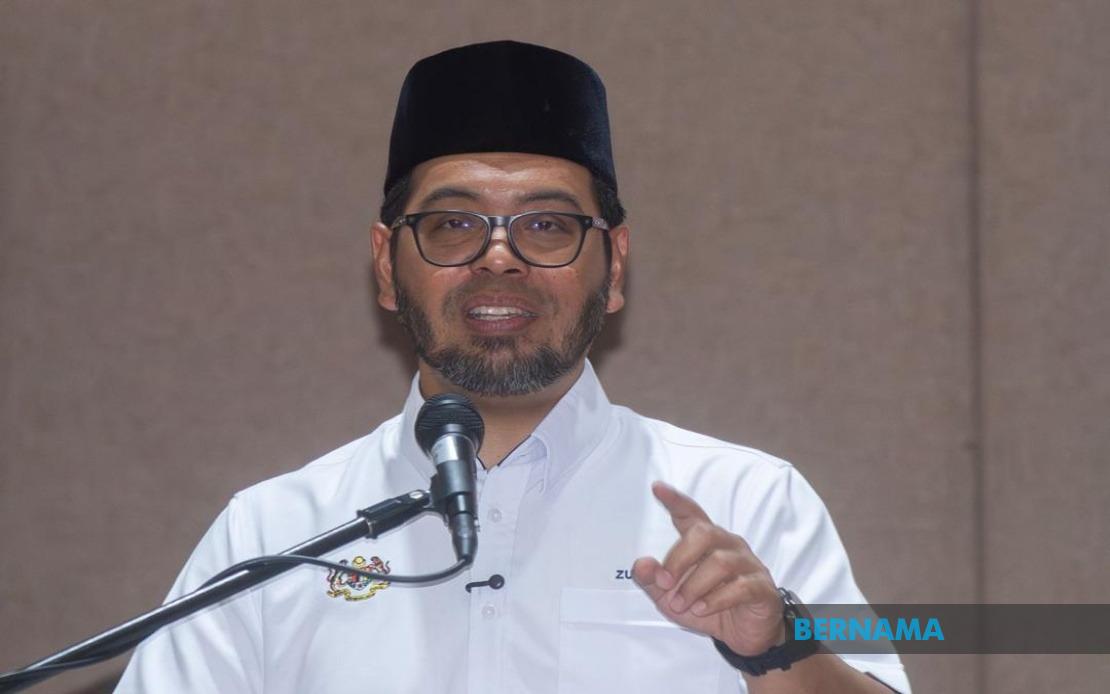
Minister in the Prime Minister's Department (Religious Affairs) Dr Zulkifli Hasan has issued a stark warning about the cascading consequences of unregistered marriages, highlighting how the absence of formal legal recognition undermines the fundamental rights and protections afforded to children and families within Malaysia's Islamic legal framework. Speaking at the launch of the 2026 Federal Territories Syariah Law Literacy Programme in Labuan, the minister emphasised that the ramifications extend far beyond administrative inconvenience, touching every critical dimension of a child's life from birth documentation through to inheritance rights.
The minister drew attention to a persistent phenomenon wherein couples maintain conjugal relationships spanning decades without fulfilling the statutory registration requirements mandated by the Islamic Family Law (Federal Territories) Act 1984. In parallel, he noted instances where individuals had solemnised marriages in jurisdictions beyond their registered domiciles or engaged unauthorised marriage registrars who operated outside the prescribed procedural framework, thereby circumventing the formal safeguards embedded within the legislation. These patterns, whether rooted in cultural practice, logistical difficulty, or deliberate avoidance, create a parallel system of domestic arrangements that carry profound legal vulnerability for all parties involved.
The vulnerability of children represents perhaps the most compelling aspect of Dr Zulkifli's intervention. Without official marriage documentation, offspring face formidable obstacles in obtaining birth certificates—a foundational document required for virtually every subsequent interaction with state institutions. The cascading effect materialises when children attempt to enrol in educational institutions, access healthcare services, or establish their identity for purposes of citizenship verification. The absence of recognised parentage creates ambiguity regarding lineage status, a matter of considerable consequence within the Islamic legal tradition where paternity determines inheritance entitlements, succession rights, and social standing.
Beyond the immediate sphere of children's welfare, unregistered marriages create legal lacunae that disadvantage spouses, particularly wives navigating claims for financial maintenance or the consolatory payment known as mutaah upon dissolution of the union. The asymmetry of vulnerability becomes apparent when one considers that women typically bear greater custodial and caregiving responsibilities, yet lack the documentary proof necessary to enforce legal remedies in disputes over spousal support. This structural weakness leaves women in a precarious position, dependent upon informal arrangements that possess no enforceability within the formal legal apparatus.
The inheritance dimensions of unregistered marriages introduce additional complexity, particularly concerning the distribution of faraid (Islamic inheritance shares) following a spouse's death. Without official recognition of the marital bond, surviving spouses encounter difficulties in establishing their entitlement to inheritance portions, while property disputes may spiral into protracted family litigation. The absence of clarity regarding succession rights creates opportunities for alternative claimants to contest distributions, thereby fractionalising family resources and generating interpersonal conflict precisely when grieving relatives require stability and closure.
Recognising these systemic vulnerabilities, the federal government has undertaken a proactive institutional response that prioritises resolution rather than enforcement. Dr Zulkifli articulated an explicit commitment to framing the initiative as an assistance programme rather than a punitive exercise, acknowledging that couples with outstanding registration issues require support and facilitation rather than sanctions. This approach reflects a pragmatic understanding that stigmatisation or deterrence strategies may discourage affected individuals from voluntarily coming forward to regularise their status.
The 2026 literacy programme represents a collaborative effort spanning multiple regulatory and support agencies, including the Federal Territories Syariah Court, the Federal Territories Islamic Religious Department (JAWI), the Federal Territories Islamic Religious Council (MAIWP), the Legal Aid Department, and faith-based financial institutions such as Tabung Haji and Yayasan Pembangunan Ekonomi Islam Malaysia (YAPEIM). This constellation of institutional partners creates multiple entry points through which affected couples can access guidance, documentation assistance, and dispute resolution services. The interactive counters established during the programme provide direct engagement opportunities for individuals seeking to address marriage registration deficiencies or requiring clarification regarding Islamic family law requirements.
For Malaysian readers, the policy initiative carries particular significance given the Federation's constitutional framework, which reserves Islamic family law matters to the states and federal territories respectively. The variance between different state regimes creates additional complexity for interstate marriages or those contracted across religious boundaries. Residents of the Federal Territories fall within a unified regulatory structure, yet the underlying vulnerabilities identified by Dr Zulkifli manifest across all Malaysian jurisdictions, albeit with procedural variations.
The minister's repositioning of syariah law compliance as a protective mechanism rather than a restrictive obligation signals a broader philosophical reorientation within the religious affairs establishment. By emphasising the safeguarding function of marriage registration—its capacity to prevent disputes, protect assets, and secure children's futures—the government attempts to mobilise cultural and familial values in support of statutory compliance. This framing recognises that religious adherents often respond more positively to narratives of protection and community welfare than to legalistic imperatives.
The underlying challenge extends beyond documentation procedures to encompass deeper questions about how marginalised or culturally isolated communities interface with formal institutional systems. Couples living in unregistered unions may do so through ignorance of requirements, inability to navigate bureaucratic processes, previous negative experiences with government agencies, or adherence to customary practices that predate modern legal structures. A purely punitive approach would entrench disengagement, whereas programmes emphasising accessibility and non-judgment create space for voluntary regularisation.
Southeast Asia more broadly confronts similar issues regarding informal marriage practices and their intersection with state legal systems. Malaysia's approach, grounded in Islamic jurisprudence and delivered through multi-agency collaboration, offers insights relevant to other Muslim-majority nations grappling with how to extend legal protections to vulnerable populations whilst respecting cultural pluralism. The emphasis on child protection and spousal rights demonstrates how religious legal traditions can be mobilised to support substantive justice outcomes beyond their formal textual requirements.
Looking forward, the success of such literacy and facilitation programmes depends upon sustained institutional commitment, adequate resourcing of support services, and genuine cultural shifts that incentivise formal compliance. For families currently operating within unregistered marriage arrangements, the initiative offers a tangible pathway toward regularising their status without facing punitive consequences, thereby extending to their children the documentary foundations necessary for full participation in Malaysian civic and social life.

