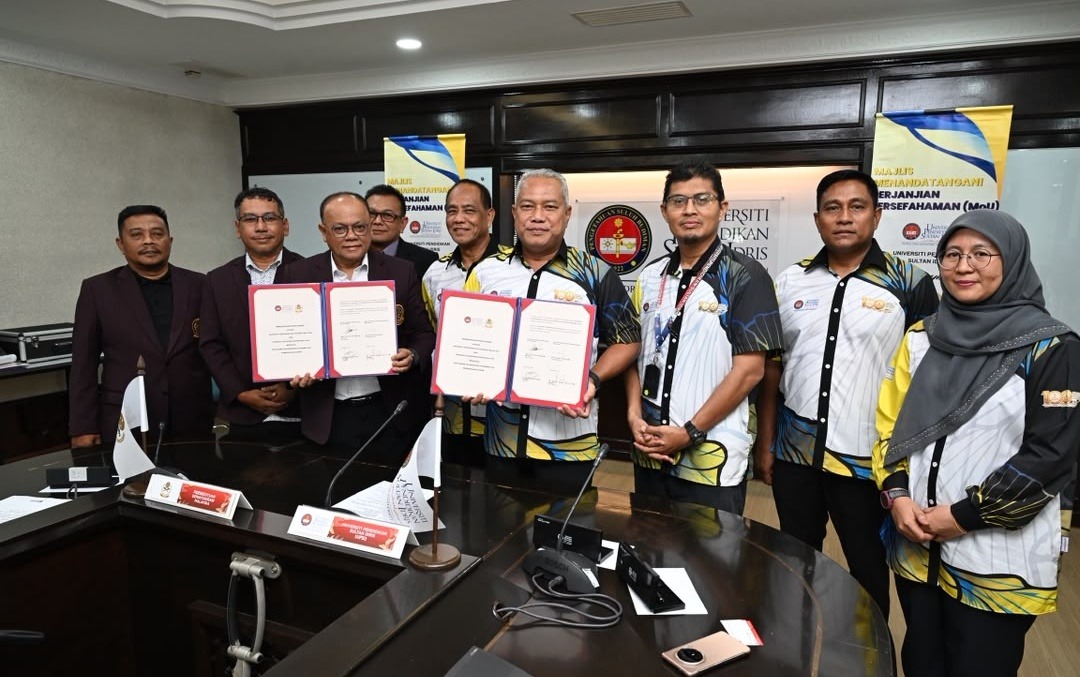
Universiti Pendidikan Sultan Idris (UPSI) has formalized a three-year strategic partnership with the Malaysian Sepaktakraw Federation (PSM) designed to integrate elite athlete development with higher education in one of Southeast Asia's most distinctive indigenous sports. The Memorandum of Understanding, signed at the university's Tanjong Malim campus in Perak, represents an institutional commitment to address a longstanding challenge in Malaysian sports: enabling talented competitors to pursue meaningful academic credentials without sacrificing their athletic careers.
The agreement addresses a critical gap in the country's sporting ecosystem. Sepak takraw, a sport that combines elements of volleyball and martial arts and commands passionate followings across Malaysia, Thailand, Indonesia and Vietnam, has historically struggled to retain athletes who face the binary choice between education and competition. UPSI's framework now permits athletes competing under PSM to access flexible study arrangements at various qualification levels, acknowledging that training schedules and tournament participation cannot be easily compressed into conventional academic timetables.
UPSI Vice-Chancellor Prof Datuk Dr Md Amin Md Taff emphasized that the collaboration transcends ceremonial gestures, positioning the MoU as a foundation for actionable initiatives rather than symbolic commitment. The university pledges to contribute its established sports science capabilities, extending beyond classroom instruction to encompass technical coaching development, officiating standards, and sports technology applications. This expertise transfer acknowledges a reality often overlooked in Malaysian sports policy: elite performance requires scientific underpinning, and institutions like UPSI possess the research infrastructure and personnel to provide it.
The partnership explicitly targets talent cultivation across the competitive pyramid, extending from schoolchildren in Malaysian Sports Schools and State Sports Schools through to national team athletes. This vertical integration matters considerably in sepak takraw, a sport where physical development windows are narrow and skill acquisition demands prolonged technical training. By creating formal educational pathways at multiple levels, the MoU removes friction points that have historically caused promising young players to abandon the sport when they reached secondary or tertiary education.
A particularly significant component involves establishing a dedicated national training centre for sepak takraw within or adjacent to UPSI's facilities. Such a centre would consolidate coaching expertise, sports science support, and competitive infrastructure that currently remain fragmented across various venues and private arrangements. For a country competing in Southeast Asian Games and World Sepaktakraw Federation championships, this centralization could materially improve preparation standards and athlete development timelines compared to the dispersed, ad-hoc approaches that have characterized the sport's infrastructure historically.
PSM Vice-President Tengku Zaihan Che Ku Abdul Rahman framed the arrangement as creating security and legitimacy for athletes navigating dual professional pathways. The federation's endorsement signals to young athletes and their families that pursuing education while competing carries institutional backing rather than representing a risky deviation from single-minded sporting focus. This messaging matters in a Malaysian context where parental expectations around educational attainment remain substantial, and where athletic scholarships or dual-track support systems lack the visibility and formalization found in established university sports programmes in other nations.
The collaboration between UPSI's academic and research resources and PSM's technical and competitive experience creates asymmetric gains for both institutions. The university enhances its reputation within national sports governance while gaining research opportunities and student recruitment pathways; PSM secures access to sports science expertise and facilities that would require substantial independent capital investment to replicate. Neither institution sacrifices autonomy, and the explicit provision for extending the arrangement beyond three years through mutual agreement suggests both parties anticipate genuine value from sustained engagement.
Tengku Zaihan's reference to the MoU serving as a reference model for other national sports bodies and higher education institutions carries significant implications for Malaysian sports policy architecture. The country has historically lacked coherent frameworks linking elite sport development with tertiary education, resulting in knowledge silos and missed opportunities for competitive advantage. If this UPSI-PSM model proves replicable across badminton, hockey, weightlifting and other sports where Malaysia maintains competitive standing, it could catalyze broader systemic improvements in athlete development pathways.
For sepak takraw specifically, the initiative arrives at a consequential moment. The sport faces demographic pressures in Malaysia as younger generations encounter expanding entertainment and employment options; competing nations have invested in infrastructure and systematic coaching development that has occasionally resulted in Malaysian teams underperforming at international championships. By institutionalizing the connection between elite competition and credentialed education, UPSI and PSM create incentives for sustained participation and reduce the opportunity costs that drive talented players toward other pursuits during their prime competitive and educational years.
The agreement's emphasis on producing qualified technical officials and coaches addresses a frequently overlooked dimension of sports development. International competition standards demand officials educated in contemporary rules, equipment specifications and refereeing protocols; coach education similarly requires formalized curricula rather than informal apprenticeship. By embedding these technical pathways within university frameworks, the partnership creates career tracks in sepak takraw that extend beyond performing athleticism to encompassing broader professional roles that sustain the sport's competitive ecology.
Implementation will require careful attention to bridging institutional cultures. Universities operate on academic calendars; sports competition follows tournament schedules that rarely align. Faculty expectations regarding research productivity and teaching load may clash with athlete-student commitments to extended training camps and overseas competitions. Successfully navigating these tensions will depend on continued institutional goodwill and probably on dedicated administrative personnel tasked specifically with managing the MoU's operational dimensions rather than treating it as an ancillary responsibility within existing portfolios.
The three-year initial term provides a reasonable window for demonstrating viability and identifying necessary refinements before automatic renewal or termination becomes relevant. Early focus should center on demonstrating concrete outcomes: athletes who complete credentials, coaches who achieve international certifications, and research publications emerging from the partnership that advance understanding of sepak takraw performance and development. Such evidence will strengthen the case for extending the arrangement and for encouraging other national sports bodies to pursue similar collaborations with Malaysian universities.

