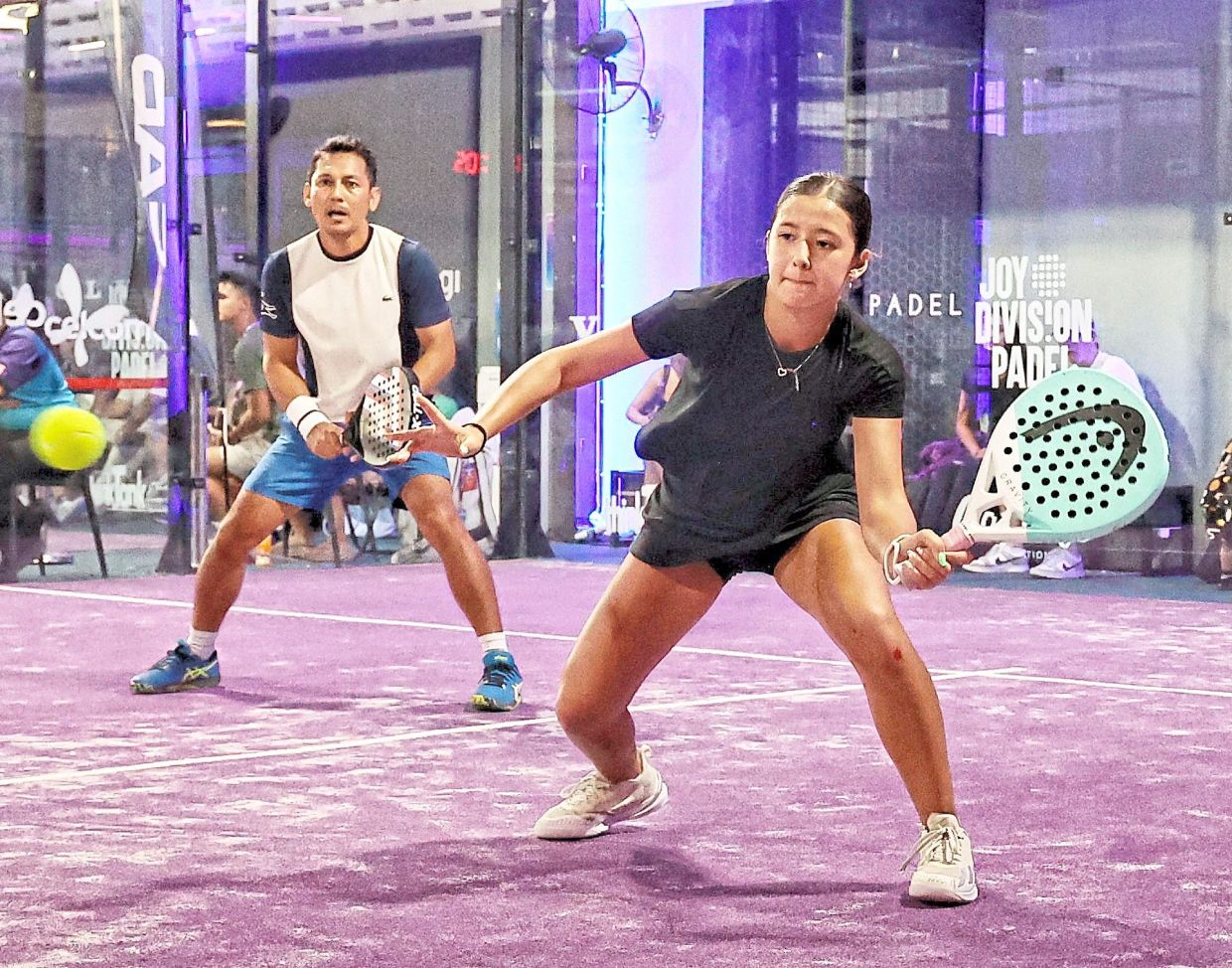
The recreational sports landscape across Malaysia's cities has undergone a dramatic transformation over the past two years, reshaping the way urban professionals spend their free time and fundamentally altering the infrastructure of suburban entertainment spaces. What was once dominated by traditional badminton halls and neighbourhood running paths has evolved into a complex ecosystem of specialised courts, boutique fitness studios and competitive race events that cater to Malaysians hungry for community, physical challenge and respite from screen-dependent work.
The expansion is most visible in the Klang Valley, where padel courts have colonised converted warehouse spaces and shopping mall rooftops, with premium time slots reserved weeks in advance. Pickleball, long dismissed as an activity reserved for retirees in leisure communities, has unexpectedly captured the imagination of players in their twenties and thirties, drawing them to repurposed badminton courts and community halls in numbers that surprise even venue operators. Reformer Pilates studios have proliferated across major urban centres, each operating with waiting lists and long-term membership commitments. Running clubs, which struggled to maintain active membership lists as recently as five years ago, now impose caps on weekly participation to manage demand. The most ambitious indicator of this fitness revolution is Hyrox, a hybrid athletic competition that blends eight kilometre-long runs with eight functional training stations including sled pushes, rowing machines and medicine ball exercises. Malaysia will host its inaugural Hyrox event on December 12 and 13 at the Malaysia International Trade and Exhibition Centre, with early evidence from the Singapore edition suggesting that demand will far outstrip available capacity.
This phenomenon extends beyond mere recreational participation into the world of investment and technology. International companies are placing substantial capital bets on the assumption that urban Malaysians will willingly pay ongoing subscription fees for detailed health data. Oura, a Finnish company manufacturing smart rings that monitor sleep patterns, heart rate variability and physical recovery metrics, recently filed confidential paperwork for a United States stock market listing at a valuation approximating US$11 billion, having sold more than 5.5 million units worldwide with projected annual revenue approaching US$2 billion. Its competitor Whoop, which produces a screenless fitness tracking strap, raised US$575 million in March at a valuation of US$10.1 billion. These valuations signal that investors perceive these companies not as consumer electronics manufacturers but as subscription-based health platforms capable of commanding premium pricing from health-conscious urban populations.
The motivations driving this participation are multifaceted and reveal important shifts in how urban Malaysians relate to technology, community and wellbeing. A significant undercurrent involves a collective reckoning with the psychological and physical toll of screen-intensive work and leisure patterns. After years of accumulated doomscrolling and notification-driven engagement, substantial numbers of urban professionals have recognised that additional smartphone time produces diminishing returns for their mental state, while physical activity generates measurable improvements in mood and cognition. This recognition has created receptiveness to activities that impose natural boundaries on digital distraction.
Equally important is the social dimension of these emerging sports. Padel and pickleball are inherently social activities, played exclusively in doubles formats, engineered to be quickly learnable for novices while retaining sufficient depth to sustain long-term engagement. Neither sport encourages the hyper-competitive intensity that can characterise tennis or basketball. Running clubs, fitness studios and even Hyrox races serve a function analogous to the traditional kopitiam for an urban demographic that consumes less alcohol, works increasingly from home offices and actively seeks structured social interaction. The wearable technology that tracks sleep, training load and heart rate variability compounds this effect by converting vague aspirations toward fitness into quantifiable, measurable habits that generate ongoing engagement and social comparison.
From a public health perspective, this trend represents genuinely positive development. Malaysian epidemiological data indicates that more than half of the adult population carries excess body weight, while non-communicable diseases including diabetes, hypertension and cardiovascular disease impose substantial financial burden on households and strain on healthcare infrastructure. Regular physical activity remains the single most cost-effective intervention for disease prevention and management, producing documented improvements in blood pressure regulation, insulin sensitivity, psychological wellbeing, cognitive function and healthy life expectancy. The enthusiasm driving padel courts, pickleball courts and running clubs directly addresses one of Malaysia's most pressing public health challenges.
However, this expansion has generated an unintended consequence that orthopaedic and sports medicine specialists across Malaysia and the region are observing with increasing frequency: a wave of significant injuries affecting newly engaged weekend athletes. The typical clinical presentation involves an individual in their forties or fifties who has maintained primarily sedentary work patterns for the preceding two decades and who suddenly initiates an intensive training programme, often progressing from complete inactivity to four or more structured sessions weekly within a single month. While cardiovascular and pulmonary systems can adapt relatively quickly to escalating demands, the musculoskeletal system operates according to a fundamentally different timeline. Tendons, ligaments and cartilage require months, not weeks, to strengthen in response to increased mechanical load, and they respond to sudden training escalation with predictable pathological responses.
The injury patterns emerging in these sports populations are neither random nor surprising to sports medicine specialists. Padel and pickleball both demand explosive lateral movements, rapid changes of directional acceleration and overhead striking mechanics that place particular stress on the lower leg, ankle and knee structures. Consequently, orthopaedic practices across regions where these sports are expanding report increasing numbers of calf muscle tears, Achilles tendon ruptures, knee ligament injuries and rotator cuff pathology. American investment analysts at UBS estimated that pickleball-related injuries alone would generate between US$250 million and US$500 million in direct medical costs annually within the United States, with the heaviest burden concentrated among players exceeding sixty years of age. These figures suggest the scale of the public health challenge emerging in parallel with the fitness boom.
The fundamental challenge for urban athletes and the medical professionals treating them centres on the mismatch between enthusiasm for exercise and the biological reality of tissue adaptation. A desk-bound individual cannot safely transition to the demands of explosive racquet sports, high-intensity functional training or structured running programmes at the pace that motivation and peer pressure often dictate. Medical guidance emphasises gradual load progression, typically increasing training volume by no more than ten percent weekly, coupled with adequate recovery between sessions. Yet the social momentum of fitness trends, the competitive energy within newly formed training groups and the measurable progress visible on wearable technology create powerful psychological incentives to accelerate beyond what musculoskeletal tissues can safely accommodate. The injured weekend athlete represents not a failure of fitness culture but rather a failure of the transition protocols by which sedentary individuals safely enter demanding physical activities.
For Malaysian healthcare providers and fitness facility operators, this emerging pattern necessitates proactive intervention. Fitness venues promoting padel, pickleball, Hyrox and similar activities increasingly recognise the value of structured onboarding programmes that educate new participants about appropriate progression rates, recovery protocols and warning signs of overtraining. Sports medicine specialists working with primary care providers can develop accessible frameworks for safe return-to-activity after periods of inactivity. Wearable technology manufacturers could incorporate algorithmic warnings when training load escalates too rapidly relative to historical baselines. These interventions require relatively modest investment compared to the human and economic costs of preventable musculoskeletal injuries.
The expansion of recreational sports participation across urban Malaysia reflects genuine improvements in how people relate to their physical bodies and their communities. The challenge ahead lies in preserving this positive momentum while implementing practical safeguards that prevent the well-intentioned but overly enthusiastic athlete from sustaining injuries that could reverse years of health gains and create lasting disability. Balancing the psychological benefits of community-driven fitness with the physiological requirements of safe training progression will determine whether this fitness revolution delivers sustainable health benefits or simply exchanges one form of sedentary disease risk for another.

