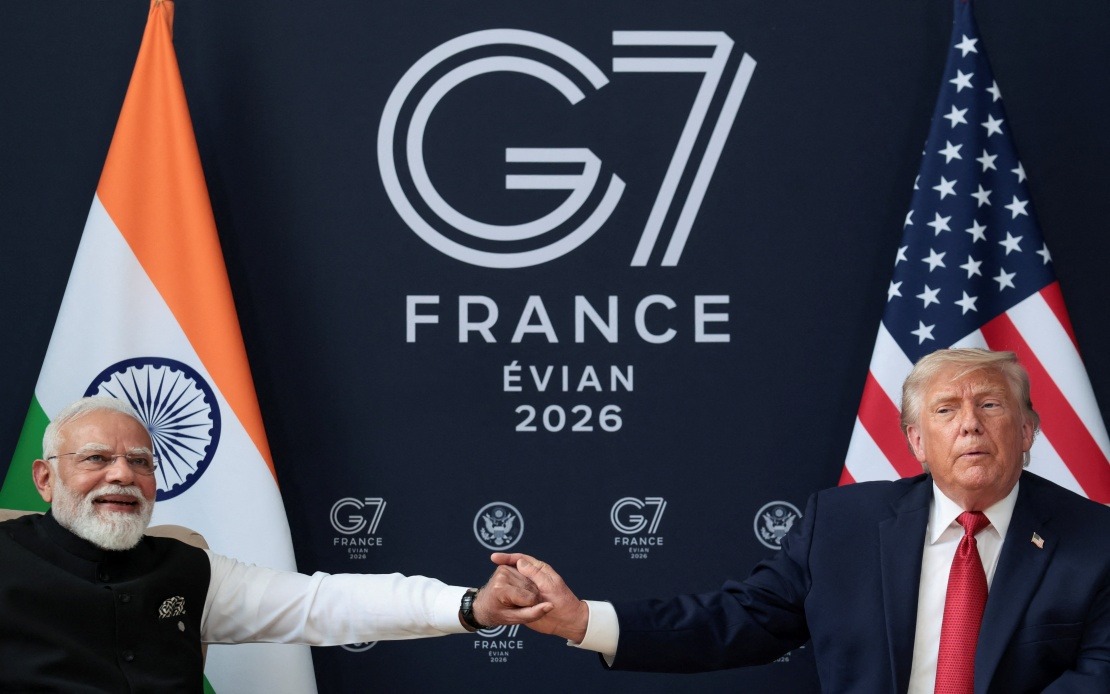
India and the United States have reached a turning point in their protracted trade negotiations, with both nations announcing that significant progress has been made towards a long-awaited bilateral trade agreement. The breakthrough came during talks between Indian Prime Minister Narendra Modi and US President Donald Trump at the G7 summit in Evian, France, where trade occupied a prominent position on their bilateral agenda.
The two leaders expressed particular satisfaction with the momentum gained in negotiations towards an interim bilateral trade agreement, signalling that a deal long sought by business circles in both nations may finally be within reach. In their official statement, India's External Affairs Ministry indicated that the two countries have instructed their respective trade officials to redouble efforts in pursuit of an accord that would benefit both economies. The ministry emphasised that any agreement must strike a balance between the interests of each nation while delivering tangible commercial benefits.
Timing appears crucial to the process. US Trade Representative Jamieson Greer is scheduled to visit India in the coming week specifically to advance the trade discussions, suggesting that negotiations have moved beyond preliminary stages and are entering a more intensive phase of detailed discussions. This diplomatic activity underscores the political will of both administrations to resolve trade frictions that have accumulated over the past several years.
Trump's characterisation of Modi as "one of the toughest" negotiators provides insight into why these talks have proceeded slowly. The US president, known for his direct communication style, acknowledged that Modi drives a hard bargain when it comes to protecting Indian interests. Trump's remark that Modi "looks like an angel" but is "as tough as a killer" was intended as a compliment to the Indian leader's negotiating acumen, reflecting the respect both leaders appear to have developed through their discussions.
The existing trade framework between the two countries provides context for these ongoing negotiations. In February of this year, the US and India had agreed on an interim trade agreement that provided some relief to Indian exporters by reducing American tariffs to 18 per cent on certain goods. However, this interim measure was always intended as a stepping stone towards a more comprehensive arrangement that would address the full range of trade concerns affecting both nations.
The backdrop of tariff tensions adds urgency to the current talks. In 2025, the Trump administration imposed 25 per cent tariffs on Indian goods broadly, and additionally levied a further 25 per cent penalty specifically targeting Indian purchases of Russian oil. These escalating trade barriers have created friction in the bilateral relationship and heightened pressure on both sides to reach a permanent settlement that would remove these punitive measures and create a more stable commercial environment.
For Malaysia and the broader Southeast Asian region, the outcome of these negotiations carries significant implications. A US-India trade accord would reshape the competitive landscape across Asia, potentially affecting supply chains that many regional exporters depend upon. If tariff barriers between Washington and New Delhi are substantially reduced, it could redirect investment flows and alter the relative attractiveness of manufacturing bases across the region. Companies currently considering India as a supply chain destination may accelerate their plans, while those in competing markets might face additional pressure to improve competitiveness.
The broader geopolitical dimensions of US-India trade normalisation also matter. Closer economic ties between the world's largest and most populous democracies could strengthen their strategic partnership at a time when both nations are focused on balancing China's growing economic and military influence in Asia. A successful trade agreement would reinforce the bilateral relationship and potentially provide a model for how the US might approach commerce with other major Asian economies, including ASEAN nations with whom Washington maintains significant trade relationships.
The negotiation style evident in Trump's comments reveals an interesting dynamic: both leaders appear willing to engage in substantive haggling while maintaining personal rapport. This suggests the final agreement, whenever it materialises, may reflect genuine compromise rather than capitulation by either side. Such outcomes typically create more durable arrangements because both parties feel they have secured meaningful gains.
Business communities on both sides have been awaiting clarity on the trade framework for some time. Indian companies exporting technology services, pharmaceuticals, and agricultural products to the United States have operated under uncertainty created by the tariff increases. Similarly, American agricultural exporters and manufacturers seeking access to India's expanding consumer market have chafed under Indian trade barriers. A comprehensive agreement addressing these sectors could unlock substantial new commercial opportunities.
The involvement of the US Trade Representative at the highest level suggests serious intent to conclude negotiations. These officials typically move slowly and carefully, building consensus among domestic stakeholders before committing to major trade agreements. Greer's imminent visit to India indicates that both sides have likely resolved many of the structural issues and are now working through detailed implementation mechanisms and final sticking points.
Looking forward, the timeline for finalising a comprehensive agreement remains uncertain, though the momentum established at the G7 summit suggests resolution may come within months rather than years. How quickly Greer's delegation can make progress during its India visit will provide clearer signals about whether a full bilateral trade agreement might be announced before the end of the year. For regional observers, the pace of these negotiations and their ultimate outcome will be worth monitoring closely.