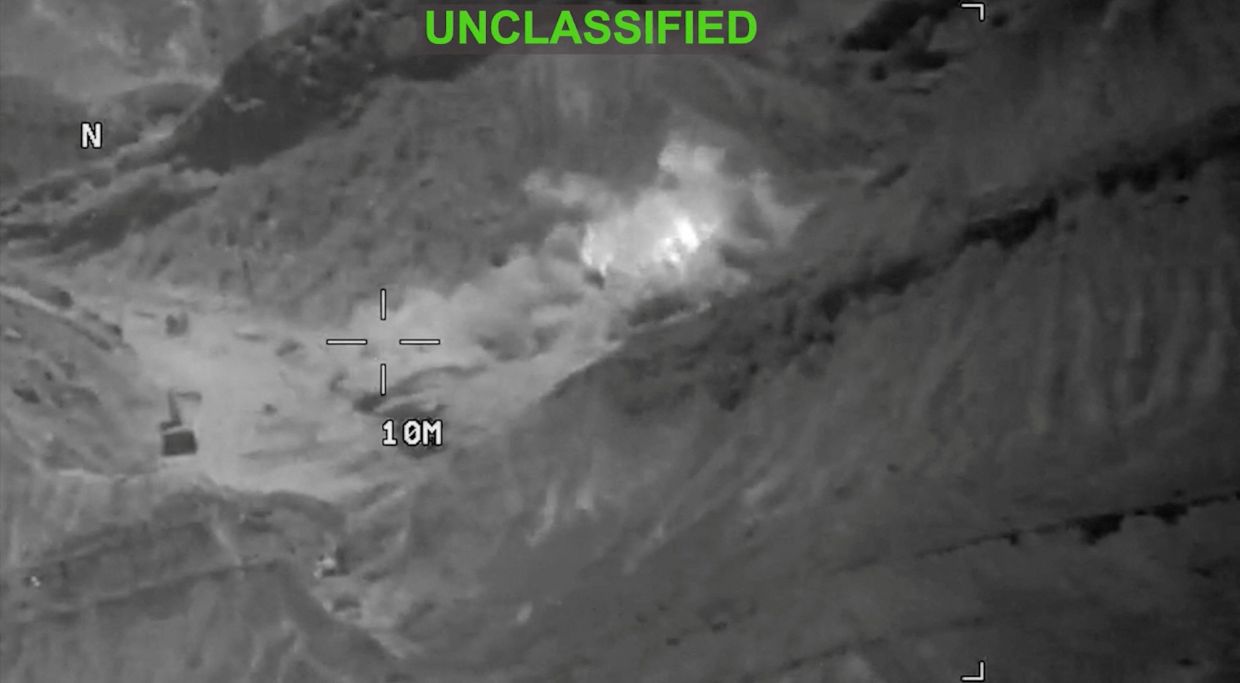
Tensions between Washington and Tehran have erupted into sustained military confrontation, with the US conducting its eighth consecutive night of airstrikes against Iranian facilities. The strikes, ordered by President Donald Trump, targeted Iranian military installations across the country, following the deaths of two US military personnel in Jordan and the reported capture of a third service member. The collapse of a ceasefire agreement brokered just one month ago has thrust the region back into open conflict, with both sides intensifying strikes against each other's military assets and threatening critical global commerce routes.
US Central Command directed strikes that commenced at 6 p.m. ET on Saturday, explicitly designed to degrade Iran's military capacity and target the Islamic Revolutionary Guard Corps forces responsible for attacks on American personnel in Jordan. The command subsequently confirmed completion of the latest round, focusing on Iranian coastal surveillance systems and air defence installations. Pentagon officials characterised the operations as proportional responses aimed at preventing further Iranian aggression, though the sustained nature of the eight-night campaign suggests a deliberate strategy to severely constrain Iran's military capabilities and regional influence.
Iranian state media reported strikes near Sirik in southern Iran and near the Iraqi border at Shadegan, claiming no significant casualties or infrastructure damage resulted from these attacks. More significantly, Iran's atomic energy authorities condemned what they described as an American strike on the Darkhovin nuclear power plant site, a facility still under construction. The targeting of nuclear infrastructure marks an escalation in the scope of the conflict, potentially signalling Washington's intent to disable Iran's broader strategic capabilities beyond conventional military assets.
In response to the American strikes, Iran launched retaliatory drone operations targeting US military installations across the Gulf region. Iranian state television announced attacks on Kuwait's Al-Adiri camp and Ali Al Salem Air Base early Sunday, claiming these strikes represented part of broader Iranian operations against American and allied military assets throughout the week. Kuwait subsequently reported intercepting additional Iranian missiles and drones on Sunday, while Bahrain's air defences similarly engaged incoming Iranian projectiles. The absence of reported casualties in these engagements suggests both sides' air defences are functioning effectively, though the psychological and strategic impact of repeated attacks remains significant.
The US Embassy in Jordan issued an emergency evacuation order for Aqaba's international airport and seaport following what officials characterised as credible security threats. However, Jordanian authorities disputed this assessment, stating they had detected no imminent threats and had not independently ordered evacuations. This discrepancy highlights the acute tensions and divergent threat assessments between American military command and host nation governments, who must balance security concerns with economic disruption from unnecessary closures. Iran's state television claimed responsibility for destroying at least two American fighter aircraft during Saturday's attack on the Jordanian military base, assertions that remain unconfirmed by US officials.
The conflict's toll on American personnel has mounted significantly. Two service members were confirmed killed on Friday, with a third reported missing in action, bringing the total US military fatalities to sixteen since hostilities began. Pentagon figures indicate more than 420 additional American service personnel have sustained wounds. Iran's health ministry countered with claims that American strikes over the past three weeks alone have resulted in fifty deaths and over five hundred injuries within Iran, though these figures remain subject to independent verification given the fog of war and competing propagandistic claims.
Both nations have escalated targeting of commercial shipping, transforming the Strait of Hormuz—a waterway handling approximately one-fifth of global petroleum supplies—into a strategic battleground. The US asserts it is enforcing a naval blockade on Iran, while Tehran claims authority to regulate vessel passage and has threatened ships navigating routes it deems unsafe. Iran's Revolutionary Guard Corps reported that four merchant vessels attempted transit via what Tehran characterised as unsafe routes backed by American support, with two abandoning their voyage and two others reportedly experiencing accidents. These maritime confrontations threaten to disrupt energy supplies and trigger global inflation, consequences affecting economies worldwide including Malaysia's energy-dependent regions.
Supreme Leader Mojtaba Khamenei issued a written statement castigating President Trump's credibility, warning of escalating costs and humiliation for the United States. Notably, Khamenei's public visibility has been severely restricted since his father and predecessor, Ali Khamenei, was killed in an airstrike on February 28—the opening day of coordinated US-Israeli military operations against Iran. The death of the previous supreme leader represents an unprecedented decapitation of Iranian leadership, fundamentally altering succession dynamics and potentially complicating diplomatic channels.
Defense Secretary Pete Hegseth framed the American casualties as strengthening US resolve, signalling Washington's commitment to sustained operations despite mounting costs. The White House declined to respond directly to Iranian threats, adopting a stance of strategic silence. This diplomatic vacuum contrasts sharply with the intense military communications occurring through strikes and counter-strikes, suggesting diplomatic channels have essentially fractured beneath the weight of escalating violence.
The original ceasefire, negotiated merely four weeks prior to its collapse, had represented a fragile diplomatic achievement. Its unraveling underscores the fundamental antagonism between Washington and Tehran, where tactical military advantages persistently override diplomatic settlement efforts. The renewed intensity of strikes raises questions about whether either side envisions an off-ramp from escalation, or whether the cycle has become self-perpetuating. For Southeast Asian nations like Malaysia, which depend heavily on stable Strait of Hormuz transit for energy security and regional commerce, the escalation presents acute vulnerabilities beyond immediate military concerns.
The February 28 initiation of this conflict, following coordinated US-Israeli strikes intended to degrade Iranian nuclear and missile programmes while undermining regional proxy forces, has fundamentally destabilised the Gulf and broader Middle Eastern security architecture. The conflict has evolved from a calculated military campaign into sustained reciprocal strikes, suggesting both sides remain locked in a dynamic of response and counter-response without clear termination conditions. As the military campaign enters its fourth week with no diplomatic resolution evident, the trajectory points toward prolonged confrontation affecting global energy markets, regional stability, and international commerce.

