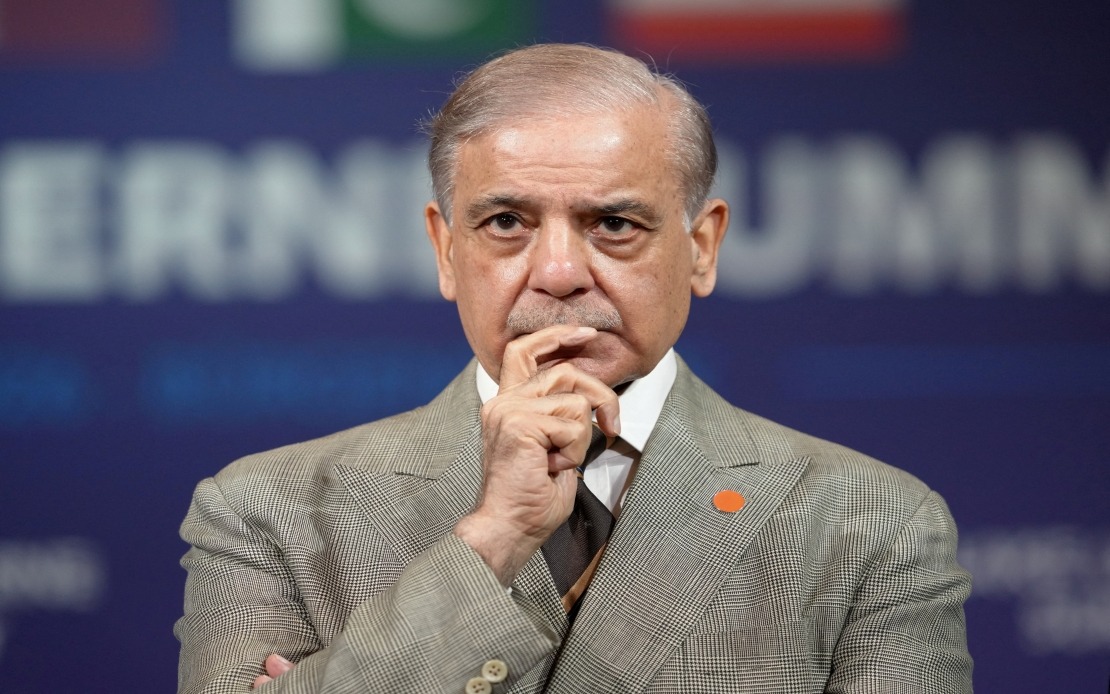
Pakistan's Prime Minister Shehbaz Sharif has confirmed that the United States and Iran plan to commence detailed technical negotiations within the next 60 days, focusing on nuclear proliferation concerns, ballistic missile capabilities, and the thawing of frozen Iranian assets. Speaking before the National Assembly in Karachi on Tuesday, Sharif indicated that both nations have committed to converting their initial Islamabad Memorandum of Understanding, signed on June 17, into a comprehensive and durable agreement during this period.
The roadmap emerged following successful preliminary talks held in Burgenstock, Switzerland, earlier this week, with Pakistan and Qatar serving as key mediators in the process. Sharif described the progress achieved thus far as historic, suggesting that the two traditionally adversarial nations have now established sufficient common ground to pursue substantive negotiations on their most contentious issues. The technical talks represent a significant escalation from previous diplomatic exchanges, moving beyond preliminary discussions toward concrete problem-solving on issues that have divided Washington and Tehran for decades.
The frozen assets component of these negotiations carries particular weight for Iran's struggling economy. International sanctions have kept billions of dollars in Iranian funds locked in foreign banks, severely constraining the nation's capacity to conduct international trade and invest in domestic development. The potential unfreezing of these assets represents one of the most tangible economic incentives for Tehran to engage seriously in the negotiation process, making it a crucial lever for securing Iranian cooperation on more sensitive security matters.
However, Tehran's approach to these negotiations contains notable caveats that could complicate reaching a final agreement. Iran's Foreign Ministry spokesperson Esmaeil Baghaei stated that his country's ballistic missile programme was never included in the Switzerland discussions and will not be subject to compromise. This position directly contradicts the multilateral framework that the US has historically sought to establish, where nuclear restraint would be coupled with restrictions on missile development that could serve as delivery systems for nuclear weapons.
Baghaei also rejected any possibility of granting International Atomic Energy Agency inspectors access to Iranian nuclear facilities that have been targeted during military operations conducted by the United States and Israel. This stance suggests Tehran intends to maintain operational secrecy at military-sensitive installations, even as it potentially allows greater transparency at civilian nuclear sites. Such selective cooperation presents a fundamental challenge to establishing the comprehensive verification mechanisms that Western nations typically demand in nuclear agreements.
The significance of these negotiations extends well beyond bilateral US-Iran relations and carries implications for regional stability across the Middle East and beyond. A successful agreement could reduce tensions in the Persian Gulf, potentially lowering energy prices and decreasing geopolitical uncertainty that affects global markets. Conversely, failure to reach accord could reinforce military posturing and increase the risk of miscalculation or direct confrontation, which would have profound consequences for international commerce and security.
Pakistan's central role as mediator reflects Islamabad's strategic interests in preventing further regional destabilisation. As a nuclear-armed nation itself, Pakistan understands the security implications of nuclear proliferation and has long advocated for dialogue between Washington and Tehran as an alternative to military escalation. The country's geographic proximity to Iran and its significant Shia Muslim population give it both incentive and credibility to facilitate compromise between the two sides.
Qatar's involvement alongside Pakistan demonstrates the necessity of multiple mediating voices acceptable to both principals. Doha's relationship with Washington, combined with its longstanding ties to Iran and substantial financial resources, positions it to offer both diplomatic expertise and practical incentives for progress. The dual-mediator approach reflects the complexity and delicacy required to manage negotiations between nations with profound historical grievances and competing strategic interests.
The 60-day timeline established in the Islamabad Memorandum of Understanding suggests that both the US and Iran recognise the window for diplomatic progress may be limited. Political developments in either nation, shifts in regional military balances, or economic pressures could alter the calculus of either side. The structured deadline creates urgency while providing sufficient time for technical experts to develop detailed proposals addressing complex verification challenges and implementation procedures.
From a Malaysian and Southeast Asian perspective, the successful conclusion of these negotiations would stabilise a crucial global energy supply region and reduce macroeconomic uncertainty affecting the region's export-dependent economies. Energy prices, shipping costs through strategically critical waterways, and risk premiums on international trade all respond to Middle Eastern geopolitical conditions. A more stable US-Iran relationship would benefit Malaysian economic growth and regional prosperity.
Yet achieving breakthrough remains uncertain given the substantive gaps evident even in preliminary statements. Iran's insistence on excluding missile capabilities from discussion and restricting inspections of military facilities suggests it will resist the comprehensive agreements that the United States typically demands. Whether Sharif's optimism about converting the memorandum into a lasting accord proves justified will depend on whether both sides prove willing to compromise on issues they have historically treated as non-negotiable red lines.

