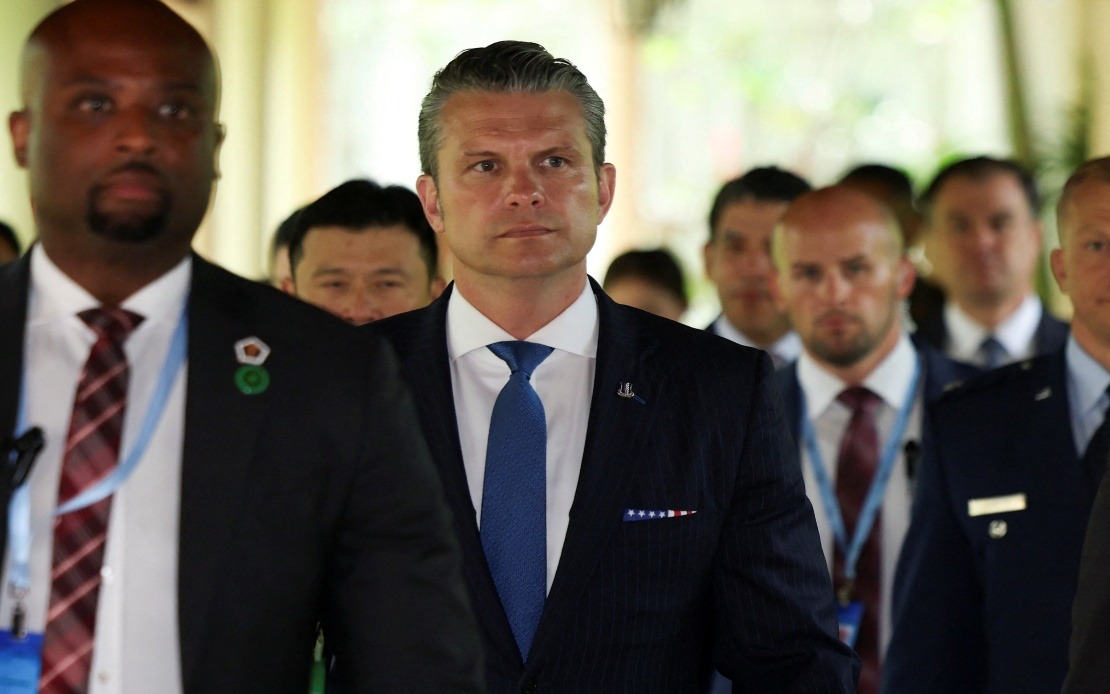
The United States and Jamaica have entered into a new defence partnership aimed at addressing the escalating challenge of narco-terrorism across the Western Hemisphere. The agreement, announced by US Southern Command (SOUTHCOM), represents a formal deepening of military and strategic ties between Washington and Kingston as both nations grapple with the destabilizing influence of transnational criminal organizations operating across Caribbean waters and Central American territories.
General Francis L. Donovan, commander of SOUTHCOM, emphasized that the arrangement builds upon decades of established security cooperation between the two countries. His statement framed the partnership as a consolidation of existing operational relationships rather than an entirely novel initiative, suggesting that US-Jamaican defence collaboration has long formed a pillar of American strategic interests in the Caribbean region. This continuity is significant for understanding how regional security architectures evolve incrementally rather than through dramatic shifts in policy.
The formal agreement was catalyzed by discussions held in August at the A3C anti-cartel forum in Panama, where US Defence Secretary Pete Hegseth met with Jamaica's Deputy Prime Minister and Minister of National Security Horace Chang. These preliminary talks laid the groundwork for the current accord, demonstrating how regional platforms facilitate bilateral defence arrangements among nations with shared security concerns. The involvement of senior-level officials from both governments underscores the priority each nation assigns to combating organized crime networks that destabilize the entire hemisphere.
This partnership must be understood within the context of Operation Southern Spear, a broader US military initiative launched in November 2025 targeting drug cartels throughout Latin America. The operation represents a significant escalation in American military engagement against narcotics trafficking beyond traditional law enforcement and intelligence channels. By involving uniformed military personnel in direct action against suspected smugglers, the initiative signals Washington's determination to treat drug trafficking as a national security threat warranting military-grade responses.
The scale of Operation Southern Spear's operational tempo reflects the intensity of current efforts. Since September 2025, SOUTHCOM reports that US military forces have conducted strikes against at least 67 vessels suspected of involvement in drug smuggling across the Caribbean Sea and Pacific Ocean. These operations have resulted in 221 fatalities, according to official command statistics. Such figures underscore both the magnitude of maritime trafficking and the kinetic nature of contemporary counter-narcotics operations in the region.
For Malaysia and Southeast Asian nations, this US-Jamaica arrangement carries important implications. The Caribbean drug trade intersects increasingly with Asian criminal networks, particularly regarding precursor chemical trafficking and money laundering that flows through both regions. As American military operations intensify in the Western Hemisphere, they reshape the global narcotics landscape, potentially displacing trafficking routes and criminal actors toward alternative corridors, including those passing through or originating in Southeast Asia.
Jamaica's strategic position makes it a critical partner for American counter-narcotics efforts. Located within the Caribbean's maritime crossroads, Jamaica serves simultaneously as a transshipment point for cocaine destined for North American markets and as a hub where regional criminal organizations maintain significant operational footprints. Strengthening Jamaica's military and security capabilities through closer cooperation with the United States aims to enhance the island nation's capacity to interdict trafficking operations within its territorial waters and airspace.
The bilateral agreement also reflects evolving perceptions of narco-terrorism within Washington policy circles. By explicitly linking drug trafficking organizations to terrorism, US officials justify expanded military involvement typically reserved for counterterrorism operations. This conceptual reframing has profound implications for how international law applies to maritime interdictions and for the legal authorities under which military personnel operate during counter-drug missions. Other nations, including those in Southeast Asia, must navigate similar questions about proportionality, jurisdiction, and the appropriate military role in combating transnational organized crime.
The partnership highlights how Caribbean nations increasingly depend on US military capabilities and strategic support to address security challenges that exceed their own resources. Jamaica's limited naval and air assets cannot adequately patrol the vast maritime territories under its jurisdiction or intercept sophisticated smuggling operations. By formally binding security cooperation with Washington, Kingston gains access to advanced surveillance systems, rapid-response capabilities, and intelligence sharing mechanisms that would otherwise remain unavailable.
For regional analysts observing from Southeast Asia, the US-Jamaica arrangement demonstrates Washington's commitment to maintaining security dominance throughout the Americas despite competing strategic priorities elsewhere. The sustained military investment in Caribbean counter-narcotics operations, even as American attention focuses on great-power competition with China and Russia, indicates that drug trafficking remains classified as a core threat to US national security. This perspective shapes how American resources are allocated globally and influences the strategic environment within which Southeast Asian nations conduct their own security policies.
The practical mechanics of the defence agreement likely include enhanced intelligence sharing, joint training exercises, equipment provision, and coordinated maritime patrols. Such arrangements typically expand military-to-military relationships incrementally, creating institutional dependencies and habitual cooperation patterns that persist across political administrations. For Jamaica, deepening integration with American military institutions represents both an opportunity to enhance security capabilities and a potential constraint on independent strategic decision-making in future contingencies.
Looking forward, the US-Jamaica partnership signals that counter-narcotics operations will remain militarized features of Caribbean security architecture for the foreseeable future. This trajectory raises questions about effectiveness, sustainability, and whether kinetic military operations adequately address the underlying economic and social conditions that enable drug trafficking organizations to flourish. Southeast Asian policymakers must consider whether similar military-intensive approaches offer sustainable solutions to organized crime challenges within their own region or whether complementary development and governance strategies deserve parallel investment.

