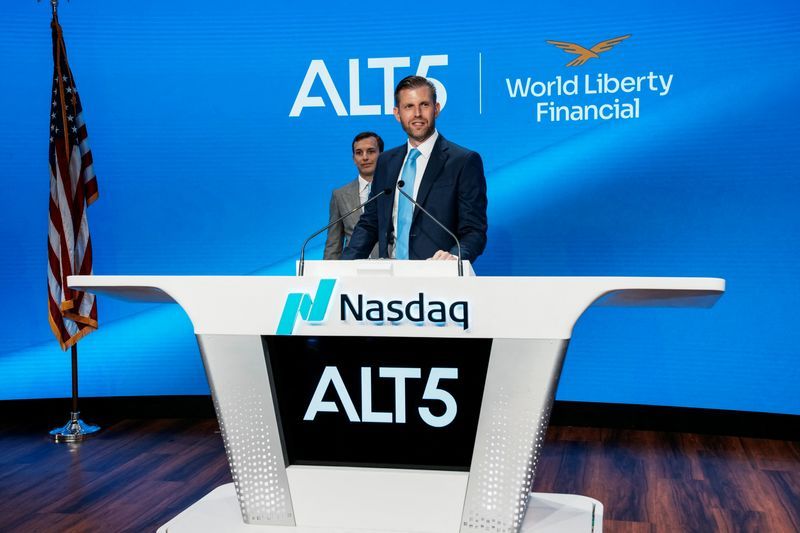
The United States Office of the Comptroller of the Currency has delivered conditional preliminary approval to World Liberty Trust Company for a national trust bank charter, marking a significant regulatory victory for the Trump family's cryptocurrency ambitions. The regulator's letter, released on Friday, effectively authorizes the Trump-affiliated venture to expand its cryptocurrency operations and formalize its position within the American financial system. The application, initially submitted in January, underscores the growing appetite among crypto enterprises to secure formal banking status during the present administration's market-friendly regulatory environment.
Unlike traditional bank charters that permit deposit-taking and lending, a national trust charter operates within a narrower scope designed specifically for asset management and settlement services. For World Liberty Financial, the approval represents the institutional legitimacy needed to consolidate operations currently distributed across multiple business partners. The charter would authorize the company to directly manage customer assets, issue its USD1 stablecoin independently, and maintain custody of the dollar reserves backing that digital asset—functions presently handled by external service providers such as BitGo. This consolidation promises operational efficiency and direct access to federal oversight mechanisms historically reserved for established financial institutions.
The regulatory approval reflects a broader shift within the Trump administration's approach to cryptocurrency oversight. Comptroller Jonathan Gould, appointed by President Trump in the preceding year, has proven receptive to such applications from the crypto sector. Similar preliminary approvals have been granted to competing platforms including Ripple and Circle, signalling a deliberate policy direction toward integrating cryptocurrency companies into the regulated banking framework rather than maintaining them at the periphery of the financial system. Industry participants view such charters as essential infrastructure for attracting institutional investment, as the federal designation enables crypto firms to service major clients across all fifty states under unified regulatory authority.
Zach Witkoff, serving as president and chairman of World Liberty Trust, welcomed the conditional approval in a statement emphasizing the significance of federal supervision. His framing highlighted how the charter brings together stablecoin issuance, custody operations, and reserve management under identical regulatory standards applied to banks for decades, suggesting that traditional banking scrutiny would apply to the crypto venture. Witkoff, notably the son of Steve Witkoff who serves as Trump's special diplomatic envoy, occupies a position of considerable influence within the organization. The Witkoff family's deep involvement—with Steve Witkoff's brother Robert designated as a proposed director and Scott Alper, president of the family's real estate enterprise, also positioned in the directorship structure—illustrates how the venture intertwines Trump administration officials with cryptocurrency business operations.
The approval letter from the OCC specified standard conditional requirements, including mandatory notification to regulators of substantial business plan modifications, maintenance of minimum capital reserves of twenty million dollars, and employment of qualified internal audit personnel meeting federal standards. These conditions, routine in such approvals, establish baseline governance expectations. However, the regulator also addressed particular concerns raised during the public comment period regarding non-United States investors in World Liberty Financial. The OCC clarified that foreign investors would not be classified as principal shareholders and noted receipt of passivity agreements from several international investors, including members of the Trump family investment vehicles, committing to non-interference in operational decisions. Eric Trump, the president's son, signed such an agreement representing a Trump-family affiliated investment entity.
The involvement of foreign capital in World Liberty Financial has attracted political scrutiny at the highest levels. During February proceedings, two Democratic members of the Senate Banking Committee sought examination of potential national security dimensions surrounding a reported five-hundred-million-dollar stake purchase allegedly connected to the United Arab Emirates' national security adviser. This inquiry reflected broader concern among congressional Democrats regarding the concentration of crypto operations within Trump family enterprises and the national security implications of foreign financial involvement in such ventures. The political opposition to the charter application highlighted persistent partisan divisions over cryptocurrency regulation and the appropriateness of administration officials deriving financial benefit from speculative digital asset markets.
Democrats have characterized the World Liberty charter as presenting substantial conflicts of interest, with party members pressing Comptroller Gould during congressional hearings to disclose the company's complete unredacted application materials. The public submission lacked comprehensive details concerning capital structure and operational strategy, fueling Democratic accusations that critical information remained hidden from public and legislative scrutiny. In response, the OCC defended its decision-making process, asserting that Gould and regulatory staff complied with statutory obligations and ethical requirements, and emphasizing that career-level examiners conducted the technical review independent of political influence. This assertion of institutional neutrality proved significant given the absence of bipartisan governance structures within the OCC, distinguishing it from numerous other financial regulators.
World Liberty Financial occupies a central position within the Trump family's cryptocurrency portfolio, which Reuters calculations indicate has funneled more than 1.6 billion dollars toward the president and his family as of April. The USD1 stablecoin, announced in March 2025, constitutes the enterprise's flagship product and has achieved remarkable market penetration, becoming the fourth-largest stablecoin by capitalization with approximately four billion dollars in circulation. The Trump family accumulated roughly fifty million dollars in earnings from USD1 through June 2026, demonstrating the financial magnitude of these ventures. The stablecoin's rapid growth reflects both brand recognition advantages and the Trump administration's favorable regulatory positioning.
The firm's stated mission centers on democratizing financial access by enabling individuals to circumvent traditional banking infrastructure that the Trump family has characterized as overly restrictive and fundamentally inequitable. USD1 functions as a blockchain-based asset designed to provide dollar-backed stability while facilitating entry to decentralized finance products. This narrative resonates with cryptocurrency ideologies emphasizing disintermediation and individual financial sovereignty, while simultaneously advancing the Trump family's commercial interests. The charter approval enables World Liberty to strengthen its competitive position within the explosive stablecoin market, potentially positioning USD1 for expanded institutional adoption.
For Malaysian and Southeast Asian observers, the charter approval carries implications for regional crypto adoption and regulatory approaches. As cryptocurrency innovation migrates from decentralized, unregulated origins toward formal banking integration, jurisdictions across the Asia-Pacific region face mounting pressure to establish comparable regulatory frameworks. The approval of the Trump-linked venture suggests that American authorities are moving decisively toward treating significant cryptocurrency platforms as conventional financial intermediaries rather than technological outliers. Regional regulators will likely monitor how American supervision of World Liberty develops, potentially informing their own approaches to domestically domiciled crypto enterprises seeking enhanced legitimacy and institutional access. The charter represents a watershed moment in cryptocurrency's integration into mainstream finance globally.

