The United States has taken a formal step toward implementing President Donald Trump's Middle East peace initiative by formally notifying Congress of financial support for an International Stabilisation Force (ISF) planned for Gaza. The State Department confirmed the notification occurred on July 30, characterising the funding commitment as preliminary in nature while declining to disclose specific monetary amounts at this stage. The move signals Washington's intention to operationalise a key component of Trump's ambitious 21-point peace strategy for the region, which has emerged as a centerpiece of the administration's diplomatic agenda following the prolonged Gaza conflict.
The ISF represents a crucial element within the broader peace framework, designed to work in conjunction with newly established Palestinian security forces following the withdrawal of Israeli military presence. According to Trump's plan, announced on July 31, the International Stabilisation Force would operate alongside a reconstituted Palestinian police apparatus and support the complete disarmament of Hamas and other armed groups operating within the territory. State Department spokesman Tommy Pigott emphasised Washington's commitment to "the full implementation of the President's historic 21-point peace plan," indicating that the funding notification reflects serious intent to move beyond preliminary discussions into concrete operational preparations.
Central to the American strategy is the Board of Peace, a coordination mechanism established to facilitate negotiations and oversee implementation of the ceasefire agreement that commenced on October 10, 2025. The State Department characterised its funding announcement as supporting "the work of the Board of Peace," suggesting that the financial allocation extends beyond the ISF itself to encompass the broader diplomatic and administrative infrastructure required to sustain the peace process. This institutional framework has already secured the release of hostages and represents what American officials describe as substantial progress toward establishing a "massive global coalition" committed to regional stabilisation.
However, the diplomatic landscape has grown considerably more complex in recent weeks, with Israeli Prime Minister Benjamin Netanyahu emerging as a significant obstacle to implementation. Netanyahu publicly rejected the peace plan this month, explicitly telling his Cabinet that Israeli forces will maintain their military presence in Gaza indefinitely until Hamas demonstrates genuine disarmament beyond any reasonable doubt. This hardline position contradicts the phased Israeli withdrawal outlined in Trump's framework, creating a fundamental disagreement between Washington and its regional ally over the sequencing and conditions for military pullback.
The tension between American and Israeli positions became increasingly apparent during recent diplomatic engagements in the region. Senior White House advisor Jared Kushner travelled to meet with both Hamas representatives in Egypt and Netanyahu in Israel, accompanied by Board of Peace envoy Nikolay Mladenov. Media reports indicate that these meetings exposed significant divisions regarding Gaza's security situation, with Netanyahu insisting that ongoing Israeli military operations against suspected militant targets would continue, while Kushner reportedly expressed strong opposition to the continued killings. This disagreement over the pace and scope of military operations represents a critical impediment to moving forward with the peace implementation schedule.
In contrast to Netanyahu's resistance, Hamas has maintained its commitment to the roadmap, suggesting that the primary obstacle to progress stems from Israeli security concerns rather than Palestinian resistance to the framework. This dynamic differs markedly from earlier phases of the conflict, where Palestinian factions proved most resistant to international peace proposals. The reversal reflects the dramatically altered strategic calculations following the prolonged military campaign and the institutional arrangements now supporting diplomatic efforts. For Malaysian and Southeast Asian observers, this shift demonstrates how sustained international pressure and multilateral coordination can gradually reshape the positions of regional actors, even when fundamental interests appear to conflict.
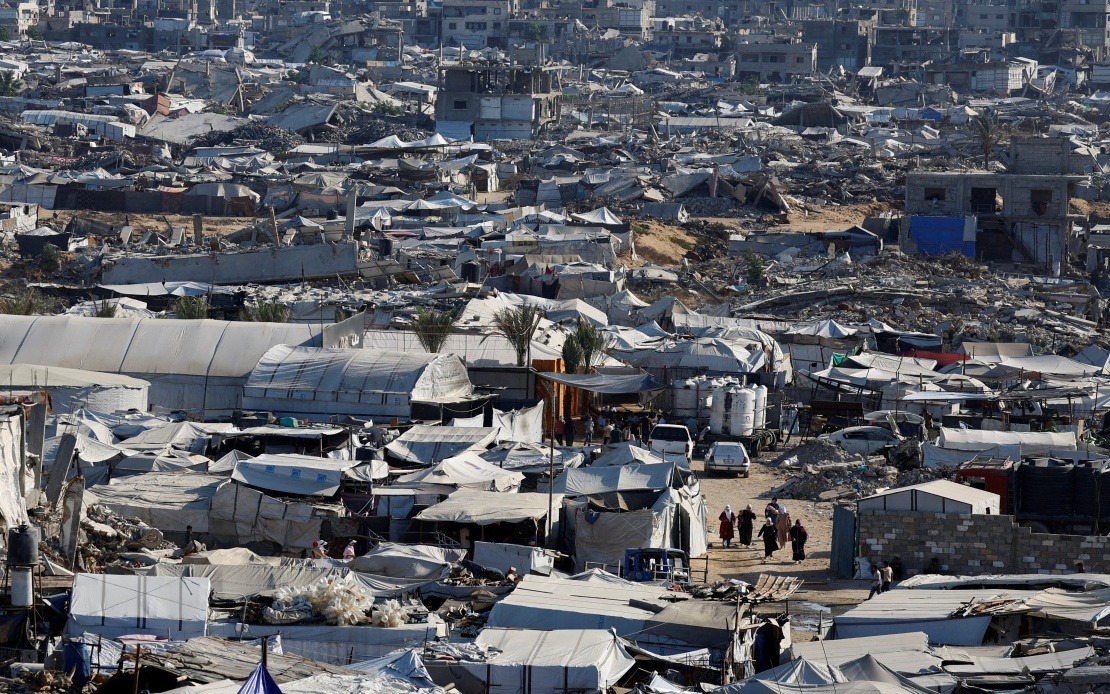
The underlying humanitarian reality that contextualises these diplomatic negotiations remains stark and consequential. Since the conflict began on October 8, 2023, the Gaza Health Ministry documents that Israeli military operations have killed more than 73,000 Palestinians and wounded over 174,000 others, with approximately 90 percent of the territory's infrastructure destroyed or rendered unusable. The October 10, 2025 ceasefire agreement represented a significant turning point, yet violations documented by the Health Ministry indicate that Palestinian casualties continue to mount, with 1,283 additional deaths and 4,248 injuries recorded since the agreement took effect. This ongoing loss of life underscores the urgency surrounding implementation of the ISF and related security arrangements that would theoretically reduce reliance on unilateral Israeli military action.
For regional stakeholders including Malaysia and other Southeast Asian nations, the American funding commitment to the ISF carries implications extending beyond immediate Gaza concerns. The establishment of an international stabilisation force operating under Board of Peace oversight represents a significant precedent for multilateral security cooperation in conflict zones, potentially offering lessons or models for addressing other regional tensions. Malaysia, as a Non-Aligned Movement leader and consistent advocate for Palestinian rights, may find opportunities to participate in or support ISF operations, though such involvement would require careful navigation of relations with both Israel and the United States.
The success or failure of Trump's peace initiative will substantially influence American engagement in the Middle East broadly and could reshape diplomatic dynamics affecting multiple constituencies across Asia and beyond. Should the plan falter due to Israeli resistance, it may signal limitations on American ability to override allied preferences in favour of multilateral frameworks, a outcome with potential consequences for security cooperation throughout the region. Conversely, should diplomatic pressure ultimately yield Israeli compliance with the phased withdrawal and ISF deployment, it would demonstrate the viability of structured international mechanisms for managing protracted conflicts and facilitating post-conflict stabilisation.
The Congressional notification of ISF funding represents an important procedural step, yet the actual trajectory of the peace process depends substantially on overcoming Netanyahu's objections and building consensus around the implementation timeline. The divergence between American and Israeli positions on the pace of Israeli withdrawals and the conditions for genuine disarmament must be resolved before the International Stabilisation Force can realistically transition from proposal to operational deployment. Mediators continue efforts to advance ceasefire implementation and secure agreement on these contentious sequencing issues, recognising that without such consensus, the peace framework risks remaining strategically stillborn despite formal American financial commitments.

