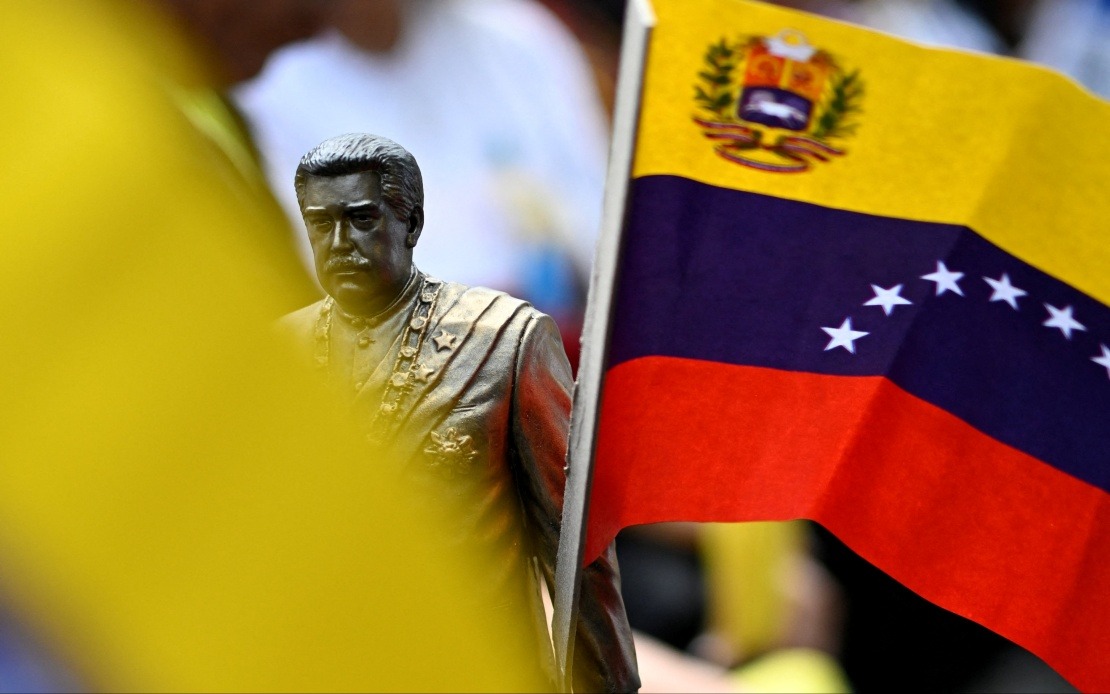
A United States federal judge has scheduled the trial of Venezuelan President Nicolás Maduro and his wife Cilia Flores to begin on June 1, 2027, establishing a timeframe that will extend the legal proceedings for more than three years. Judge Alvin Hellerstein made the determination during a brief 15-minute hearing in Manhattan on Wednesday, as attorneys representing both the prosecution and defence presented their respective positions on scheduling the case. The couple, both maintaining their not guilty pleas against charges of drug trafficking and illegal firearms possession, appeared before the New York court for the third time since their extraordinary detention earlier this year.
The circumstances surrounding Maduro's arrival in American custody have become increasingly contentious in international discourse. According to accounts presented in court and widely reported, US military forces conducted a large-scale military operation against Venezuela on January 3, forcibly apprehending Maduro and Flores before transporting them to New York. The pair has remained detained at the Metropolitan Detention Centre in Brooklyn since their seizure in Caracas, separated from their homeland and the Venezuelan government they led. This method of arrest—executed through direct military intervention rather than extradition proceedings—represents an unprecedented action by Washington and has fundamentally reshaped how global observers perceive American approach to foreign leaders deemed problematic by the administration.
Maduro's legal defence strategy, articulated by his attorney Barry Pollack, centres on a foundational challenge to the court's authority to proceed. Pollack has signalled his intention to contest the indictment based on principles of sovereign immunity, arguing that sitting heads of state possess legal protections from prosecution in foreign jurisdictions. Should this motion succeed, the entire case could be dismissed without requiring Maduro to mount a traditional defence on the substance of the charges. This argument taps into longstanding international law conventions, though its application in this context remains contested given the manner of Maduro's detention. The sovereign immunity defence represents the most direct avenue for dismantling the prosecution before trial commences, potentially eliminating the need for the scheduled June 2027 proceedings.
The reaction outside the courthouse provided striking testimony to the polarisation surrounding the case. Protesters gathered outside the heavily fortified Manhattan courthouse building, their presence underscoring the deep divisions within American society regarding US military intervention in Venezuelan affairs. Demonstrators articulated concerns that transcend conventional partisan boundaries, uniting peace activists with those questioning the constitutional parameters of executive military authority. Allison Gunderson, a protester who travelled from Minneapolis to participate in the demonstrations, characterised the prosecution as fundamentally illegitimate, describing it as the United States prosecuting a sovereign nation's elected president following what she termed an illegal kidnapping operation.
Tom Burke, representing the Anti-War Action Network's steering committee, elaborated on objections rooted in international legal frameworks. Burke contended that the abduction itself, combined with the detention and subsequent trial of a sitting president, violates established norms of international law that all signatory nations to the United Nations Charter have theoretically accepted. His statement—"The United States is basically doing an armed robbery"—encapsulated a view gaining traction among diverse constituencies questioning whether American power operates within agreed international boundaries. Burke extended his critique to encompass broader concerns about global confidence in American institutions, suggesting that international observers increasingly distrust the US government following such actions. The implication runs deeper than partisan criticism; it reflects apprehension that powerful nations increasingly feel unbound by the legal frameworks nominally governing interstate relations.
Sara Flounders, a political analyst and writer focused on American foreign policy, invoked the symbolic weight of duration, noting that Wednesday marked precisely 200 days since Maduro's initial detention. By emphasising this milestone, Flounders connected the Venezuelan situation to broader patterns of American military and political interventions she identifies as constituting crimes against international law. Her framing positioned the Maduro case within a continuum encompassing US operations targeting Iran and Cuba, suggesting systematic rather than isolated policy choices. This perspective resonates particularly within Caribbean and Latin American contexts, where historical memory of American intervention remains vivid and contemporary anxieties about sovereignty remain acute.
For Malaysian and Southeast Asian observers, the case presents important implications regarding how powerful nations approach confrontations with leaders they deem unacceptable. The precedent of direct military seizure of a sitting president raises questions about the boundaries of great power prerogative and the vulnerability of smaller nations to unilateral action when relations deteriorate. Malaysia, as a sovereign nation operating within a multipolar region where various powers project influence, has institutional interest in precedents regarding the legal limits on military intervention and executive authority across borders. The invocation of sovereign immunity defences suggests that international law frameworks theoretically constrain even superpower action, though their practical effectiveness remains uncertain.
The extended timeline established by Judge Hellerstein's June 2027 trial date effectively defers resolution of these fundamental questions by nearly four years. This timeline creates extended space for diplomatic initiatives, international pressure, or changed political circumstances that might alter the case's trajectory. The trial date, rather than representing a near-term judicial resolution, signals instead a prolonged period of legal contestation, with the sovereign immunity motion potentially serving as an inflection point determining whether the case advances to substantive trial proceedings. During this interval, the international political landscape may shift in ways currently difficult to anticipate.
The Venezuelan government and allied nations have mounted vigorous protests against what they characterise as an extraordinary violation of international norms. The global diplomatic response to Maduro's detention has crystallised international concerns about the stability of a rules-based international order, particularly when applied inconsistently according to perceived American interests. From a Malaysian diplomatic perspective, the case illustrates challenges confronting medium-power nations attempting to maintain principled positions on international law while navigating relationships with stronger powers pursuing distinct strategic objectives. The precedent established through this prosecution could reverberate across international relations frameworks that Southeast Asian nations collectively depend upon for protection and stability.

