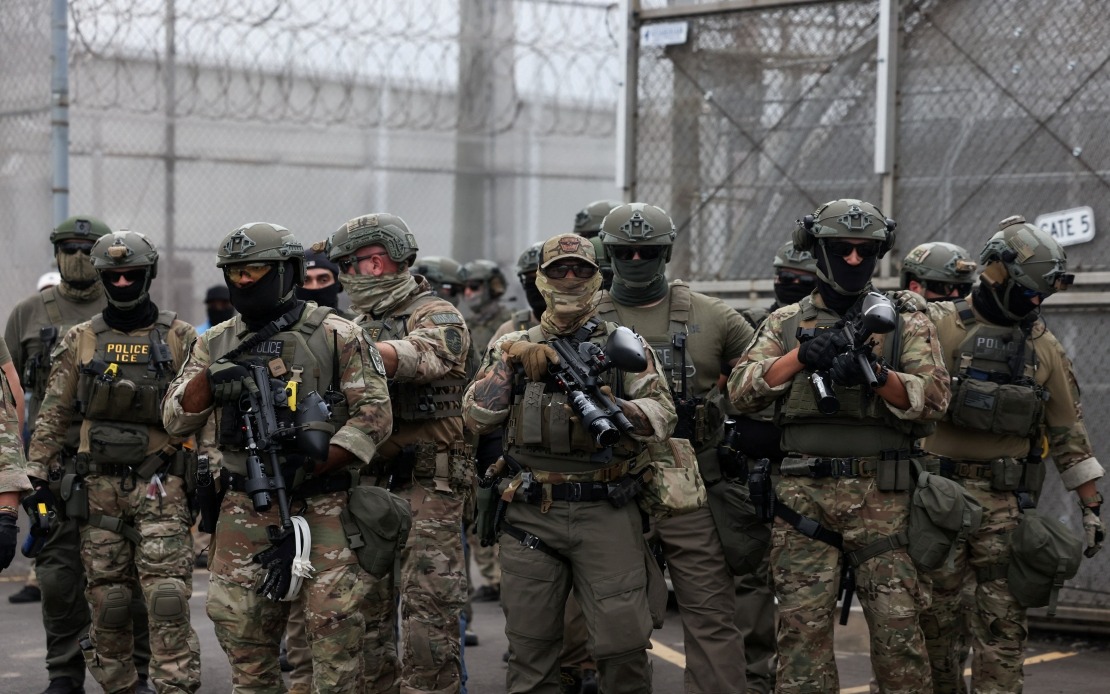
A federal judge in California has issued a nationwide ruling that prevents United States Immigration and Customs Enforcement from conducting arrests of migrants within or near immigration courthouses. The decision represents a significant legal setback for a cornerstone policy of President Donald Trump's deportation enforcement agenda, temporarily halting what critics have long characterised as a troubling erosion of procedural fairness in the immigration system.
The practice that triggered this court intervention had become increasingly common following the start of Trump's second term in office. Immigration and Customs Enforcement officers began systematically arresting undocumented migrants at courthouses across multiple states, capturing individuals who were either preparing for hearings, in the middle of legal proceedings, or departing after court appearances. This approach represented a marked shift in enforcement priorities, as immigration courthouses had historically operated as spaces where vulnerable populations could access legal representation and due process, however imperfectly.
Immigration courts themselves are civil proceedings designed to determine deportability and hear cases from migrants facing possible removal from the country. These facilities handle thousands of cases monthly, with many migrants arriving with legal counsel to contest deportation orders or seek relief from removal. The courthouse arrest strategy directly interfered with this judicial process by making migrants fearful of attending their own hearings, creating a chilling effect on legal participation even among those with legitimate claims to remain in the United States.
The Trump administration had introduced new internal guidelines at the beginning of the second term that explicitly endorsed courthouse arrests and emphasised their perceived enforcement value. Agency officials argued that courthouses represented high-probability venues for locating deportable aliens, and that the practice would improve overall enforcement efficiency. However, the federal judge found this rationale legally insufficient and procedurally flawed.
In the detailed ruling, the judge determined that Immigration and Customs Enforcement had fundamentally failed to address legitimate concerns about how the new policy would undermine migrants' willingness to appear for court proceedings. The agency had not adequately analysed the practical consequences of discouraging court attendance or explained why the benefits of courthouse arrests outweighed the damage to judicial processes. This analytical gap proved fatal to the policy's legal standing.
The due process argument carries particular weight within American constitutional law. When government agencies dramatically shift enforcement practices, courts typically require that agencies explain their reasoning, consider alternatives, and respond to documented harms. The judge found that Immigration and Customs Enforcement had essentially bypassed these safeguards, implementing the policy without sufficient justification under administrative law standards.
For Southeast Asian observers, this ruling illustrates how judicial systems can check executive power even during periods of hardline immigration enforcement. While the United States has pursued aggressive deportation policies before, courts have occasionally intervened to preserve minimum fairness standards. The decision does not prevent immigration enforcement entirely—it simply prohibits arrests at the specific location where legal proceedings occur, preserving migrants' ability to access courts without fear of immediate detention.
The implications extend beyond the immediate policy. Courthouse arrest bans exist in several other countries and regions based on similar reasoning: that functioning legal systems require migrants to participate without fear of immediate arrest. Countries including Canada and several European nations have adopted similar restrictions, recognising that judicial legitimacy depends partly on allowing litigants to access courts. This California ruling aligns with international practice even as it contradicts the Trump administration's enforcement philosophy.
The ruling also reflects ongoing tension within American governance between executive enforcement priorities and judicial oversight. Deportation policy remains heavily executive-dominated, with immigration authorities possessing substantial discretion in enforcement decisions. However, courts retain authority to ensure that such decisions follow procedural requirements and respect statutory limits. This particular judgment suggests that even in immigration—an area traditionally deferential to executive judgement—there remain meaningful constraints on policy implementation.
The decision applies nationwide, making it impossible for Immigration and Customs Enforcement to continue the courthouse arrest practice in any jurisdiction while the legal challenge proceeds through the courts. The Trump administration will likely appeal, setting the stage for extended litigation that could reach higher judicial levels. For migrants and their advocates, the ruling provides temporary protection and validates long-standing due process arguments. For enforcement officials, it represents a frustrating constraint on operational flexibility.
For Malaysia and the region, the case demonstrates how domestic legal systems in major countries grapple with immigration enforcement and individual rights. While Malaysian immigration law operates under different frameworks, understanding how other democracies balance enforcement with fairness offers perspective on these perennial policy tensions. The courthouse arrest ban ultimately reflects a judicial determination that immigrants accessing legal proceedings deserve minimum procedural protection, a principle with resonance across different legal systems.

