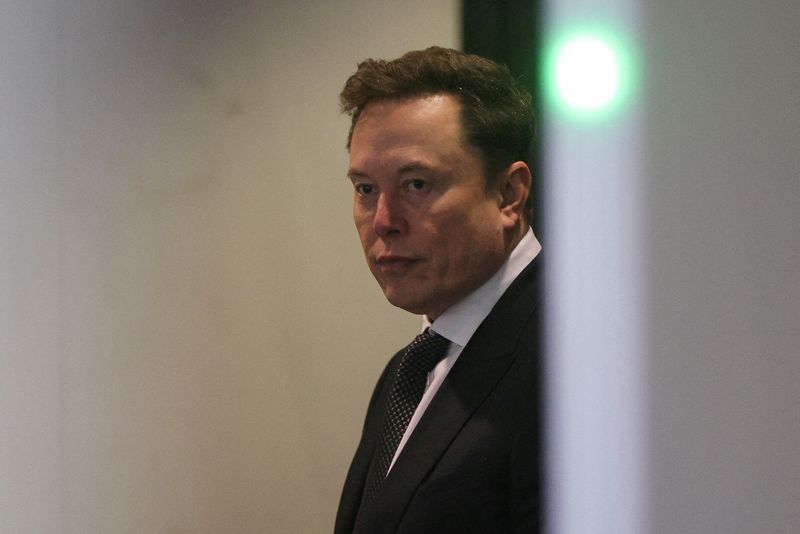
A federal judge in Washington, D.C., has given formal approval to the U.S. Securities and Exchange Commission's settlement with Elon Musk over his undisclosed Twitter share purchases, yet her decision carried unmistakable signs of judicial dissatisfaction with the terms. U.S. District Judge Sparkle Sooknanan acknowledged on Wednesday that while she had endorsed the accord, she harboured what she characterised as "significant misgivings" about the "red flags" embedded within the agreement, raising broader questions about whether the regulatory outcome matched the severity of alleged wrongdoing.
The dispute centres on Musk's delayed public disclosure of his early purchases of Twitter shares in March and April 2022, a lag the SEC contends extended eleven days beyond regulatory requirements. During that interval, the world's richest individual—currently valued at $927.2 billion according to Forbes magazine—allegedly accumulated shares at depressed prices, gaining what regulators calculated as approximately $150 million in financial advantage before public disclosure drove valuations upward. Musk has consistently maintained the delay was unintentional, though this characterisation failed to fully satisfy the presiding judge or assuage concerns within the regulatory community.
Under the settlement framework, a trust established in Musk's name will remit $1.5 million to resolve the SEC's allegations. This amount, while substantial in absolute terms, represents a minuscule fraction of the estimated $150 million financial benefit Musk obtained through the delayed disclosure—a mathematical disparity that appears to have troubled Judge Sooknanan considerably. The judge's written opinion emphasised her limited constitutional role in reviewing consent judgments, noting that federal courts occupy an uncomfortable middle ground: neither passive rubber stamps nor independent ombudsmen empowered to unilaterally overturn negotiated settlements.
Critical to the judge's reservations was the SEC's deliberate decision to forgo demanding disgorgement—the return of ill-gotten gains to defrauded parties. This departure from conventional regulatory practice triggered pointed questioning from the bench. Judge Sooknanan wondered whether the SEC's historical record of not pursuing disgorgement in analogous cases genuinely justified abandoning such remedies in the Musk matter, or whether doing so fundamentally undermined the settlement's legitimacy as a matter of public interest. The implication was stark: regulatory consistency might matter less than ensuring wrongdoers genuinely forfeit unlawful profits.
Another dimension of judicial scepticism concerned the structural mechanics of the settlement itself. Rather than holding Musk personally accountable, the SEC agreed to accept payment from a trust vehicle bearing Musk's name—an arrangement that technically allowed the billionaire entrepreneur to publicly proclaim his exoneration from wrongdoing. Judge Sooknanan flagged this outcome as potentially problematic, suggesting it permitted Musk to escape reputational consequences while the broader public absorbed the compliance burden. This distinction between formal settlement compliance and substantive accountability underscores a persistent tension in securities enforcement: whether regulatory victories genuinely deter misconduct or merely create theatrical compliance performances.
The judge further questioned whether Musk had received preferential treatment unavailable to other alleged securities law violators. She pointedly noted that the SEC appeared to have negotiated this settlement through channels somewhat disconnected from the agency's enforcement litigators—an observation grounded in May hearings where SEC counsel expressed apparent surprise upon learning settlement discussions had already transpired. This procedural oddity raised the spectre of high-level political or administrative intervention potentially influencing enforcement outcomes in ways that circumvent normal litigation protocols. The timing reinforced such concerns: the settlement announcement on May 4 followed the March departure of former SEC enforcement chief Margaret Ryan after merely six months, during which she had clashed with agency leadership over enforcement priorities.
Musk's business empire spans multiple domains of significant technological and economic consequence. His rocket and satellite enterprise SpaceX now owns the formerly independent social media platform Twitter, rebranded as X following his $44 billion acquisition completed in October 2022. Simultaneously, Musk leads Tesla, the electric-vehicle manufacturer that fundamentally reshaped automotive markets. This concentration of influence across aerospace, communications infrastructure, and transportation technology amplifies the regulatory stakes: enforcement decisions affecting Musk carry implications extending far beyond individual share transactions, touching foundational questions about corporate governance and accountability among the world's most consequential business figures.
For Southeast Asian investors and policymakers, this episode illustrates the persistent challenges confronting major democracies in calibrating regulatory enforcement against concentrated wealth and political influence. The settlement's apparent leniency—especially the abandoned disgorgement demand—potentially signals that even transparent regulatory violations yield negotiated outcomes disproportionately favourable to wealthy defendants, particularly those with political connections. The SEC itself sought to defend its approach, arguing that the $1.5 million penalty represented the largest of its type in comparable cases and that the injunction effectively binding Musk's trust provided meaningful ongoing compliance oversight.
Judge Sooknanan's carefully worded decision ultimately defers fundamental questions about regulatory adequacy to the democratic process itself, suggesting citizens assess enforcement outcomes through electoral mechanisms rather than judicial intervention. Yet this framing somewhat sidesteps the core problematic raised by her own opinion: whether regulatory systems designed to protect market integrity can effectively function when enforcement appears to track wealth and political affiliation more reliably than legal culpability. The settlement stands approved, yet the judicial record unmistakably documents serious reservations about whether American securities regulation maintained credible independence from executive branch influence or whether extraordinary figures obtained extraordinary forbearance.

